
Private Wireless Network Guide for Field Ops
Private wireless network guide for industrial and mission-critical teams. Learn architecture, spectrum, backhaul, mobility, and deployment tradeoffs.

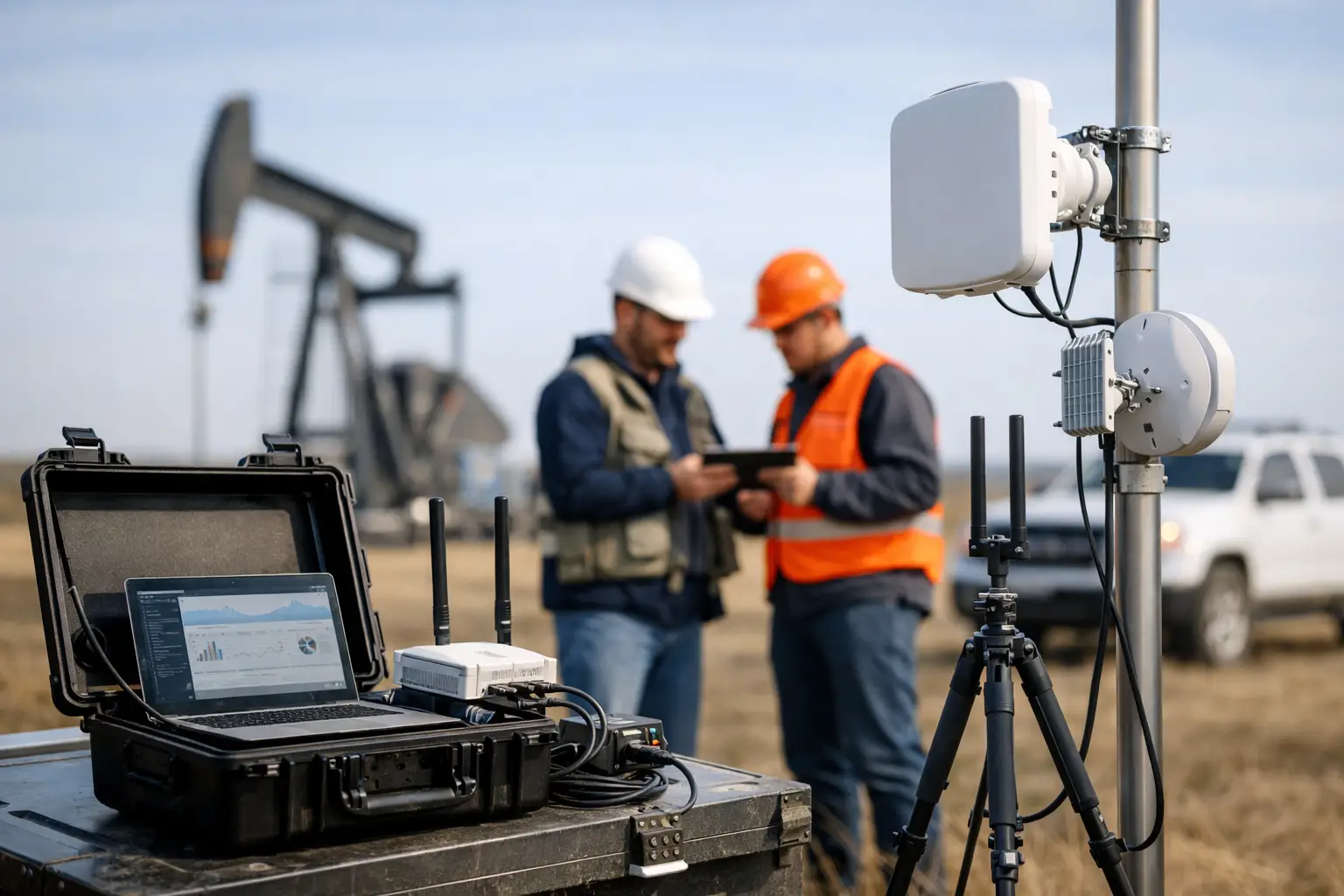
When a drilling pad, patrol zone, vessel, or temporary command post loses connectivity, the problem is rarely just bandwidth. It is usually coverage at the edge, unstable backhaul, moving assets, RF interference, or infrastructure that was never designed for the operating environment. This private wireless network guide is built for teams that need dependable LTE or 5G performance where public networks, fixed fiber, or standard Wi-Fi architectures fall short.
What a private wireless network actually solves
A private wireless network gives an organization direct control over coverage, capacity, traffic priority, security policy, and service levels. That matters when communications support safety systems, field applications, video, telemetry, push-to-talk, SCADA, autonomous equipment, or onboard operations.
Public carrier service can be useful, but it is shared by design. In a busy port, a disaster response zone, or a remote industrial corridor, that shared model introduces risk. Congestion, variable uplink performance, and coverage gaps can affect operations at the exact moment reliability matters most. A private LTE or private 5G deployment is different because the network is engineered around the site, the applications, and the movement of users or vehicles.
That does not mean private wireless is always the right answer. If your requirement is limited to a small indoor footprint with low mobility and no hard uptime target, managed Wi-Fi may be enough. If you need wide-area mobility, deterministic performance, and better control over RF behavior, private cellular becomes a stronger fit.
Private wireless network guide: start with the operating model
The right design starts with operational reality, not marketing terms. Before selecting radios, spectrum, or core software, define how the network will be used in the field.
Ask where coverage is required, how fast endpoints move, what applications are business-critical, and what failure modes are unacceptable. A fixed mining site has a very different RF profile from a fleet of patrol boats or a convoy support network. A construction site changes every month. An offshore platform may need local access, vessel approach coverage, and resilient backhaul in the same architecture.
In practical terms, most projects come down to five design questions. First, what area must be covered, and with what signal quality indoors, outdoors, or offshore? Second, how many devices will attach now and later? Third, what traffic matters most – broadband data, low-latency control, voice, or video? Fourth, what backhaul options exist? Fifth, what level of mobility, handoff performance, and environmental hardening is required?
Those questions shape everything else.
The core building blocks
Every private wireless network has the same high-level components, but the engineering choices inside them vary widely.
Radio access network
The radio access network includes the LTE or 5G radios, antennas, and site design that create coverage. This is where many projects are won or lost. On paper, a standard eNodeB or gNodeB may look sufficient. In the field, antenna height, tilt, polarization, path obstructions, and moving-platform behavior often determine real performance.
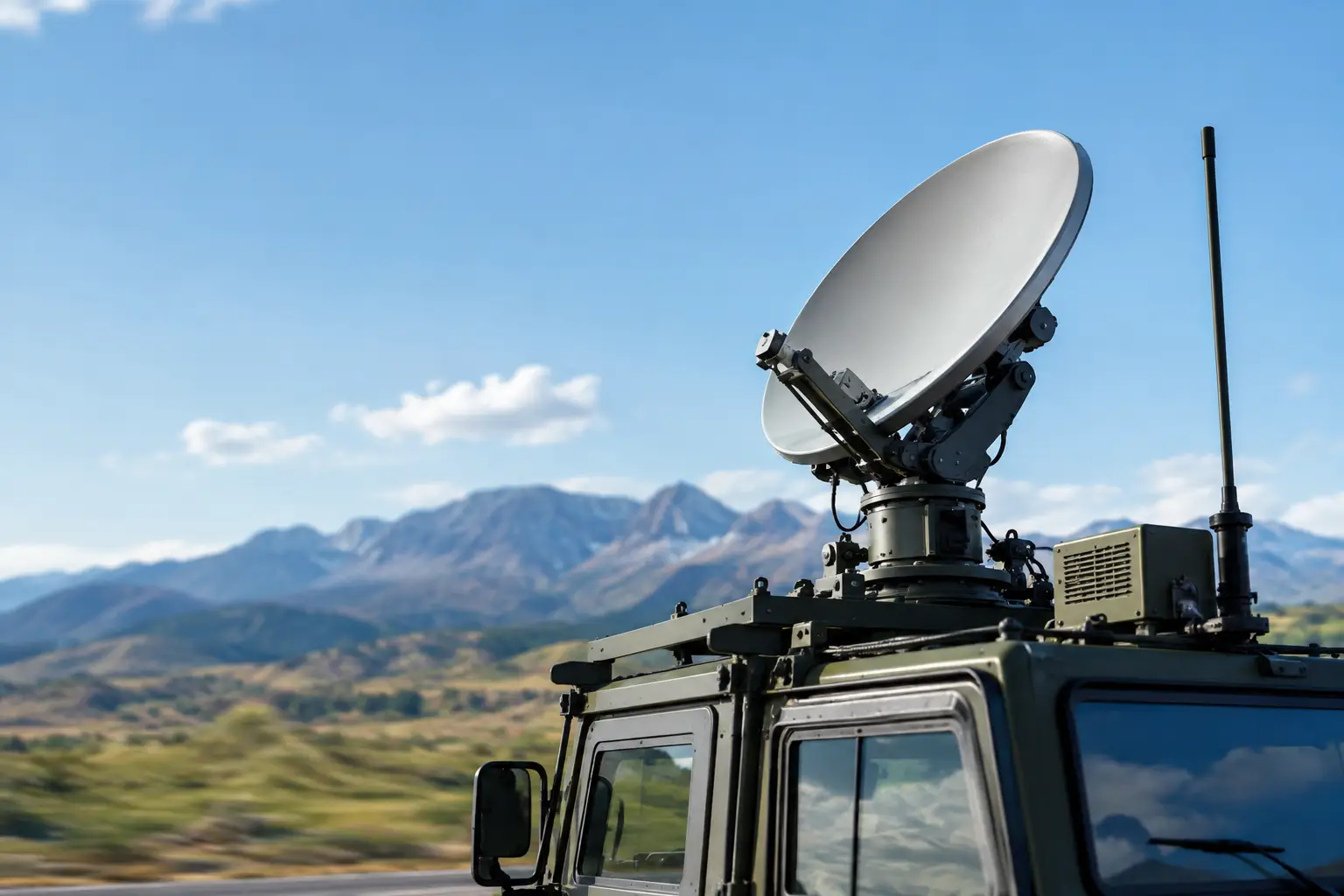
For industrial and mission-critical environments, radio design has to account for terrain, metallic reflections, saltwater effects, clutter, temporary structures, and line-of-sight changes. If connectivity must be maintained to moving assets, stabilized and auto-aiming systems can become part of the wider architecture rather than an optional add-on.
Core network
The core manages subscriber identity, policy, traffic routing, quality of service, and security. It can be deployed on premises, at the edge, or in a managed cloud model. The best choice depends on latency targets, security requirements, and site logistics.
On-premises core deployment offers tighter local control and can support operations even if upstream backhaul is degraded. Cloud-based core can reduce local infrastructure burden, but it introduces dependency on transport quality. Many buyers land on a hybrid approach, especially when they need local survivability with centralized administration.
Spectrum
Spectrum strategy is not a side issue. It is foundational. In the US, many enterprise deployments evaluate CBRS because it offers an accessible path to private LTE and 5G. In other cases, licensed spectrum, shared spectrum, or integration with public carrier assets makes more sense.
The tradeoff is straightforward. More controlled spectrum options can improve predictability, but cost and access may be higher. Shared models can speed deployment, but performance planning has to reflect local spectrum conditions and coordination rules.
Devices and interoperability
A private network is only as useful as the devices that can attach to it. Handsets, routers, cameras, sensors, vehicle gateways, onboard systems, and industrial equipment all need to be validated for band support, authentication, roaming behavior, and application compatibility.
This is where experienced engineering matters. It is common to see solid RF coverage paired with endpoint failures because someone assumed all LTE or 5G devices behave the same way. They do not.
Backhaul is often the real constraint
A lot of private wireless discussions focus on local coverage. In demanding deployments, backhaul is often the harder problem.
If the site has reliable fiber, the design path is relatively clean. If not, the network may depend on microwave, satellite, a temporary relay, or a multi-path design that uses several transport methods. Each option affects throughput, latency, resilience, and cost.
Microwave remains a strong answer when line of sight is available and high-capacity, lower-latency transport is required. For mobile and maritime environments, stabilized microwave systems and adaptive antenna tracking can make the difference between a usable link and a recurring outage window. Satellite extends reach where terrestrial options end, but application planning needs to reflect latency and service economics.
The lesson is simple: do not design the access layer first and hope transport will sort itself out later.
Mobility changes the engineering
A static industrial campus is one thing. A network supporting vessels, ground vehicles, rail assets, or rapidly shifting field operations is another.
Mobility introduces handoff complexity, fluctuating signal geometry, and changing path conditions. Network timing, antenna strategy, cell overlap, and traffic prioritization all become more sensitive. A design that performs well for fixed cameras may struggle when asked to support moving command vehicles streaming video and operational data.
This is why private wireless for field operations often requires more than commodity infrastructure. It may need directional coverage planning, integrated radios, path calculation, onboard networking, and antenna systems built to maintain alignment and link stability under motion. For organizations operating beyond standard telecom conditions, that is not overengineering. It is the baseline for continuity.
Security and control without false promises
Private LTE and 5G can improve security posture because the organization controls subscriber access, segmentation, and policy. Sensitive traffic can stay inside a defined environment, and mission-critical applications can be prioritized.
Still, private does not automatically mean secure. Misconfigured cores, poorly managed SIM provisioning, exposed management planes, and weak integration between IT and OT domains can create avoidable risk. The better view is that private wireless gives you the tools for stronger control, but those tools need to be engineered and operated correctly.
For public safety, defense, and critical infrastructure buyers, that distinction matters. Security claims should be tied to architecture, governance, and field procedures, not generic platform language.
Where private wireless delivers the most value
The strongest use cases tend to share the same traits: remote geography, unreliable carrier coverage, moving assets, operationally important applications, or a need for traffic isolation.
Industrial sites use private wireless to support automation, worker communications, vehicle connectivity, and sensor traffic across large outdoor areas. Maritime operators use it for onboard broadband, port approach coverage, and vessel-to-shore links. Energy operators use it for production fields, compressor stations, wind farms, and temporary projects where fiber is impractical. Public safety teams use it for incident areas, deployable networks, and continuity when commercial infrastructure is overloaded.
These are not vanity deployments. They are communications systems built because failure carries operational cost.
How to evaluate a solution partner
If you are comparing vendors, ask how they handle difficult RF environments, mobility, and backhaul under real conditions. Ask what happens when the site moves, the weather changes, the vessel rolls, or the temporary mast is not perfectly placed. Ask how they validate interoperability across radios, antennas, cores, and endpoint devices.
A credible partner will talk about path analysis, installation realities, antenna behavior, environmental hardening, and support after commissioning. They will also be clear about tradeoffs. Not every site can get the same latency, redundancy model, or cost profile. The right answer is the one that fits your operating risk and performance target.
For organizations working in harsh or mobile environments, that practical engineering approach is where specialist providers such as BATS Wireless stand apart from general-purpose networking vendors.
A private wireless network guide should end with one decision
Do not start by asking whether you want private 4G or private 5G. Start by asking what continuity looks like when your people, assets, and applications are operating at the edge of normal infrastructure. Once that is defined, the right architecture becomes much easier to justify, procure, and deploy.

October 23, 2026

October 23, 2026

October 23, 2026
October 23, 2026
