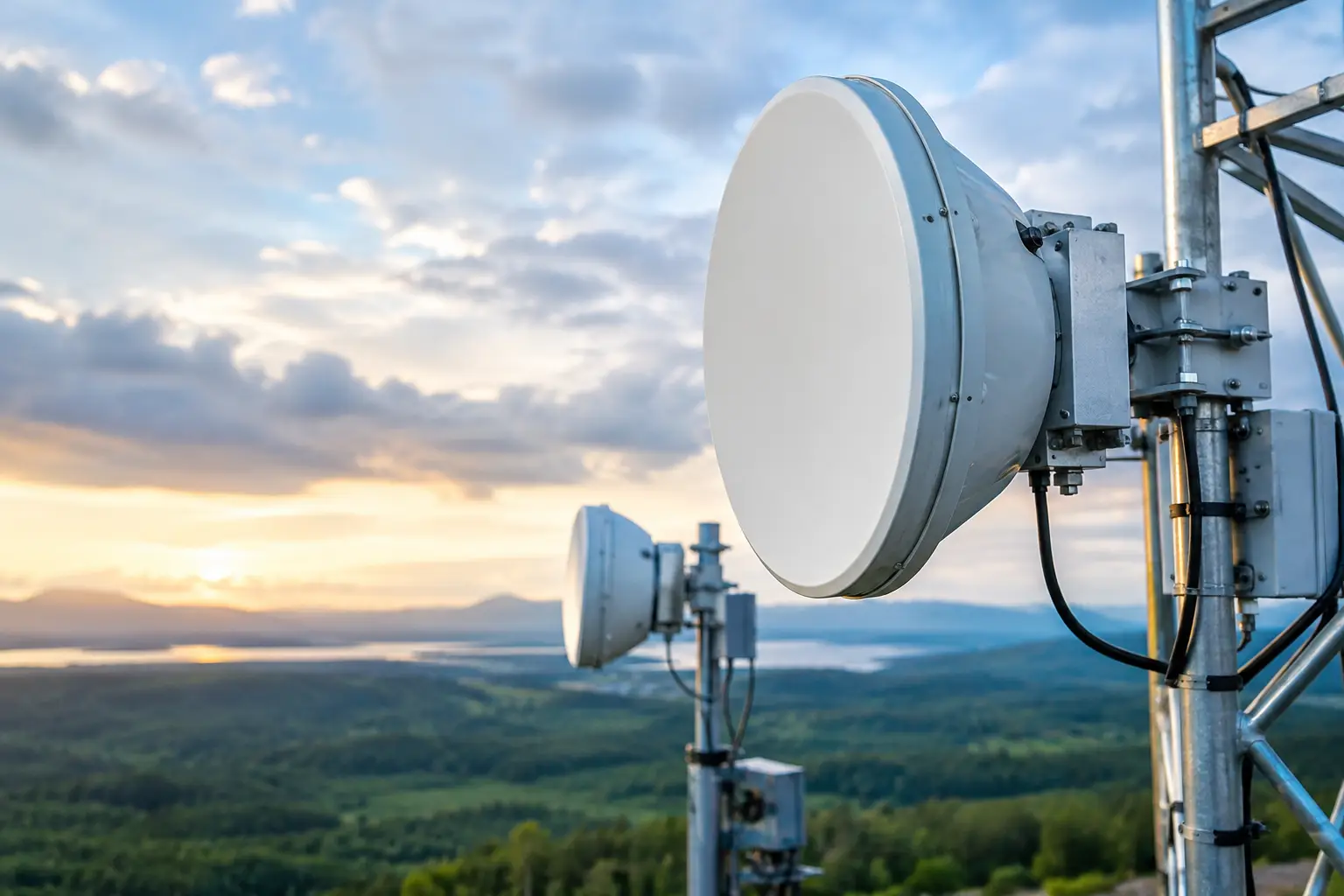
Why Do Microwave Links Fail at Critical Sites?
Why do microwave links fail? Learn how path obstruction, fading, alignment, interference, and equipment faults affect mission-critical wireless uptime.

Why do microwave links fail? Learn how path obstruction, fading, alignment, interference, and equipment faults affect mission-critical wireless uptime.
CBRS network architecture connects private LTE and 5G radios, spectrum access, backhaul, and security for reliable industrial and mobile operations daily.
Secure shipboard LTE traffic with segmented onboard networks, authenticated access, encrypted backhaul, and resilient coverage built for vessels at sea.
What is link budget? Learn how RF gains, losses, receiver sensitivity, fade margin, and antenna alignment determine dependable wireless links in the field
Learn how to align long range microwave links with accurate path data, stable mounts, auto-aiming tools, and field verification for reliable backhaul.
Learn how does CBRS licensing work for private networks, including GAA access, PAL spectrum, SAS coordination, and deployment decisions for critical sites.
Choose the best industrial directional antennas for reliable long-range backhaul, private LTE/5G, and mobile operations in difficult field conditions daily.
Stabilized antenna platforms keep mobile crews, vessels, and remote assets connected by holding precise RF links through motion, weather, and distance.
Learn how to configure CBRS radio equipment for private LTE and 5G networks, from SAS onboarding to RF design, validation, and field performance checks.
Remote site spectrum planning aligns coverage, capacity, backhaul, and interference controls so mission-critical networks perform reliably in the field.