
Mining Private Wireless Systems That Hold Up
Mining private wireless systems give sites reliable LTE and 5G coverage for vehicles, crews, sensors, and backhaul in harsh, changing conditions.

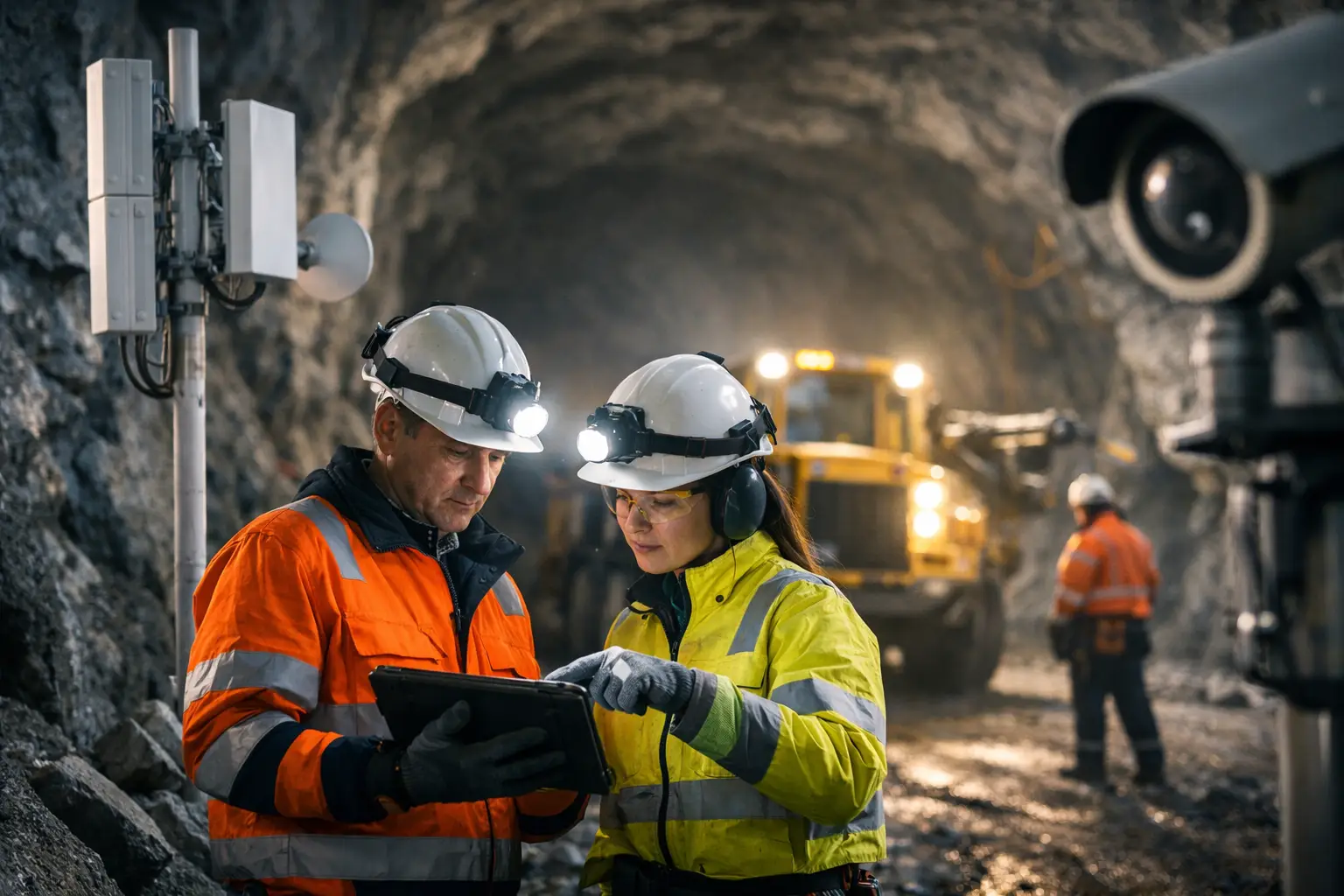
A haul truck dropping off the network at the pit wall is not an IT nuisance. It is an operational risk. In mining private wireless systems, coverage gaps affect dispatch, telemetry, autonomous workflows, maintenance visibility, and worker communications at the same time.
Public carrier coverage rarely matches the shape of a mine. Terrain changes, benches shift, fleets move, and processing areas often sit far from any commercial network edge. That is why serious mining operations are moving toward engineered private LTE and 5G environments built around site-specific RF design, controlled backhaul, and field-proven infrastructure.
Why mining private wireless systems are different
A mine is not a fixed campus, and it is not a clean industrial plant. The RF environment changes as excavation progresses. Elevation profiles evolve. Mobile assets move through cuttings, ramps, tunnels, stockpiles, and processing zones that create shadowing and multipath. Dust, vibration, weather, and long distances add another layer of difficulty.
That matters because wireless performance in mining is tied directly to production outcomes. If a private network is going to carry fleet management, environmental monitoring, video, voice, and machine data, it needs more than theoretical coverage. It needs predictable behavior under load and across changing operating conditions.
This is where many generic enterprise wireless designs fall short. A mine needs engineered coverage planning, hardened equipment, reliable synchronization, and backhaul that can keep pace with operational growth. In many cases, the network also has to support moving assets without handoff issues that interrupt applications.
What a strong mining private wireless system needs
At a technical level, the right architecture depends on whether the mine is surface, underground, or mixed. It also depends on how much traffic is mission-critical versus best-effort. But the strongest designs usually share the same priorities: controlled coverage, resilient transport, interoperability, and room to scale.
Coverage design starts with geography, not a standard bill of materials. A mine may need macro-style LTE coverage for broad outdoor zones, localized cells around crushers and plants, and specialized links for remote monitoring points. If the site includes temporary or mobile facilities, the design should account for relocation without forcing a complete rebuild.
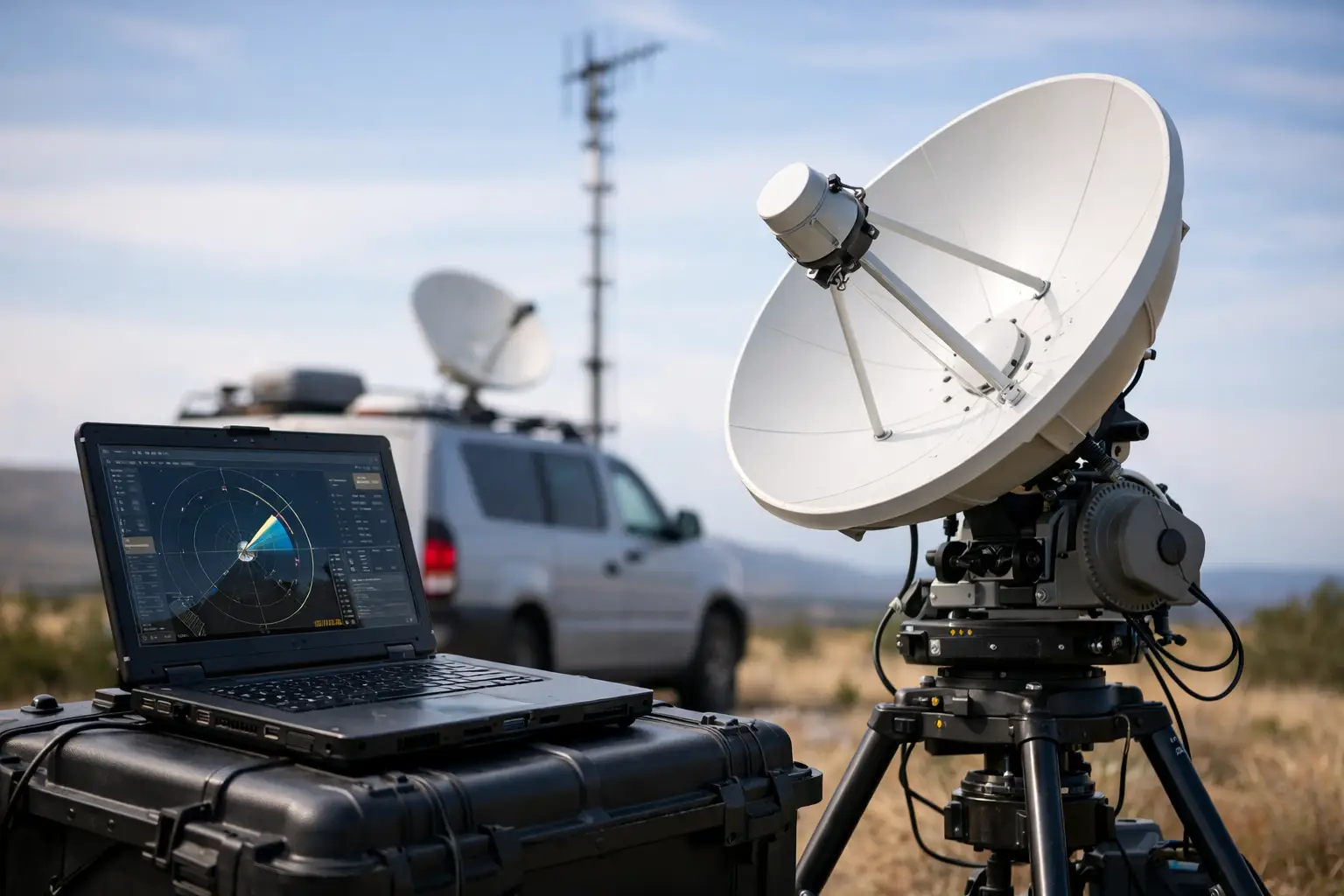
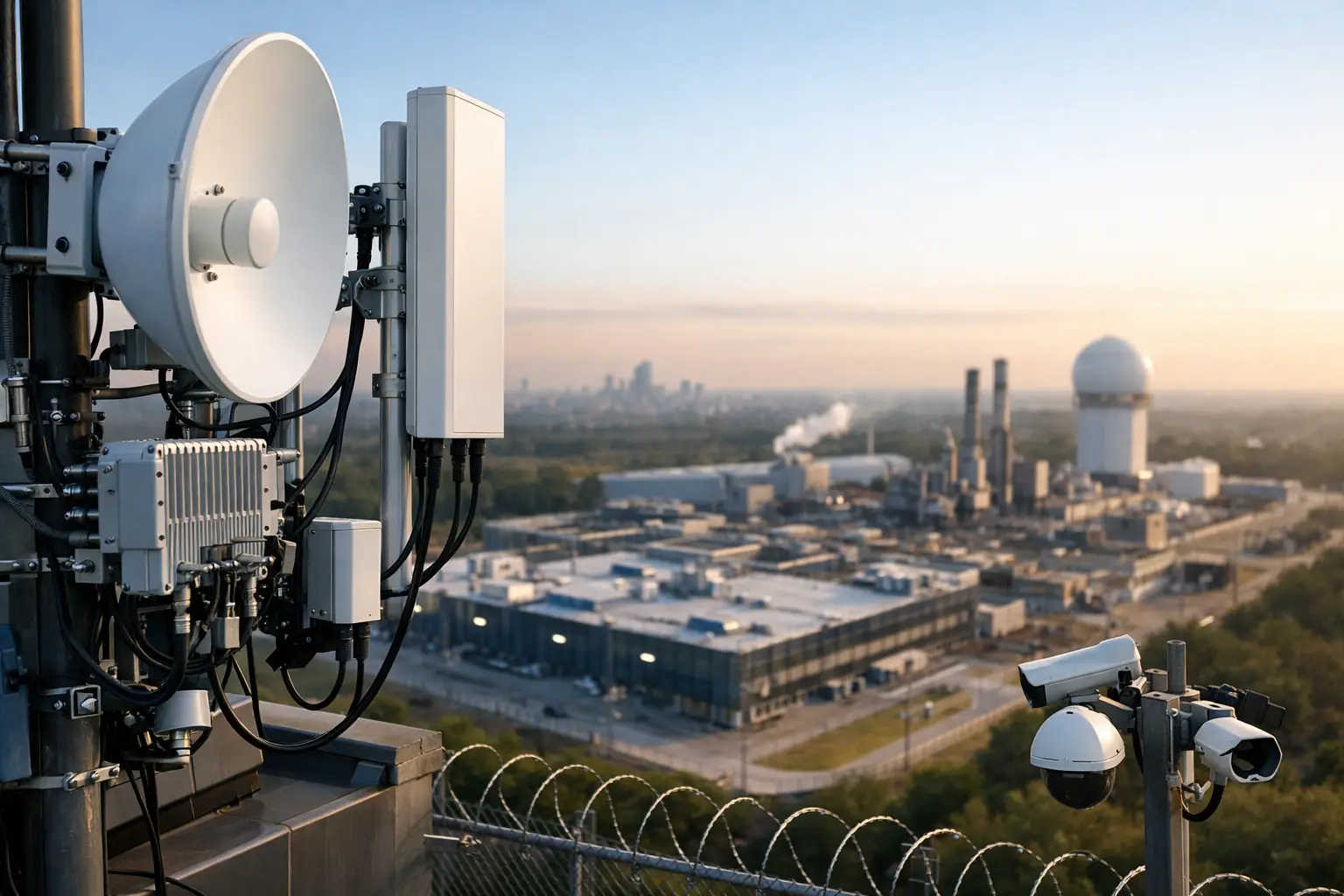
Backhaul is just as important as radio access. A private LTE or 5G network is only as stable as the transport supporting it. Fiber may be available in parts of the site, but many mining operations still require microwave or other wireless backhaul to reach remote areas economically. In rough terrain, line-of-sight planning, mount stability, path engineering, and equipment hardening are not minor details. They determine whether the network performs consistently or becomes another source of downtime.
Then there is mobility. Haul trucks, service vehicles, drills, and light fleets do not move through predictable office-like coverage patterns. If applications depend on low latency and persistent sessions, the network has to be designed for that mobility from the start. That may include careful sectorization, edge placement, and tuned handover behavior based on actual traffic types.
LTE, 5G, or a hybrid approach?
For most mines, the answer is not ideological. It is practical.
Private LTE remains a strong fit for broad-area coverage, proven device ecosystems, and predictable support for vehicle connectivity, push-to-talk, telemetry, and operational applications. It is mature, stable, and often the right starting point for sites that need immediate reliability more than headline data rates.
Private 5G becomes more attractive when the use case requires higher capacity, lower latency, or denser device support. That can include machine vision, advanced automation, real-time video analytics, and future-ready autonomous workflows. But a 5G deployment only makes sense if the application stack, device ecosystem, and backhaul are ready for it. Otherwise, the mine pays for capability it cannot fully use.
A hybrid model is often the smarter path. LTE can carry wide-area operational traffic while 5G is introduced in targeted zones where higher performance justifies the investment. That staged approach helps control cost, reduce deployment risk, and align infrastructure decisions with actual mine expansion plans.
The real design challenge is change
A mine network is never really finished. Roads move. Pit walls deepen. Temporary work areas become permanent. New sensors and applications show up faster than original requirements anticipated.
That is why mining private wireless systems should be built with change in mind. Fixed infrastructure still matters, but adaptability matters just as much. Mounting strategies, relocation plans, modular radio layers, and flexible backhaul options all influence how expensive future changes become.
This is also where engineered wireless providers add value beyond equipment supply. Anyone can quote radios. Fewer can model terrain-driven path changes, design around moving assets, and integrate wireless layers into a broader operational communications strategy. In mining, that difference shows up later as either continuity or expensive rework.
Surface mines, underground mines, and mixed operations
Surface mines generally need broad outdoor coverage with strong mobility performance and enough capacity for fleet operations, safety systems, and industrial data. The challenge is usually terrain variation and network expansion over large footprints. Macro cells, distributed coverage points, and hardened wireless backhaul all play a role.
Underground mines are a different problem. Signal propagation changes by tunnel geometry, rock composition, and equipment density. Leaky feeder still has a place in some environments, but private LTE and 5G are becoming increasingly relevant for targeted underground coverage, especially where higher data performance is required. The design has to account for survivability, power availability, maintenance access, and the practical difficulty of supporting infrastructure below grade.
Mixed operations are the most demanding because they require continuity across very different environments. A worker, vehicle, or application may move from open pit to plant to underground transition areas. If those network domains are not designed with interoperability in mind, the operation ends up with isolated communications islands instead of a unified system.
Where ROI actually comes from
The business case for private wireless in mining is not just about replacing Wi-Fi or filling a carrier dead zone. The stronger return usually comes from operational consistency.
When dispatch systems hold connection across the site, fleet decisions improve. When equipment telemetry arrives reliably, maintenance teams can act earlier. When mobile crews have dependable communications in marginal areas, safety response improves. When backhaul to remote assets is stable, operations can centralize monitoring instead of sending people out just to confirm status.
That said, not every mine needs the same level of investment. If the site only requires a narrow set of telemetry and voice services, a simpler LTE architecture may be enough. If the roadmap includes autonomy, high-resolution video, or AI-driven field analytics, then the network should be sized and staged accordingly. The right answer depends on current operations and the next three to five years of expansion.
Common failure points in mining private wireless systems
Most network problems in mining can be traced back to design assumptions that did not survive field conditions. Coverage maps looked good, but did not reflect actual terrain evolution. Backhaul paths were technically viable, but not stable enough for long-term operation. Hardware was specified for performance, not survivability. Or the system was designed around one application and quickly overloaded by five more.
Another common issue is poor integration between the radio layer and the transport layer. A site may deploy capable LTE or 5G infrastructure, then connect it through weak or inconsistent backhaul. That creates a bottleneck that users experience as a radio problem, even though the root cause is elsewhere.
There is also a procurement issue. Mining buyers are often presented with standard private network packages marketed as universal solutions. Mines are not universal environments. The better approach is to start with traffic profiles, terrain data, mobility requirements, and operational constraints, then engineer the network around those realities.
What buyers should ask before deployment
The first question is not about brand preference. It is whether the proposed system reflects the mine as it actually operates. Buyers should press on RF modeling assumptions, path availability, relocation strategy, redundancy options, and how the design handles growth.
They should also ask how the system will support moving assets, what latency can be expected for priority applications, and how the network will be managed over time. A good design conversation includes maintenance access, spare strategy, environmental hardening, and the practical process for expanding coverage as the site changes.
For operators with difficult geography or remote infrastructure zones, it is worth looking closely at the backhaul engineering piece. This is an area where specialized providers such as BATS Wireless tend to stand apart, especially when the deployment calls for integrated radio compatibility, path calculation, and stabilized or auto-aiming wireless systems in demanding conditions.
Mining private wireless systems pay off when they are treated as operational infrastructure, not a box-level purchase. The best networks are the ones that keep working after the mine changes shape.
August 31, 2026
August 31, 2026

August 31, 2026

August 31, 2026
