
How to Design Private Coverage for Critical Sites
Learn how to design private coverage for remote and mobile operations, from spectrum and RF planning to backhaul, security, redundancy, and validation.

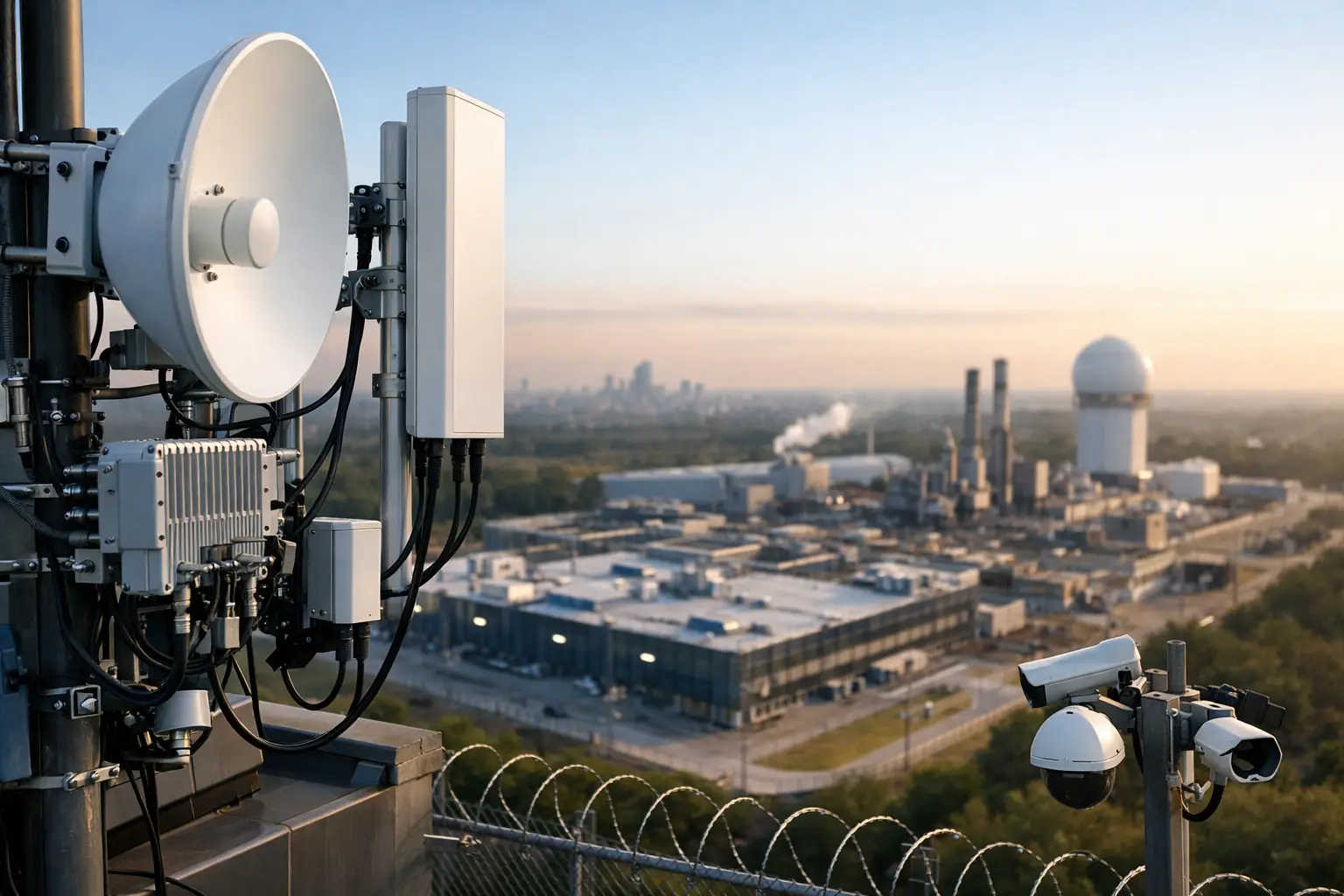
A private network can look excellent on a coverage map and still fail when the workday begins. A vessel turns, a haul truck enters a cut, a drilling rig starts up, or a public safety team moves beyond the fixed site perimeter. Learning how to design private coverage means designing for those operating conditions, not simply placing radios where a planning tool indicates signal.
For industrial, maritime, defense, energy, and field operations, private 4G and 5G coverage is an engineered system. RF design, spectrum, backhaul, antenna placement, device behavior, security, and redundancy must work together. The objective is not maximum bars on a handset. It is predictable service for the applications and teams that keep the operation moving.
Start With the Operational Requirement
Coverage design should begin with the operational mission. Identify who needs connectivity, where they travel, what applications they use, and what failure looks like. A construction site may prioritize push-to-talk, video surveillance, and equipment telemetry. An offshore operation may require crew connectivity alongside low-latency control traffic. A port may need dependable mobility for handheld terminals, autonomous equipment, and vehicle-mounted cameras.
These requirements determine more than capacity. They influence the acceptable latency, handoff behavior, uplink demand, device density, and availability target. Video backhaul, for example, can create significant uplink demand that a downlink-focused design may not support. Low-band spectrum may extend useful reach, while mid-band spectrum can provide the capacity needed around work areas, docks, processing equipment, or command centers.
Define performance by zone rather than treating the site as one uniform service area. Critical control areas, worker safety routes, loading zones, remote perimeters, temporary work fronts, and accommodations may require different service objectives. This prevents overbuilding low-value areas while leaving high-consequence locations underdesigned.
How to Design Private Coverage From the RF Layer Up
An RF plan needs field data, not assumptions. Start with a site survey that captures terrain, elevation, structures, vegetation, cranes, storage tanks, moving equipment, water surfaces, and likely sources of interference. In remote and industrial environments, a clear line of sight on paper can be blocked by steelwork, process infrastructure, seasonal foliage, or a mobile asset that was not present during the initial survey.
Select Spectrum for the Job
Spectrum selection is a coverage and capacity decision. Lower frequencies generally provide stronger propagation and better building penetration, making them useful for broad outdoor coverage and difficult terrain. Higher bands can deliver greater capacity but typically require denser infrastructure and more deliberate placement.
There is no universal best band. A remote mine spread across uneven terrain may favor coverage-oriented spectrum with targeted capacity sectors near the plant. A logistics facility with dense device traffic may need a capacity-led approach. In the United States, many private deployments evaluate CBRS alongside licensed spectrum options. The right choice depends on local spectrum conditions, required control, interference tolerance, available equipment, and the consequences of service degradation.
Model the Site, Then Verify It
Propagation modeling helps establish an initial radio layout, antenna heights, azimuths, downtilts, and expected overlap between cells. It is useful for evaluating alternatives before equipment is installed, but it is not a substitute for validation.
A practical design anticipates areas where the model may be less reliable: reflective metal environments, water crossings, steep grades, tunnels, dense vegetation, and locations where machinery routinely changes the RF environment. Use a field survey and post-installation walk or drive testing to verify signal strength, signal quality, throughput, latency, and handoff performance at the locations where people and assets actually operate.
Engineer Backhaul as Carefully as the Access Network
A private LTE or 5G radio network is only as dependable as its backhaul. Fiber is often the preferred option where it is available and economically practical. In remote, temporary, mobile, or offshore settings, fiber may be unavailable, slow to deploy, or vulnerable to damage. That is where licensed microwave, point-to-point wireless, satellite, or a hybrid design becomes necessary.
Backhaul should be sized for aggregate traffic with room for peak conditions, growth, and failover. A network that carries basic telemetry under normal conditions may become congested when several camera feeds activate during an incident. Consider both the committed throughput and the behavior of the connection during weather events, antenna movement, spectrum congestion, or power disruptions.
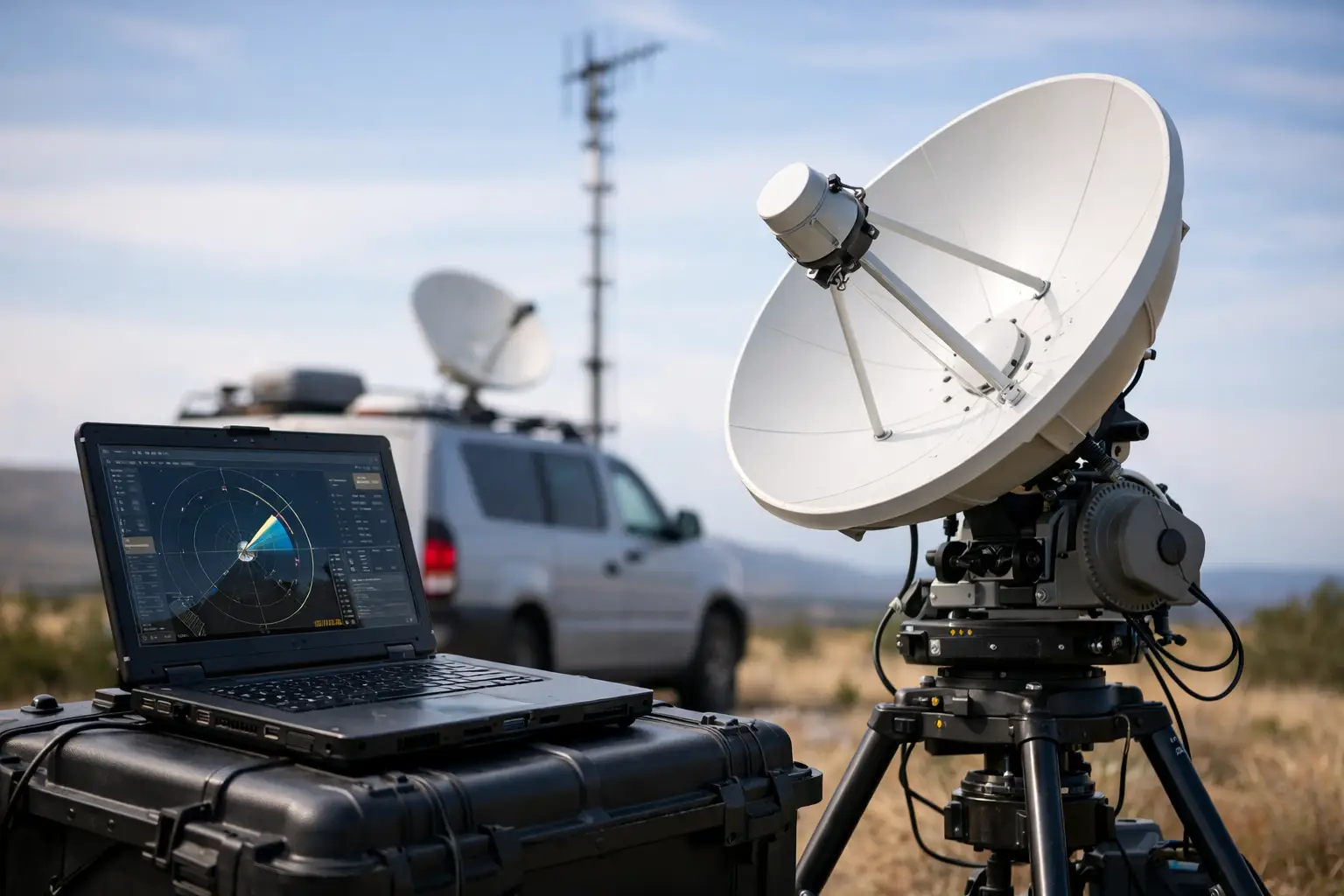
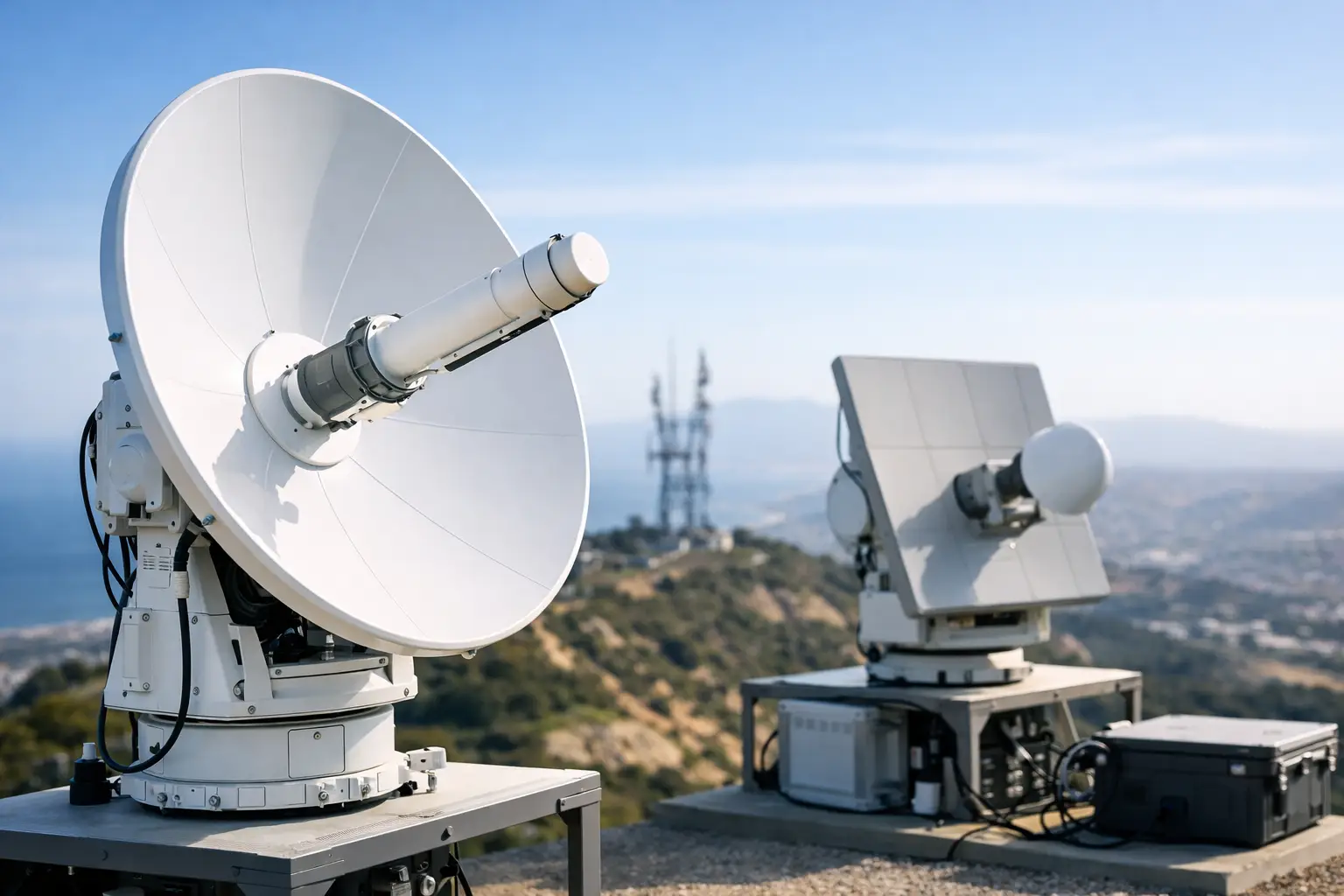
For moving platforms and geographically separated assets, stabilized microwave and auto-aiming antenna systems can maintain long-range connectivity where fixed directional links are not practical. The network design must account for antenna tracking accuracy, link budget, path availability, vessel or vehicle motion, and the transitions between available transport paths.
Design for Mobility, Not Just Signal Presence
Private coverage often serves users and assets in motion. That changes the engineering priorities. A device needs usable signal before it reaches the cell edge, and it needs a clean, timely handoff as it moves into the next sector or site.
Cell overlap is necessary, but excessive overlap can introduce interference and make handoff behavior less predictable. Antenna patterns, transmit power, sector orientation, and neighbor relationships should be designed around actual travel corridors. Consider roadways, rail lines, shipping lanes, flight paths, and equipment routes, rather than relying on a simple geographic grid.
Device selection also matters. A rugged handheld, onboard router, industrial gateway, and vehicle modem can have materially different RF performance and supported band combinations. Validate the equipment that will be deployed, including external antennas, mounting locations, and power behavior. A well-designed network cannot compensate for a poorly installed vehicle antenna or an endpoint that does not support the selected spectrum configuration.
Build Resilience Into the Physical System
Mission-critical coverage requires more than redundant core software. The physical layer needs a credible continuity plan. Evaluate power at every radio, transport node, edge compute location, and antenna site. Battery backup may cover short interruptions; generators, fuel planning, and remote power monitoring may be needed for extended outages.
Resilience also includes physical access and maintainability. A radio installed at an ideal height may be costly or unsafe to service. A microwave path may have an alternate route, but the alternate route may share the same power source or conduit. True redundancy avoids common points of failure wherever practical.
For harsh environments, specify equipment and enclosures for temperature range, vibration, salt exposure, wind loading, dust, moisture, and electromagnetic conditions. These details affect long-term availability more than a theoretical peak throughput figure.
Segment Traffic and Secure the Operating Environment
A private network gives the organization more control, but security still requires deliberate design. Separate operational technology, corporate IT, guest access, video, and contractor traffic according to risk and business need. Apply identity-based access controls, device authentication, encryption, logging, and monitoring from the beginning rather than treating security as a later integration task.
Edge processing can reduce backhaul demand and improve response time for applications such as video analytics, local control, and sensor processing. It also introduces systems that must be patched, monitored, and protected. The right architecture balances local autonomy with centralized visibility and governance.
Commission Against Measurable Acceptance Criteria
Coverage should be accepted against operational measurements, not general assurances. Establish test routes, indoor and outdoor test locations, required application results, minimum throughput, latency thresholds, packet-loss limits, and availability objectives before deployment. Include busy-hour testing and failure scenarios, such as loss of a primary backhaul path or a power interruption at a remote node.
Document the final RF configuration, antenna orientation, cable paths, spectrum settings, IP addressing, device profiles, and baseline performance. That record becomes essential when the site expands, an asset moves, or field conditions change. BATS Wireless approaches these deployments as integrated communications systems because ongoing performance depends on the relationship between radios, transport, antennas, and the operating environment.
Private coverage is never truly finished at commissioning. Treat the initial design as a measured baseline, then use operational data to refine weak zones, capacity hot spots, handoff behavior, and resilience priorities before they become a disruption in the field.
August 31, 2026

August 31, 2026
August 31, 2026

August 31, 2026
