
Private LTE Security for Mission-Critical Networks
Private LTE security requires more than encryption. Learn how identity, segmentation, backhaul, and field operations protect mission-critical networks.


A private LTE network can keep crews connected across a port, drilling site, construction zone, vessel, or remote command area when commercial coverage is unavailable or unreliable. But the same network may also carry operational technology data, voice traffic, video, telemetry, and access to enterprise systems. Private LTE security must therefore protect more than the radio link. It must protect the identities, transport paths, management interfaces, devices, and operating procedures that keep the network available.
For mission-critical operators, security is inseparable from continuity. A network that encrypts traffic but permits unauthorized devices, exposes its management plane, or relies on an unprotected backhaul can still create a serious operational weakness. The right architecture depends on the site, threat profile, available transport, and the consequences of downtime.
Private LTE Security Starts With Network Boundaries
A private LTE deployment has a clearer ownership model than public cellular service, but that does not make it automatically isolated. The radio access network, evolved packet core, subscriber database, edge applications, and backhaul may be distributed across multiple locations. A maritime network may connect onboard radios to an onshore core over stabilized microwave or satellite transport. An industrial site may use local edge computing while maintaining a management connection to a central network operations center.
Each connection point creates a security boundary that must be defined and controlled. The first design question is not simply whether the network is private. It is which users, devices, applications, administrators, and external systems are permitted to communicate across each boundary.
Separate operational traffic from enterprise IT traffic wherever practical. A video surveillance platform, a programmable logic controller, a crew tablet, and a contractor laptop should not receive the same network access merely because each has a valid cellular connection. Segmentation limits lateral movement if an endpoint is lost, misconfigured, or compromised. It also prevents high-volume applications from creating avoidable exposure to sensitive control systems.
This is especially relevant in industrial and public safety environments, where legacy devices may have limited security controls. Private LTE can provide dependable access for those assets, but the network should not be expected to compensate for every weakness in the endpoint itself.
Identity Is the First Control Point
Subscriber identity is one of LTE’s strongest security advantages when it is properly managed. SIM or eSIM-based authentication gives operators a practical way to identify authorized devices before they gain network access. That capability is more controlled than a shared Wi-Fi password, yet its value depends on disciplined lifecycle management.
Every SIM should be assigned to a known asset, user role, and intended service profile. A tracking unit in a vehicle, a camera on a perimeter fence, and a field engineer’s handset may all need LTE connectivity, but they do not need identical permissions. Access policies should reflect the device function, location, ownership, and risk level.
The operational process matters as much as the technology. Teams need a reliable method to activate, suspend, replace, and retire SIMs. A device that is sold, reassigned, lost at sea, or removed from a worksite should not remain an active subscriber indefinitely. Periodic reconciliation between the subscriber inventory and the physical asset inventory catches the overlooked devices that often become security gaps.
Identity should extend beyond the SIM. Use unique administrative accounts for network management, enforce multifactor authentication for privileged access, and eliminate shared credentials. A private cellular core is not a set-and-forget appliance. Its management plane deserves the same access controls, logging, and review applied to other critical infrastructure.
Protect the Radio Link, But Do Not Stop There
LTE includes established authentication and encryption mechanisms for traffic between a device and the cellular network. Those protections are valuable, particularly in locations where traffic would otherwise traverse an open wireless environment. However, air-interface encryption is only one layer of the design.
A compromised endpoint can transmit legitimate encrypted traffic. An improperly secured application server can expose data after it reaches the core. A weak administrator password can provide an attacker a path around the radio security altogether. Security planning must follow data from the field device through the radio network, the core, the transport network, and the application environment.
Radio planning also has an availability dimension. Jamming, interference, antenna obstruction, and poorly engineered coverage are not always cybersecurity events, but their effect can be operationally identical to an attack: field personnel lose communications and systems lose visibility. Monitor signal conditions, device registration behavior, and unusual changes in traffic patterns so network teams can distinguish normal RF challenges from suspicious activity.
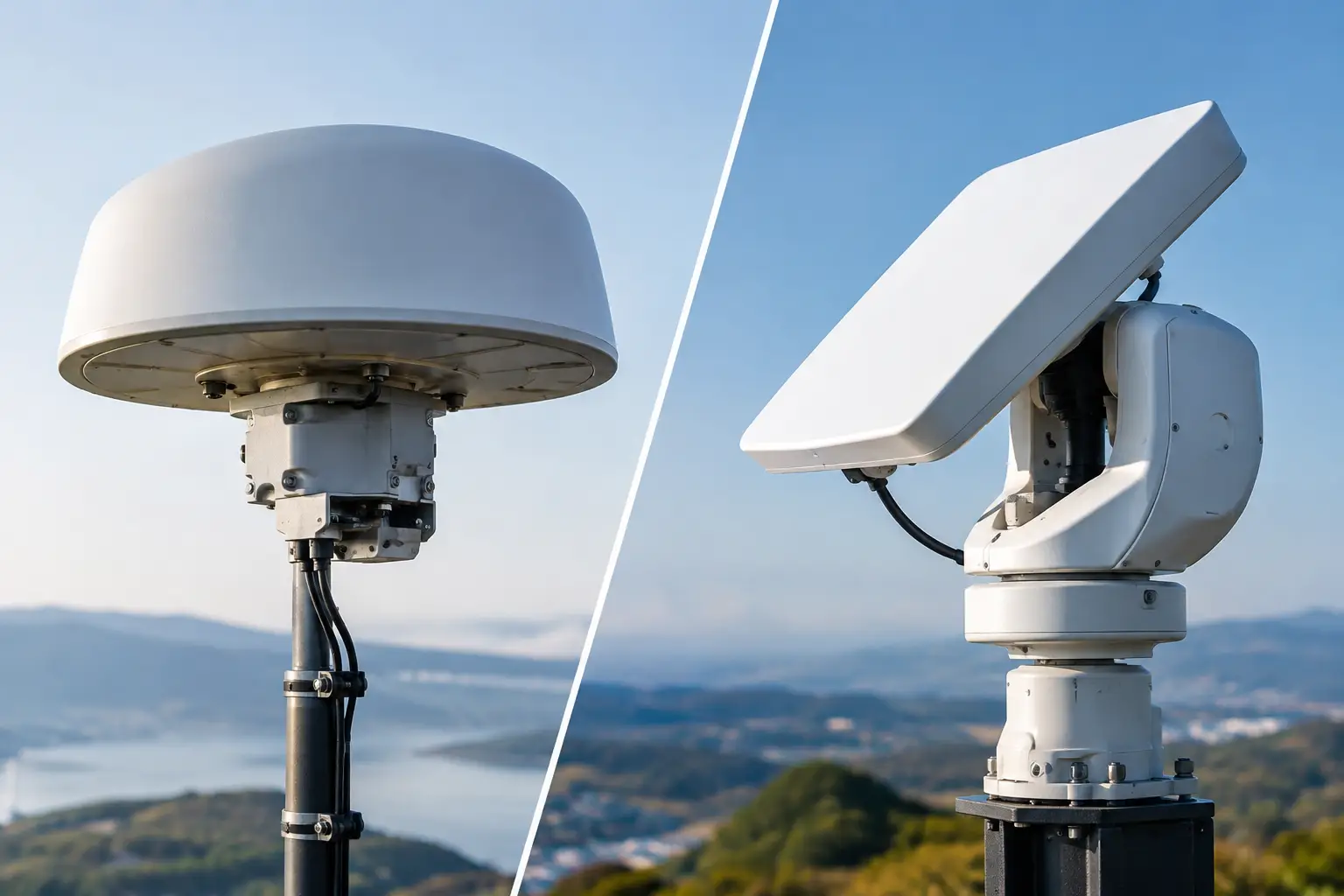
For mobile platforms, antenna placement and link stability are part of the security posture. A degraded backhaul link can force operational workarounds, including unsecured consumer connectivity or ad hoc local networks. Engineered antenna tracking and stabilized microwave systems reduce the likelihood that an essential connection will be replaced with an uncontrolled one during an incident.
Secure the Backhaul and Core Architecture
The backhaul is often the most overlooked element of private LTE security. A well-configured LTE radio network can still be exposed if traffic passes across an untrusted microwave, satellite, fiber, or shared IP transport path without appropriate protections.
Use encrypted and authenticated transport where required by the architecture and risk model. IPsec tunnels, MACsec on suitable Ethernet links, private routing domains, and firewall policies can each serve a purpose, but the correct combination depends on where the core is located and who operates the underlying transport. The objective is to prevent interception, unauthorized routing, and management-plane exposure between sites.
Where latency and availability requirements justify it, placing core functions and critical applications closer to the operational edge can reduce dependency on distant data centers. This approach is useful for remote mines, offshore platforms, emergency response deployments, and temporary construction environments. It is not automatically the most secure option, however. Edge sites require physical protection, secure remote administration, power resilience, patch management, and a defined recovery process.
A centralized core may simplify governance and monitoring, while a distributed design may improve local survivability. The decision should be based on the operational cost of losing connectivity, the sensitivity of local data, and the ability of personnel to support equipment in the field.
Make Segmentation Enforceable
Segmentation is frequently described as a policy exercise. In a private LTE environment, it must be enforceable in the core, the routing layer, the firewall, and the application environment. Device groups should receive only the access required for their assigned role.
For example, field cameras may be permitted to reach a video management platform but not business applications. Maintenance tablets may reach approved diagnostic services through a controlled gateway. OT sensors may send telemetry to an edge broker while remaining unable to initiate connections to unrelated devices. These controls limit the impact of a compromised device and make abnormal behavior easier to identify.
Network slicing is more commonly associated with 5G, but LTE deployments can still achieve meaningful service separation through access point names, dedicated routing, quality-of-service policy, virtual LANs, firewalls, and separate subscriber groups. The terminology matters less than the outcome: sensitive workloads should not share unrestricted paths with general-purpose traffic.
Operate Private LTE Security as a Field Discipline
A secure design can degrade quickly if configuration changes are undocumented, software is not maintained, or site access is uncontrolled. This is where operational discipline separates a lab-ready design from a network that can support real missions.
Establish a change process for radio parameters, core configuration, subscriber profiles, firewall rules, and management access. Keep current backups of critical configurations and test restoration procedures before an outage forces the issue. Review software and firmware status across radios, routers, cores, switches, and connected edge systems. Patching must be planned carefully in environments that cannot tolerate interruption, but deferring updates indefinitely creates a different kind of risk.
Physical controls deserve equal attention. Remote radio sites, equipment shelters, vessel communications rooms, and temporary field enclosures may be accessible to contractors or exposed to weather and vibration. Lockable enclosures, protected cable paths, tamper awareness, controlled console access, and spare equipment procedures all contribute to availability and security.
BATS Wireless approaches these deployments as integrated communications systems, where radio design, stabilized transport, antenna behavior, and network operations must work together under field conditions. That engineering perspective is essential when the network extends beyond a fixed facility.
Design for Detection and Recovery
No security architecture should assume prevention will be perfect. Centralized logs from the cellular core, firewalls, identity systems, routers, and critical applications give operators the evidence needed to investigate abnormal events. Useful indicators include unexpected SIM registration locations, repeated authentication failures, unusual data consumption, new management sessions, configuration changes, and traffic attempting to cross segmented zones.
Detection must be paired with a response plan that field teams can execute. Define who can disable a subscriber, isolate a network segment, revoke administrator access, switch to a backup transport path, and communicate with operational leadership. Test those actions during planned exercises, not only during a live outage.
The most effective private LTE security program is one that fits the mission. Start with a clear view of the assets that matter most, engineer controls around their actual traffic paths, and make recovery procedures practical for the people who will use them under pressure.

November 25, 2026

November 25, 2026
November 25, 2026

November 25, 2026
