
How Does Radio Interoperability Work in the Field?
How does radio interoperability work? Learn how gateways, standards, encryption, and network design connect mission-critical teams in the field reliably.

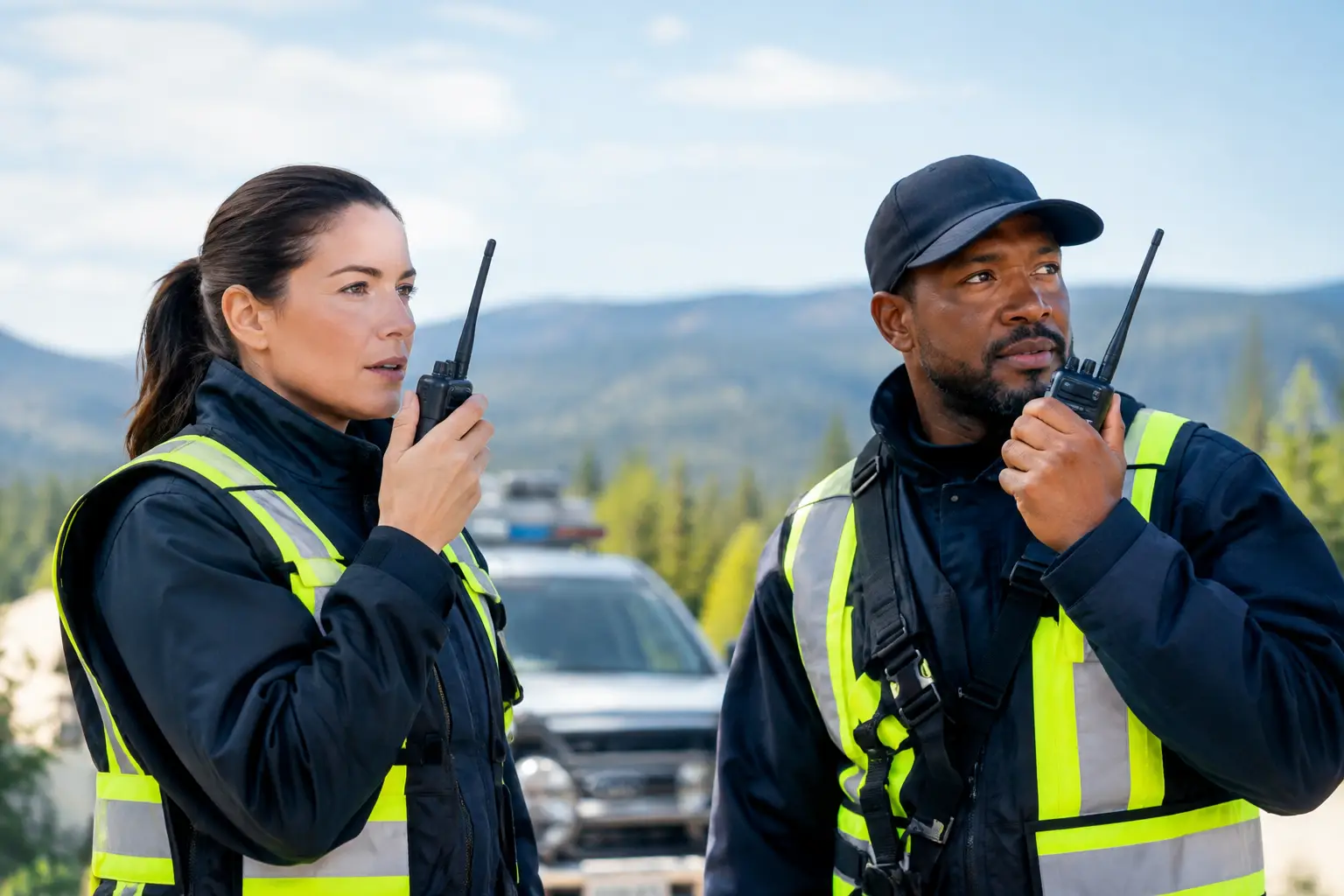
A command post may have a P25 public safety radio, a military tactical radio, a VHF marine set, an analog UHF network, and an LTE push-to-talk application operating within a few yards of one another. That does not mean they can communicate. How does radio interoperability work when those systems use different frequencies, waveforms, encryption, and operating procedures? It works by creating controlled connection points between otherwise incompatible communications systems, then managing those connections as part of the operational network.
For public safety, defense, maritime, energy, and industrial teams, interoperability is not simply a feature on a radio specification sheet. It is an architecture decision. The right approach preserves the reliability, security, and coverage characteristics of each network while giving authorized users a practical way to coordinate across agencies, assets, and locations.
What Radio Interoperability Actually Means
Radio interoperability is the ability for users on separate communications systems to exchange voice, data, or both with sufficient clarity, speed, and security for the mission. The systems may differ by frequency band, radio manufacturer, modulation method, network protocol, encryption scheme, or dispatch environment.
A common misconception is that interoperability requires every organization to replace its radios with a single platform. That can work in a narrow deployment, but it is rarely realistic for regional response, multi-agency operations, or large industrial sites with established infrastructure. Interoperability more often connects existing systems through gateways, dispatch consoles, shared channels, or standards-based interfaces.
The appropriate method depends on the operational requirement. A temporary wildfire response may need a portable gateway that connects mutual-aid agencies for several days. A port authority may need permanent connectivity between marine VHF, land mobile radio, private LTE, and a command center. A defense or offshore operation may need communications that move with the platform and remain available through long-range microwave or satellite backhaul.
How Does Radio Interoperability Work at the System Level?
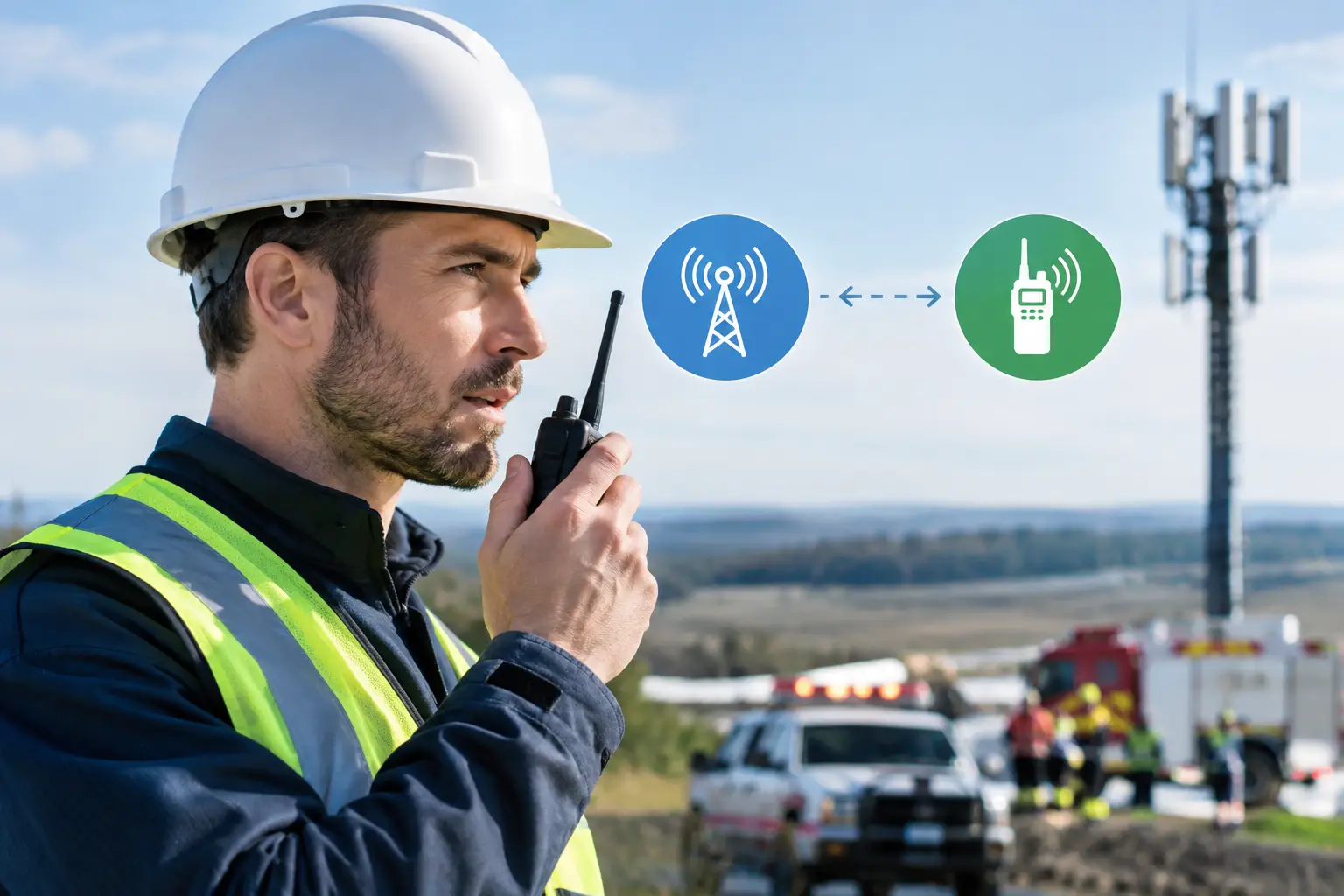
At its most basic, an interoperability system receives audio or data from one radio network, converts or routes it in a usable form, and transmits it to another network. The conversion may be as simple as passing analog audio between two radio interfaces. It can also involve decoding digital voice, applying encryption policy, mapping talk groups, and transporting traffic across IP networks to remote sites.
The core components usually include the radio networks themselves, interface hardware or software, an interoperability controller, and a defined operating plan. The controller determines which channels or talk groups are connected, who has authority to activate them, and how traffic is prioritized.
Gateways Bridge Unlike Radio Systems
A radio gateway is often the most direct solution when systems cannot communicate natively. It connects radio control and audio interfaces from two or more systems. For example, a gateway can create a temporary patch between an analog VHF fire channel, a UHF law enforcement channel, and a P25 talk group.
The gateway receives incoming audio, detects transmission activity, and routes that audio to the selected destination interfaces. In more advanced designs, it can support multiple simultaneous patches, remote control, recording, priority rules, and connection to dispatch or voice-over-IP systems.
This approach has a practical advantage: each organization can keep using its assigned radios, channel plans, and coverage assets. The trade-off is that a gateway patch does not eliminate the limitations of the original networks. If one radio system has poor coverage at the incident site, routing its audio elsewhere will not fix the RF problem.
Standards Reduce Friction, but Do Not Remove It
Standards-based systems make interoperability easier when agencies or organizations have aligned procurement and programming decisions. P25, for example, was designed to support interoperable public safety communications across compliant equipment. Project 25 systems can support shared talk groups, roaming, and common operational features when the network design, encryption, and governance are aligned.
Other environments may use DMR, TETRA, NXDN, analog FM, or proprietary tactical waveforms. Even when two systems use the same standard, they may still be unable to interoperate directly because of different system IDs, talk-group plans, subscriber programming, encryption keys, or network policies.
That is why standards should be treated as an enabling layer, not a guarantee. Effective interoperability requires engineering alignment and operational agreement in addition to compatible technology.
Frequency, Waveform, and Coverage Are Different Problems
Interoperability is often discussed as though it is only a frequency issue. Frequency matters, but it is one of several barriers.
Two radios on different bands, such as VHF and 700/800 MHz, cannot communicate directly without equipment that bridges or translates between them. Two radios on the same band can also fail to interoperate if one is analog and the other is digital, if their channel bandwidths differ, or if their signaling formats are incompatible.
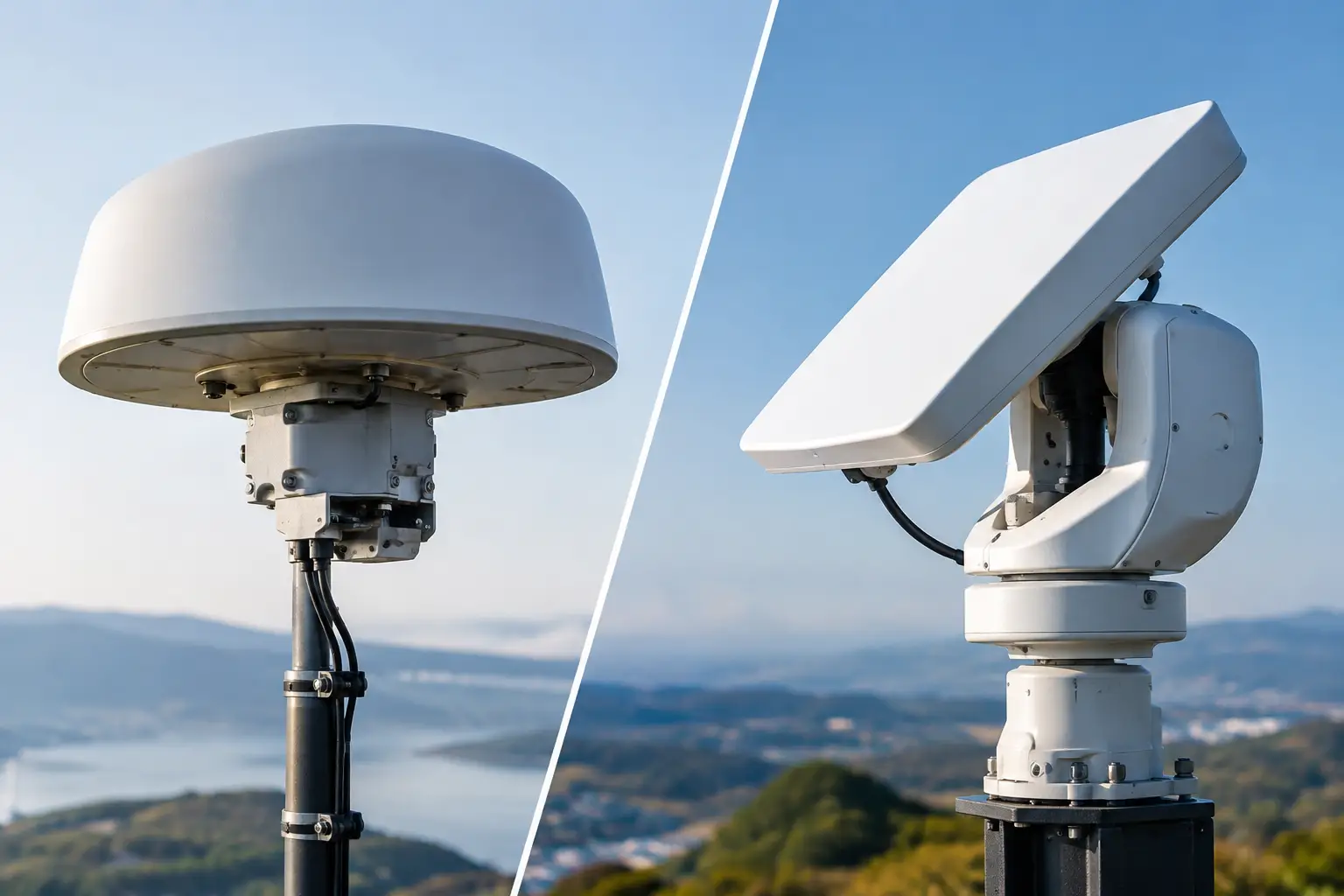
Coverage adds another layer. A fixed gateway at a command center may connect networks logically, yet users in a canyon, offshore vessel, wind farm, or industrial facility still need an RF path back to their local radio system. In remote and mobile environments, the communications design may require portable repeaters, distributed antenna systems, private LTE or 5G coverage, point-to-point microwave, and auto-aiming antenna systems that maintain backhaul while the platform moves.
The design objective is not merely to make systems talk. It is to make communications available where crews actually operate.
Encryption and Security Must Be Designed In
Encryption is essential for many mission-critical networks, but it is also one of the most common interoperability constraints. Encrypted communications require compatible algorithms, approved key material, correct key loading, and shared policies governing who can access traffic.
A gateway cannot simply convert protected traffic into an open channel without creating a security exposure. In some cases, the correct answer is a controlled cross-band patch that preserves encryption end to end. In others, policy may require that sensitive traffic remain within its originating network while only selected incident coordination traffic is shared.
Security planning should also address user authentication, remote gateway access, network segmentation, logging, and cyber protection for IP-connected components. A field-deployed radio interoperability system is part of the communications security boundary, not an isolated audio accessory.
Dispatch Consoles and Push-to-Talk Platforms Extend the Model
Modern interoperability increasingly includes more than conventional land mobile radio. Dispatch centers may need to communicate with LTE push-to-talk users, mobile command vehicles, field tablets, maritime crews, aircraft, and fixed operations centers.
A dispatch console can provide a single control point for multiple radio channels and IP-based talk groups. Operators can monitor traffic, create incident-specific patches, manage priority communications, and document activity. When designed correctly, the console does not replace field radio discipline. It gives dispatch personnel a controlled way to coordinate systems that would otherwise remain separated.
Private 4G and 5G networks can also carry push-to-talk, video, sensor telemetry, and operational data alongside radio interoperability functions. This is particularly useful at ports, refineries, construction projects, mines, and remote industrial sites where an organization controls the wireless infrastructure. However, broadband push-to-talk should be evaluated against coverage, device hardening, latency, priority access, and failure-mode requirements before it is positioned as a replacement for land mobile radio.
Operational Governance Determines Whether It Works Under Pressure
The technology can be installed correctly and still fail during an incident if users do not know what to do with it. Interoperability requires documented procedures: which channels are patched, who authorizes the patch, what traffic belongs on the shared channel, and how users identify themselves.
Shared channels can become congested quickly. A broad patch that connects every participating agency may create more confusion than value, especially when users have different terminology and urgency procedures. Incident-specific talk groups, disciplined dispatch control, and clear communications unit leadership usually produce better results than connecting every available network.
Testing is equally important. Agencies and operators should test radio interfaces, encryption behavior, console controls, backhaul paths, and power resilience before an emergency or major outage. Field exercises expose issues that bench testing will miss, including audio levels, interference, coverage gaps, user training deficiencies, and delay across extended IP links.
Engineering for Mobile and Remote Operations
For fixed facilities, interoperability can be integrated into a permanent radio room, dispatch center, or network operations environment. Mobile and remote deployments require more attention to transport, power, environmental protection, antenna placement, and backhaul continuity.
A command vehicle, vessel, or rapidly deployed site may need a compact interoperability gateway combined with integrated radios, a local Wi-Fi or private cellular network, and a stabilized microwave link. If the platform is moving, antenna tracking and path calculation become part of communications availability. The radio patch may be functioning perfectly, but it depends on the network path that carries remote users, dispatch functions, and command traffic.
BATS Wireless approaches these environments as complete communications systems, combining integrated radio capability with auto-aiming and stabilized wireless infrastructure where fixed connectivity is not practical. The key is to engineer the RF, transport, and operational layers together rather than treating them as separate purchases.
Start With the Mission, Not the Radio Inventory
The most productive interoperability design process starts with a few operational questions: Who must communicate with whom? Where will they be located? What information must be shared? What must remain protected? And what happens when the primary network path fails?
Those answers determine whether the right solution is a common talk group, a permanent gateway, a deployable cross-band system, an IP-based dispatch integration, or a hybrid architecture. They also reveal where additional coverage, backhaul, and redundancy are needed.
A radio interoperability plan earns its value when separate teams can coordinate clearly without abandoning the systems they depend on. Build that plan around real field conditions, test it under load, and make the communications path as deliberate as the operation it supports.
November 20, 2026

November 20, 2026

November 20, 2026
November 20, 2026
