
Rugged Wireless Communication Systems That Hold the Link
Rugged wireless communication systems keep crews, vehicles, vessels, and remote field sites connected with engineered backhaul, tracking, and private LTE/5G.

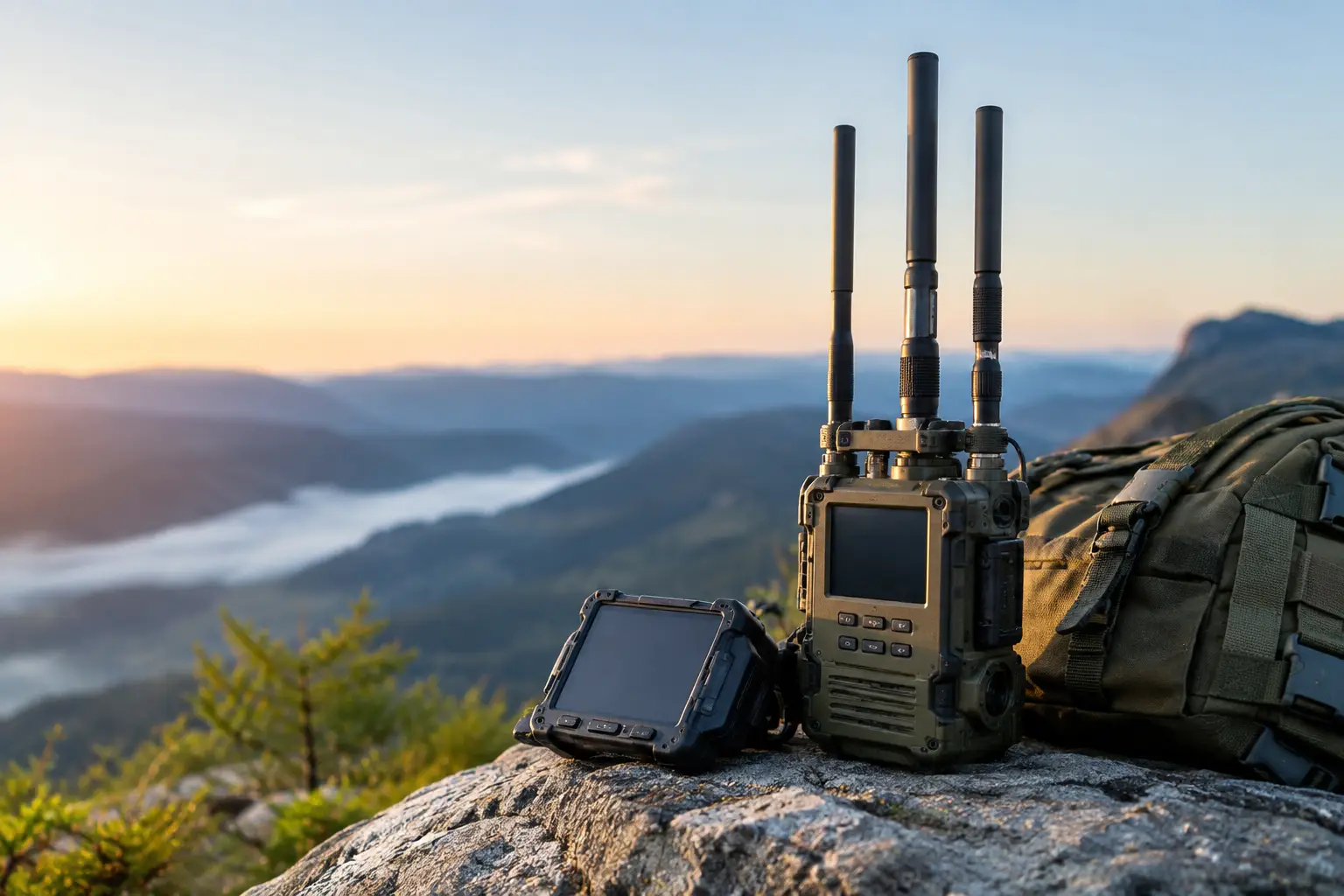
A communications link rarely fails at a desk. It fails when a vessel rolls in heavy seas, a vehicle moves behind terrain, a drilling operation shifts beyond fiber reach, or a public safety team enters an area with damaged infrastructure. Rugged wireless communication systems are built for those moments: when the network must continue to carry operational traffic despite motion, weather, distance, interference, and limited access to support.
For organizations operating outside conventional coverage, the question is not whether wireless equipment can establish a connection during a site visit. The question is whether the complete system can maintain useful throughput, predictable latency, and secure connectivity as conditions change. That distinction drives the engineering decisions behind mission-critical wireless architecture.
What Makes a Wireless System Truly Rugged?
A rugged enclosure is necessary in many field deployments, but it is not the definition of a rugged communications system. Environmental protection matters – including resistance to moisture, salt spray, dust, vibration, temperature extremes, and shock – yet the network must also be designed to perform under operational stress.
That means selecting radios, antennas, mounting hardware, power systems, and network components as an integrated system. A high-gain antenna is of limited value if it cannot stay aligned. A capable radio cannot compensate for a path that is blocked by terrain, vessel structure, or changing elevation. Private LTE or 5G coverage will not deliver its intended value if the backhaul path becomes the bottleneck.
In practice, rugged wireless communication systems combine physical durability with RF discipline, transport resilience, power planning, and network management. They are engineered around the actual movement of the asset, the characteristics of the radio path, the applications being carried, and the consequences of a lost connection.
Start With the Operating Environment, Not the Hardware
A fixed industrial site, a moving command vehicle, and an offshore workboat may all need broadband, but they do not require the same design. The environment determines the architecture.
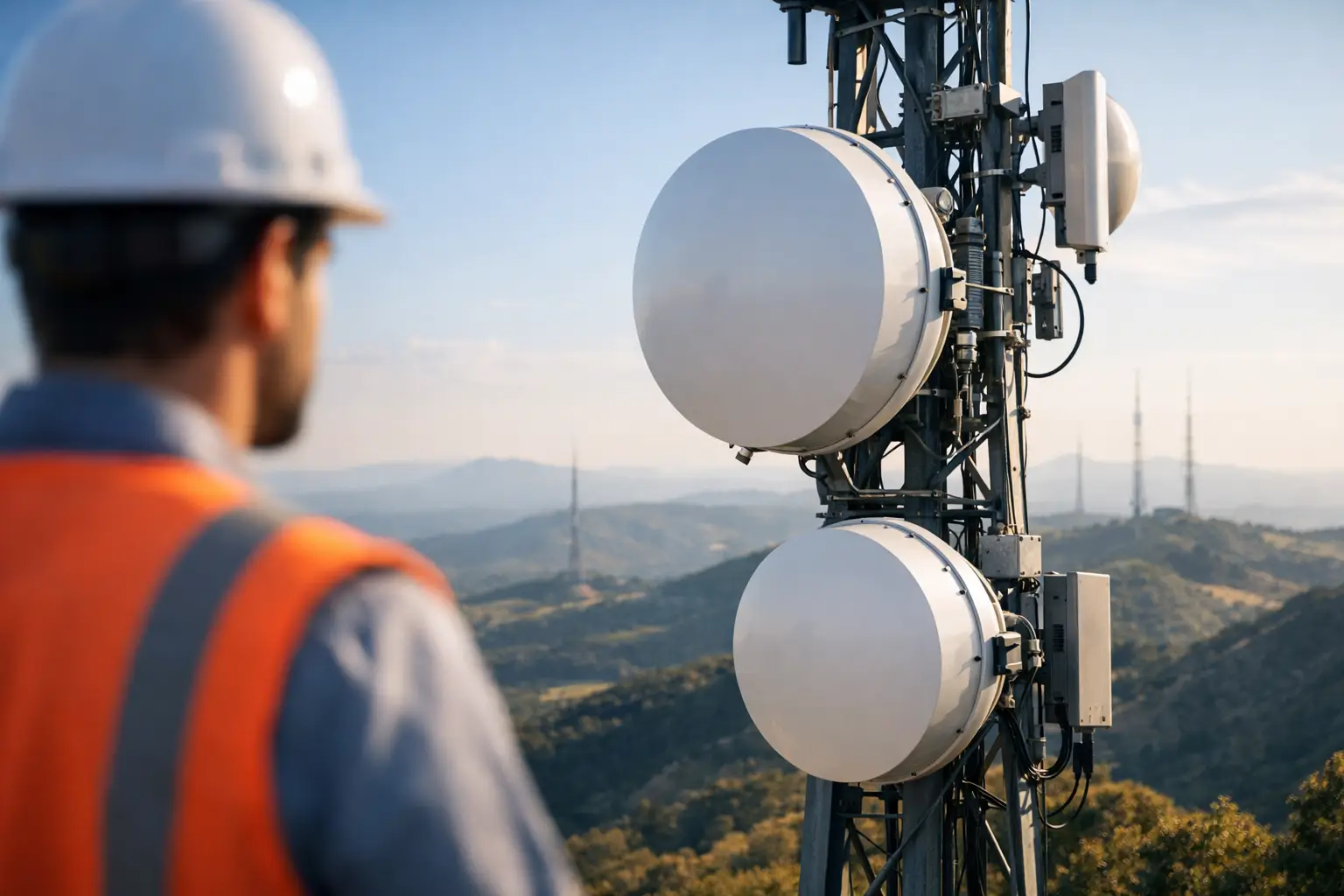
For a remote construction project or mine, line of sight and terrain modeling may be the central design constraints. A point-to-point microwave link can provide high capacity over long distances, but only if antenna height, Fresnel zone clearance, and available spectrum support the path. Where the site layout changes regularly, the system must accommodate relocation without turning every move into a major network project.
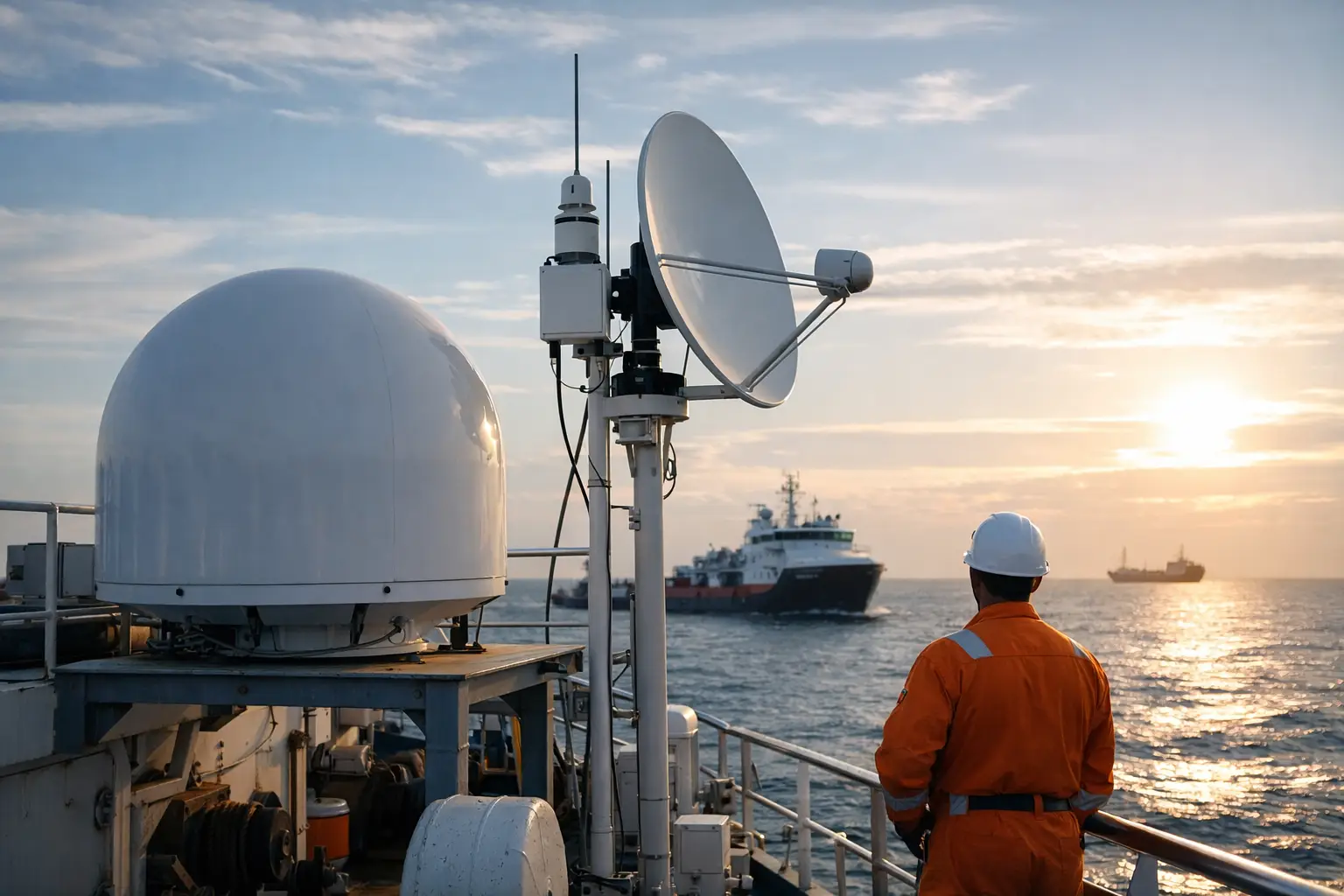
Maritime operations present a different challenge. Vessel pitch, roll, yaw, and heading changes can move a directional antenna off its intended path in seconds. Stabilized microwave systems and auto-aiming antenna tracking are not conveniences in this environment. They are the mechanisms that preserve a high-capacity connection between a moving platform and a shore, buoy, offshore platform, or companion vessel.
For defense and public safety deployments, the operating environment may change faster than the network plan. Teams need communications that can be transported, deployed, recovered, and re-established with disciplined configuration control. Interoperability with existing radios, IP networks, and command systems matters as much as peak data rate.
Mobility Changes the RF Problem
Fixed links can be surveyed, aligned, and monitored against a mostly stable path. Mobile links require continuous adjustment. The system must account for where the platform is now, where it will be moments later, and how that movement affects antenna pointing and signal quality.
Auto-aiming systems use position, heading, and orientation data to calculate the required antenna path. Stabilization compensates for platform movement while tracking maintains alignment with the remote endpoint. The result is not simply a stronger signal. It is a more consistent transport layer for voice, video, operational telemetry, crew welfare traffic, and private cellular services.
The required level of tracking depends on link distance, antenna beamwidth, platform dynamics, and application tolerance. A short-range link with a wider beam may accept more movement than a long-range microwave connection using a narrow beam. Engineering should reflect that trade-off rather than applying one antenna approach to every deployment.
The Network Is Only as Reliable as Its Backhaul
Private 4G and 5G networks have become practical tools for extending controlled coverage across industrial, maritime, energy, and temporary field operations. They can support a broad mix of handheld devices, sensors, cameras, laptops, vehicles, and operational equipment under one managed wireless layer.
But the cellular layer is only part of the design. Every private LTE or 5G deployment needs a dependable path from the local radio access network to the core, cloud services, command center, or wider enterprise network. In remote environments, that path may be a stabilized microwave link, a point-to-point terrestrial system, satellite service, fiber where available, or a combination of technologies.
Capacity planning must account for more than average traffic. Video surveillance, inspection footage, dispatch applications, mapping, telemetry, software updates, and crew internet use can compete for the same transport connection. Quality of service policies help prioritize critical applications, but they cannot create capacity that was never designed into the link.
A practical architecture identifies what traffic is mission-critical, what can tolerate delay, and what should be rate-limited during constrained periods. It also considers failover. A secondary path may not match the capacity of the primary microwave link, but it can preserve command traffic, voice, and essential telemetry when the primary route is unavailable.
Compatibility Is an Engineering Requirement
Many field networks are not greenfield projects. They must connect to existing routers, firewalls, radio platforms, edge compute systems, security tools, and enterprise addressing schemes. Procurement teams often focus on individual specifications, but compatibility is where deployments either accelerate or stall.
An effective solution should support the required radio bands, Ethernet and IP interfaces, routing approach, timing needs, power availability, and security policy. It should also fit the physical realities of the installation: mast loading, cable runs, connector protection, grounding, equipment access, and maintenance procedures.
This is especially relevant when integrating multiple radio types. A deployment may use microwave for long-range backhaul, Wi-Fi for localized high-throughput access, private LTE or 5G for mobility, and integrated radios for specialized field communications. The goal is not to force all traffic onto one technology. It is to assign each technology a role where it performs best.
Design for Maintenance Before the System Leaves the Yard
Remote systems cost more to service because every fault can involve travel, vessel time, site access approvals, safety requirements, and operational downtime. That makes installation quality and remote visibility central to lifecycle cost.
Equipment should be configured, labeled, and tested before deployment whenever possible. Teams need documented settings, known-good software versions, spare components, and a clear method for isolating faults. Remote monitoring should expose link status, signal trends, power conditions, device health, and traffic behavior early enough to prevent a minor degradation from becoming an outage.
Physical installation deserves the same attention. Connectors, cable strain relief, weatherproofing, grounding, vibration management, and antenna mounting determine whether a system retains its designed performance after months in service. On moving platforms, mechanical alignment and cable routing must accommodate motion without creating recurring failure points.
BATS Wireless approaches these deployments as complete communications systems rather than commodity hardware purchases. That includes antenna tracking, stabilized microwave, integrated radios, onboard networking, private cellular connectivity, and the technical services required to make those elements operate as one architecture.
Where Rugged Wireless Systems Create Operational Value
The strongest business case is usually tied to continuity of operations. On a wind farm, reliable connectivity can support turbine monitoring, technician access, safety systems, and video backhaul without waiting for conventional infrastructure expansion. In aquaculture, it can connect remote cages, vessels, cameras, sensors, and shore-based operations across water where cable installation is expensive or impractical.
Oil and gas operations may need to extend communications to mobile crews, temporary facilities, and distributed assets while maintaining network segmentation and control. Public safety agencies may need rapidly deployable broadband and backhaul after storms, wildfires, or other events damage terrestrial networks. Maritime operators may require dependable onboard access for crew, vessel systems, cargo operations, and shore coordination.
Each use case has different priorities. Some require maximum throughput. Others prioritize availability, low latency, mobility, security, or fast deployment. The right system is the one that makes those priorities explicit and is tested against the conditions that crews will actually face.
Choose a System That Can Be Operated, Not Just Installed
A field communications project should end with a network that the operating team can understand, monitor, and support. The best design balances performance with practical realities: available power, trained personnel, replacement lead times, mounting constraints, spectrum rules, and future expansion.
Before selecting equipment, define the coverage area, endpoints, mobility profile, traffic classes, required uptime, primary and backup paths, and acceptance criteria. Then validate the RF path and platform dynamics before committing to a final architecture. A successful deployment is measured by stable service during routine operations and difficult conditions alike.
When connectivity supports safety, revenue, coordination, or remote control, the communications system should be treated as operational infrastructure. Engineer it for the environment, maintain it with clear visibility, and give the people in the field a link they can rely on when conditions stop being ideal.
September 14, 2026
September 14, 2026
September 14, 2026

September 14, 2026
