
Best Industrial Directional Antennas for Field Networks
Choose the best industrial directional antennas for reliable long-range backhaul, private LTE/5G, and mobile operations in difficult field conditions daily.

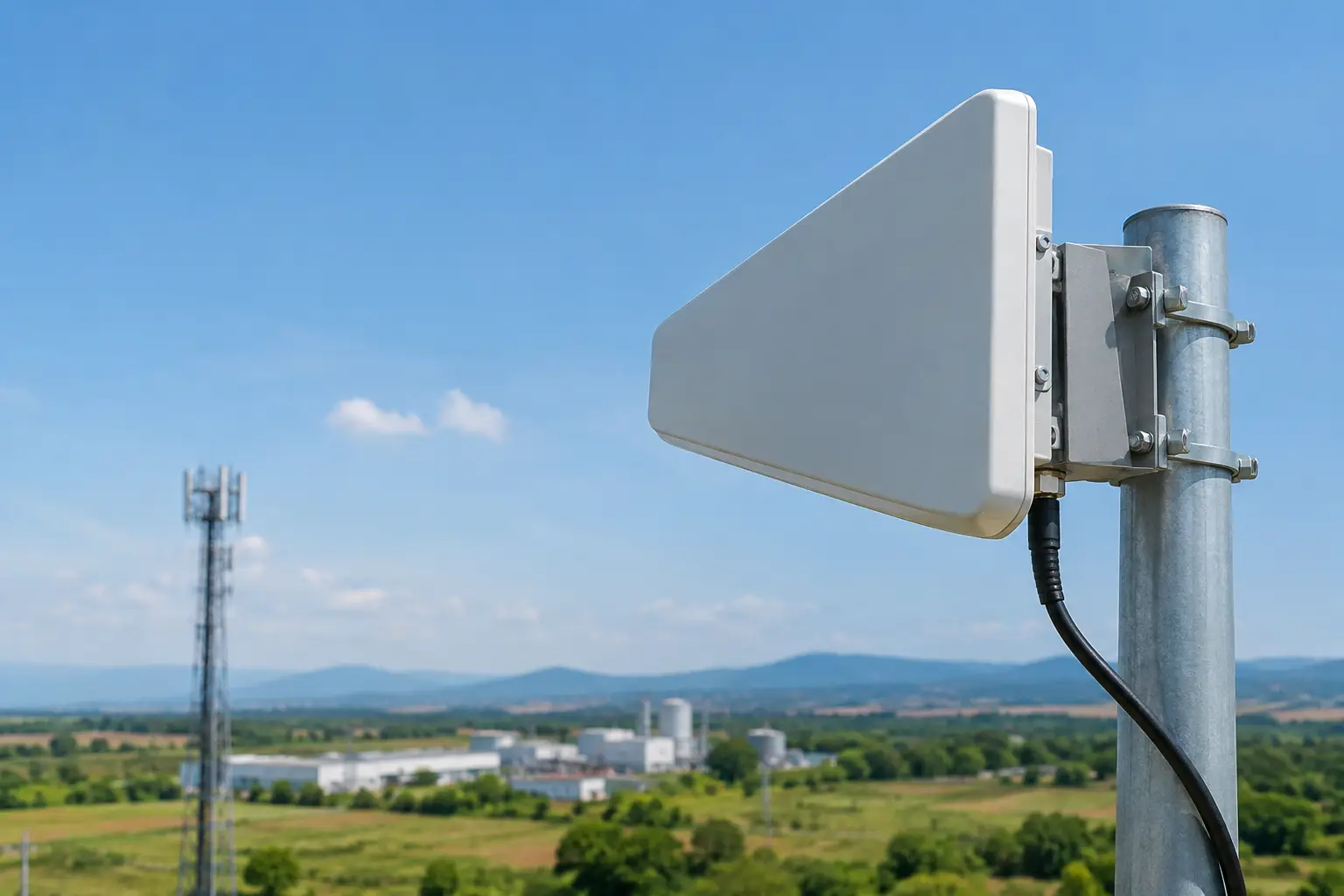
A directional antenna that performs well on a tower roof can fail quickly when installed on a moving vessel, a wind farm service vehicle, or a remote production site. Selecting the best industrial directional antennas is not a matter of choosing the highest gain figure on a data sheet. It is an engineering decision that must account for path geometry, radio compatibility, motion, mounting, environmental exposure, and the operational cost of a lost connection.
For industrial networks, antenna performance is measured at the application layer as much as at the RF layer. The right system keeps crews connected, carries camera traffic without instability, supports private LTE or 5G coverage, and maintains backhaul when fixed infrastructure is unavailable or impractical.
What Makes an Industrial Directional Antenna the Right Choice?
Directional antennas focus RF energy into a defined beam rather than radiating equally in all directions. That concentration creates the gain needed for longer links, improved signal-to-noise ratio, and greater resistance to interference from unwanted directions. In industrial deployments, this is especially valuable where spectrum is congested, terrain is difficult, or a network must bridge substantial distance without installing new fiber.
But gain alone does not make an antenna suitable for the field. A 30 dBi parabolic antenna can be an excellent fixed backhaul component, yet it may be the wrong choice for a vehicle that experiences constant vibration or for a vessel whose heading changes continuously. A lower-gain panel with a wider beamwidth may deliver better real-world availability if it can tolerate small pointing errors.
The best choice depends on whether the endpoint is fixed, intermittently mobile, or continuously moving. It also depends on whether the antenna supports a point-to-point microwave link, a point-to-multipoint network, Wi-Fi transport, private cellular infrastructure, or an integrated multi-radio architecture.
Best Industrial Directional Antennas by Deployment Requirement
There is no universal “best” antenna category. The correct design starts with the operating requirement and then matches gain, beamwidth, polarization, frequency, and mechanical configuration to it.
High-Gain Parabolic Antennas for Fixed Long-Range Backhaul
Parabolic dishes remain a primary option for high-capacity, long-distance point-to-point links. Their narrow beamwidth and high gain make them effective for microwave backhaul between facilities, elevated sites, offshore platforms, construction locations, and remote industrial assets.
These antennas are most appropriate when both ends of the path are stable and a clear or engineered line of sight is available. They can support demanding capacity requirements, but the narrow beam creates a trade-off: precise alignment is mandatory. Wind loading, mast movement, thermal expansion, and installation tolerances can all reduce link margin if they are not addressed during design.
For fixed paths, specify more than gain. Evaluate dish diameter, radome availability, wind survival rating, mounting hardware, polarization options, and compatibility with the intended microwave radio. A link budget should include expected rain fade, path obstruction risk, and fade margin rather than assuming a clear-day RSSI represents reliable service.
Panel Antennas for Industrial LTE, 5G, and Sector Coverage
Directional panel antennas are often the practical choice for fixed private LTE and 5G coverage zones, targeted Wi-Fi coverage, and point-to-multipoint applications. They offer controlled sector coverage with a more forgiving beamwidth than a dish, making them useful around yards, ports, industrial campuses, mines, substations, and temporary work sites.
For cellular applications, MIMO capability is central. The antenna must support the radio’s required spatial streams, frequency bands, and polarization arrangement. A panel that appears compatible by frequency but does not support the intended MIMO configuration can restrict throughput and reduce the value of the cellular system.
Sector width matters as well. A narrow sector can extend coverage and limit co-channel interference, while a broader sector simplifies coverage across an active work area. The decision should follow the RF plan, not a preference for maximum advertised gain.
Yagi Antennas for Focused Coverage and Moderate Distances
Yagi antennas remain useful where a focused, cost-conscious directional link or targeted coverage extension is needed. Their relatively simple construction and manageable size can suit remote telemetry, utility communications, rural coverage extensions, and lower-band industrial applications.
Their limitations are equally clear. A Yagi typically provides less gain and less bandwidth flexibility than a comparable dish or purpose-built wideband panel. It may be appropriate for a stable, defined path, but it is rarely the first choice for a high-capacity multi-band private 5G deployment or a moving platform.
Stabilized and Auto-Aiming Antenna Systems for Mobility
Conventional directional antennas assume the link endpoints remain aligned. That assumption fails on vessels, ground vehicles, temporary command platforms, and other moving assets. In these environments, the antenna must be part of a complete tracking system.
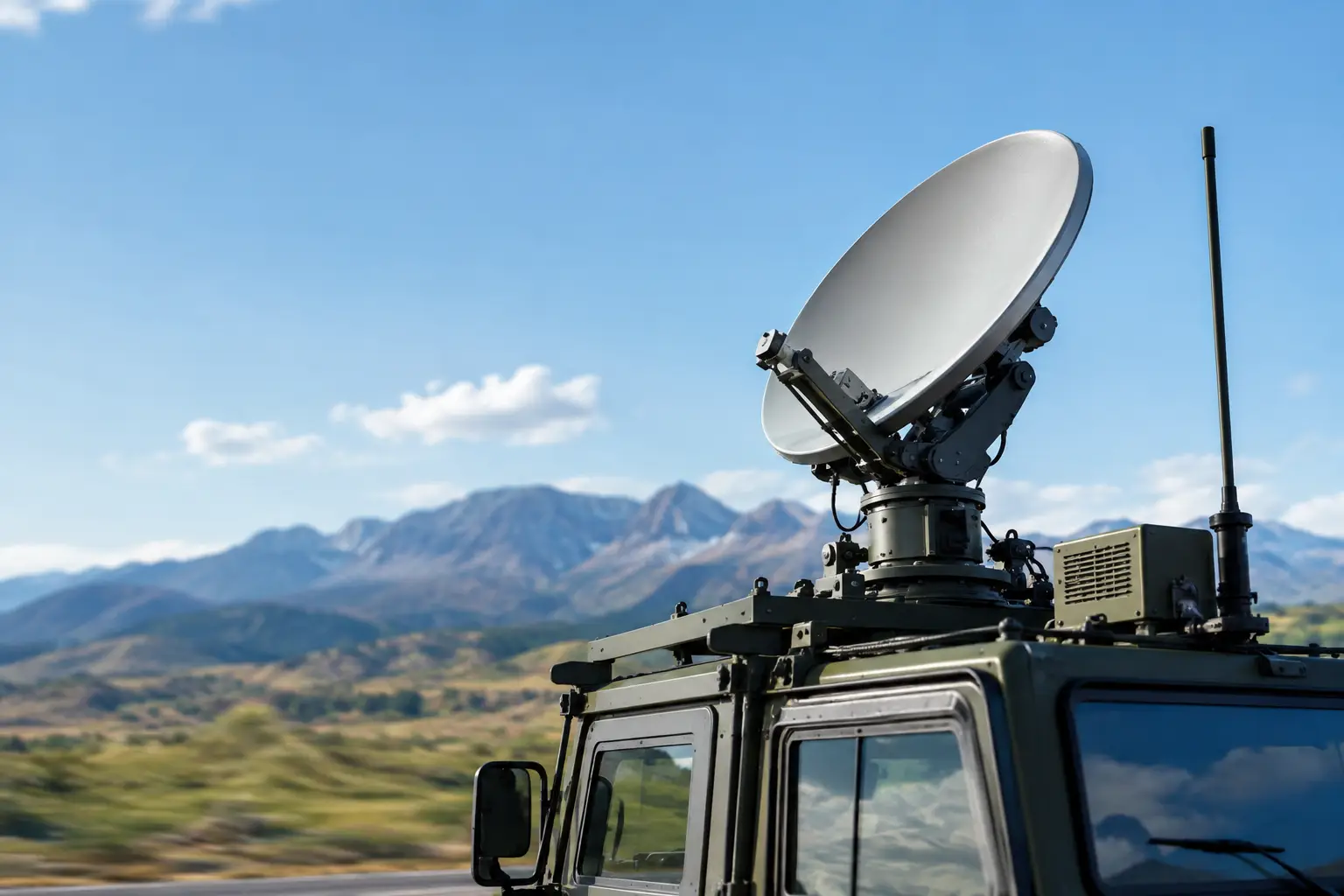
Auto-aiming, stabilized microwave systems combine directional antennas with GPS, heading data, motion sensing, control software, and path calculation. The system continuously maintains alignment as the platform moves, pitches, rolls, or changes bearing. This is the practical route to maintaining long-range broadband between moving assets and shore, aircraft, command centers, or fixed network nodes.
The antenna is only one element of that performance. Tracking speed, stabilization accuracy, radio integration, cable management, enclosure design, and the ability to reacquire a link after obstruction all affect operational continuity. BATS Wireless designs these systems as engineered communications solutions rather than treating the antenna as a standalone component.
Key Technical Criteria Before You Specify Equipment
A capable directional antenna can still underperform when its electrical and mechanical characteristics are mismatched to the network. Procurement and engineering teams should define several criteria before comparing models.
First, confirm the operating frequency range and available spectrum. Antennas are not interchangeable across licensed microwave, CBRS, 4.9 GHz public safety, 5 GHz Wi-Fi, and 6 GHz or other bands. A wideband antenna can simplify future changes, but only if its gain, pattern control, and port configuration meet the immediate requirement.
Second, model gain and beamwidth together. Higher gain generally means a narrower beam. Narrow beams improve reach and interference rejection, but they increase alignment sensitivity. For a fixed link on rigid infrastructure, that trade-off is usually favorable. For mobile or vibration-prone assets, wider beamwidth or active tracking may be the more reliable choice.
Third, verify polarization and MIMO architecture. Cross-polarized antennas can improve capacity and reduce interference in suitable radio systems, while dual-polarized or multi-port designs support modern LTE and 5G radios. The number of RF ports, connector types, isolation between ports, and cable losses must all align with the radio design.
Fourth, assess survivability at the installed location. Industrial equipment needs more than a weather-resistant enclosure. Consider wind speed, salt fog, UV exposure, ice loading, corrosion, vibration, shock, temperature range, ingress protection, and lightning protection. Offshore, coastal, desert, and heavy-equipment environments impose very different failure mechanisms.
Finally, calculate the full path. Fresnel-zone clearance, terrain, structures, vegetation, water reflections, nearby transmitters, and seasonal conditions can change the result. For long links, a path profile and fade analysis are far more valuable than selecting equipment based on nominal range claims.
Antenna Selection for Common Industrial Use Cases
A remote oil and gas pad may need a high-gain fixed microwave link to carry operational data, voice, video, and private cellular backhaul to a central facility. Here, high availability, environmental hardening, and path diversity may matter more than minimizing initial hardware cost.
A port or maritime operator may need broadband across a vessel fleet and dockside facilities. Fixed shore sectors can serve predictable coverage areas, but vessel connectivity requires stabilized, auto-tracking directional systems when uninterrupted high-throughput communications are required beyond local Wi-Fi coverage.
A wind farm presents another distinct challenge. Turbine locations can be spread across large areas, exposed to severe weather, and difficult to reach. Directional backhaul links can reduce the need for costly trenching, but the design must account for turbine movement, elevation, interference management, and maintenance access.
For disaster response or temporary public safety operations, deployment speed becomes a primary requirement. Portable directional antennas and rapidly deployable masts can establish high-capacity backhaul where terrestrial infrastructure is damaged or absent. In this case, the best design balances gain with fast alignment, transportability, and the ability to operate with available power sources.
Avoid the Commodity Antenna Decision
A directional antenna is often purchased as a line item, then expected to solve a network problem by itself. That approach creates avoidable outages. The radio, antenna, mount, cable assembly, power system, path design, and installation process operate as one RF system.
For mission-critical operations, specify acceptance criteria before deployment. Define target throughput, latency tolerance, minimum received signal level, expected availability, link recovery behavior, and environmental operating conditions. Test the installed system under realistic traffic and movement conditions, not only during a calm commissioning window.
The strongest antenna decision is the one that protects the operational outcome: stable backhaul, continuous onboard access, secure private cellular coverage, or dependable communications at the edge. Start with that outcome, validate the path and platform constraints, and select an antenna system engineered to keep working after the installation crew has left.

October 22, 2026

October 22, 2026
October 22, 2026

October 22, 2026
