
Can 5G Support Drones in Critical Operations?
Can 5G support drones in complex operations? Learn where low latency, private networks, tracking, backhaul, and coverage planning determine results today.

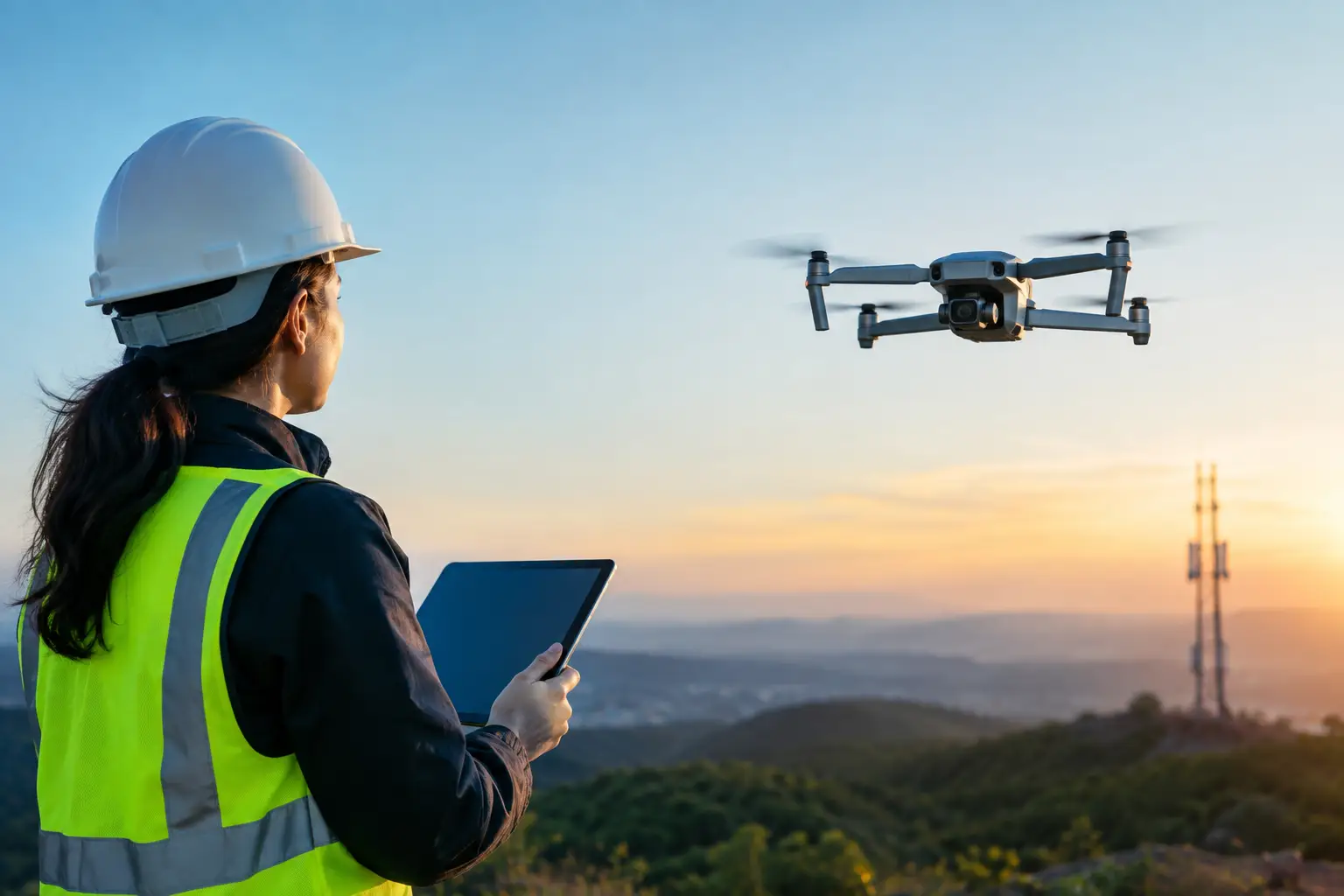
A drone inspecting an offshore platform, surveying a wildfire perimeter, or carrying a thermal camera across a large industrial site does not simply need a fast wireless connection. It needs continuous command-and-control, predictable video performance, managed handoffs, and a recovery plan when the aircraft moves beyond the strongest signal. So, can 5G support drones? Yes, but only when the air-to-ground network is engineered around the mission rather than treated as a generic coverage problem.
For enterprise and mission-critical users, 5G can be a powerful drone connectivity layer. It can extend real-time operations beyond the limits of short-range radio links, carry high-resolution sensor data, and support centralized fleet management. It does not, however, eliminate the need for carefully designed coverage, protected spectrum, directional antennas, reliable backhaul, and flight-safe failover behavior.
Can 5G Support Drones? The Short Answer
5G can support drone operations when its performance characteristics match the application. The technology offers higher capacity, lower potential latency, network slicing capabilities, and more flexible private-network deployment options than earlier cellular generations. Those benefits are especially relevant for drones transmitting live video, LiDAR data, telemetry, or inspection imagery while operating across large sites or remote corridors.
The critical distinction is between what 5G can provide in a laboratory or dense urban service area and what it will deliver at altitude, at the edge of coverage, or across an industrial operating area. A drone is a moving endpoint with line-of-sight to multiple cell sites. That can improve signal reach, but it can also create interference, unstable cell selection, and handoff complexity.
A viable design starts with the operational requirement. Is the drone flying beyond visual line of sight? Is the network carrying only telemetry and command traffic, or is it also carrying multiple high-definition video streams? Is the aircraft operating over water, around metal structures, through terrain shadow, or near an active incident scene? Each condition affects network architecture.
What 5G Enables for Drone Programs
The strongest use case for 5G is not merely flying a drone farther. It is making the aircraft a connected operational asset within a larger communications system.
For public safety, a 5G-connected drone can send live thermal or optical video to an incident command post while crews maintain voice, data, and mapping access on the same private network. For energy operators, the network can support inspection video from pipelines, substations, wind farms, or offshore facilities while moving the captured data to engineering teams in near real time. In ports, construction sites, and large industrial facilities, drones can become part of a routine site-monitoring workflow rather than standalone tools that must return before data can be reviewed.
5G is also well suited to fleet operations. When multiple aircraft are active, centralized management requires more than bandwidth. The network must identify devices, prioritize traffic, apply policy, and provide visibility into performance. A private 5G deployment can give the operator much more control over these conditions than a best-effort public cellular connection.
Low latency matters most when the use case involves time-sensitive video, remote piloting support, or rapid decision-making. Yet latency should be assessed end to end, not just at the radio interface. The camera encoding process, onboard router, cellular uplink, edge compute platform, backhaul path, application server, and operator display all contribute to the final response time.
The Network Architecture Matters More Than the Label
Calling a network “5G” does not guarantee it is ready for drones. A drone connectivity system is only as dependable as its weakest operational link.
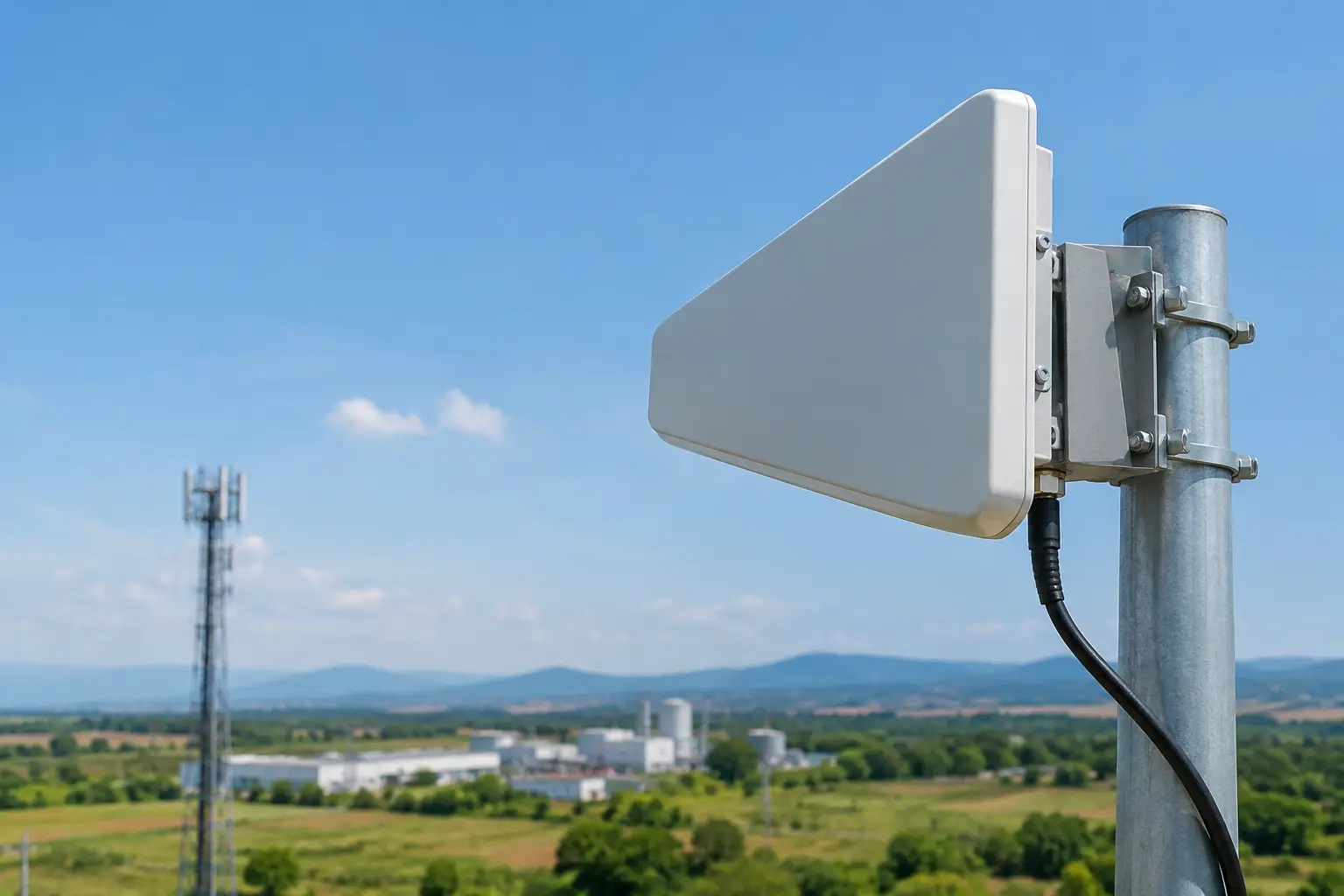
At the aircraft, the modem, antenna placement, power budget, and onboard network design determine whether the device can maintain useful service as it banks, climbs, or changes direction. Omnidirectional antennas may be appropriate for broad local coverage, but they have limits in weak-signal environments. For long-range or highly mobile applications, the ground-side infrastructure often requires directional, auto-aiming, or stabilized antenna systems to maintain a high-quality backhaul path.
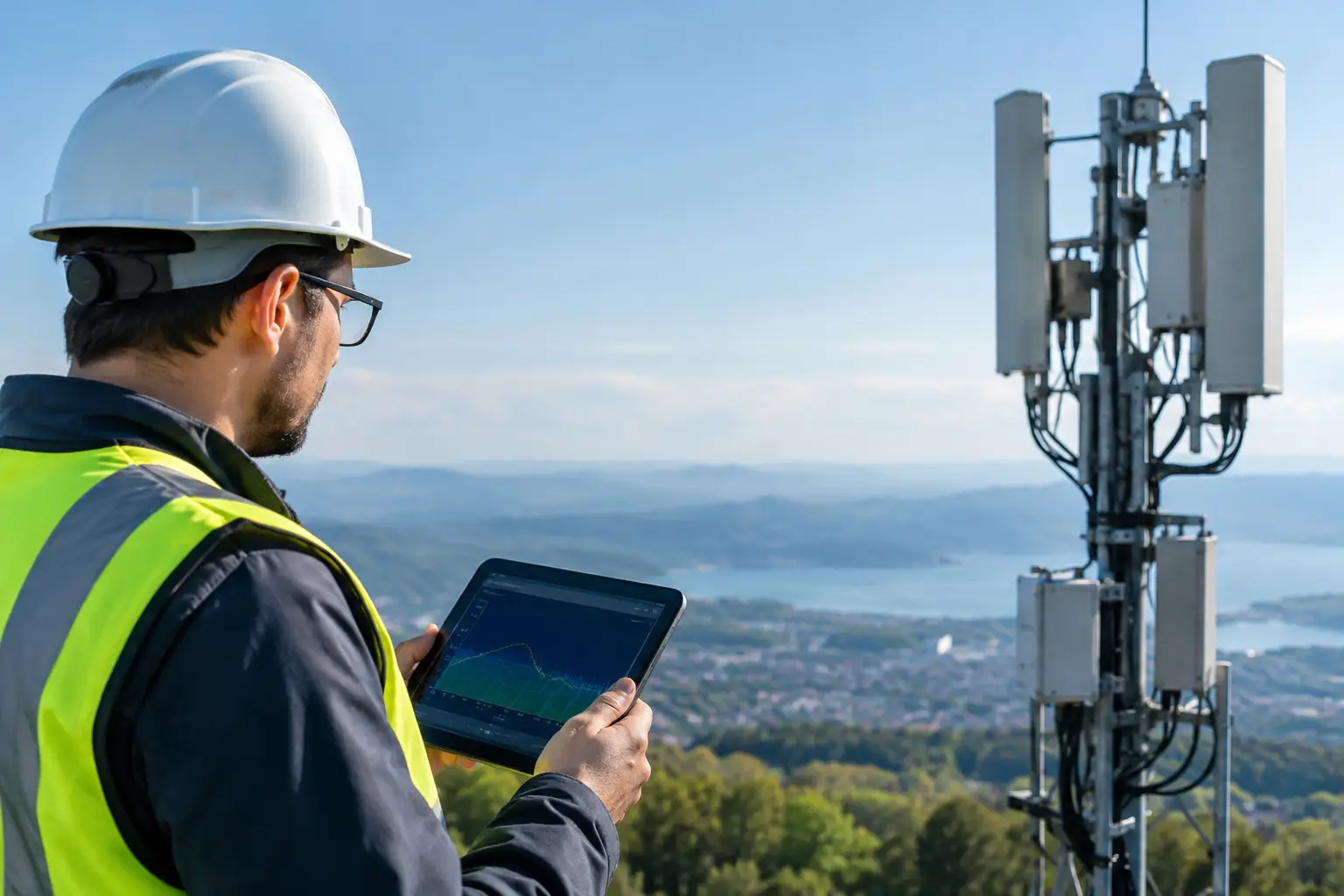
At the ground network, radio placement must account for the aircraft’s flight altitude and route, not just personnel or vehicles at grade. Traditional cellular planning often prioritizes terrestrial users. Drone traffic may interact with antenna sidelobes and distant sectors in ways that produce unexpected results. RF modeling, field measurements, and route-specific validation are necessary before committing a drone operation to a coverage assumption.
Behind the radio network, backhaul capacity and resilience are decisive. A private 5G network supporting several video-equipped aircraft can quickly create substantial upstream demand. Microwave links, fiber, satellite, or a combination of transport options may be needed depending on the site. For remote fields, maritime deployments, and disaster response areas, a stabilized microwave system can provide a practical high-capacity connection where fixed infrastructure is unavailable or impractical.
Public 5G Versus Private 5G for Drones
Public 5G can be useful for regional operations, temporary deployments, and flights where coverage is proven along the route. It can reduce upfront infrastructure costs and allow a drone to operate across a broad geographic footprint. The trade-off is that the operator does not control network loading, service priorities, sector configuration, or maintenance windows.
Private 5G is often the better fit for industrial, government, defense, and critical infrastructure environments. It allows the organization to control coverage design, quality-of-service policies, device access, traffic separation, and integration with local applications. It is particularly valuable where the drone must communicate inside a defined facility, along a fixed asset corridor, or across a remote operational area with limited commercial cellular service.
A hybrid design is frequently the most practical answer. Private 5G can cover the launch area, facility, incident zone, or primary flight path, while public cellular or another wide-area transport service provides continuity beyond that footprint. The aircraft and ground control system must be configured to manage the transition intelligently, with clear policies for which traffic has priority during a degraded connection.
Key Constraints That Must Be Designed In
Drone communications are safety-related communications. A network design should never assume that high throughput means guaranteed control continuity. Command-and-control traffic is relatively low bandwidth, but it must be protected from congestion and given clear priority over less time-sensitive payload data.
Video creates a different problem. A high-resolution camera stream can consume significant uplink capacity, particularly when operators demand low compression and low delay. Adaptive bitrate settings, codec selection, local recording, and edge processing can reduce network demand without compromising the mission. In some inspections, transmitting only event-driven video or analytics results is more efficient than continuously sending raw footage.
Security must also be engineered across the system. Device identity, SIM or eSIM provisioning, encryption, network segmentation, role-based access, and application security all matter. A drone should not become an unmanaged entry point into an industrial network simply because it carries a cellular modem.
Finally, every operation needs defined loss-of-link behavior. The aircraft should have a tested response to degraded coverage, radio failure, network handoff issues, and backhaul loss. That may include holding position, returning to home, landing at a designated point, or switching to a secondary communications path. The correct choice depends on airspace, mission risk, flight authorization, and the operating environment.
Where Antenna Tracking and Backhaul Become Critical
5G does not replace specialized wireless infrastructure in remote or mobile deployments. In many cases, it depends on it.
A temporary private 5G network at a wildfire command area, offshore vessel, mining operation, or disaster site still requires dependable transport to the broader network or command center. If that transport link moves, vibrates, or changes heading, a fixed antenna may not maintain alignment. Auto-aiming antenna tracking and stabilized microwave systems help preserve high-capacity links between moving or rapidly deployed assets.
This is especially relevant in maritime operations. A vessel-based 5G or LTE system can support onboard personnel and drone missions, but the vessel’s motion changes the geometry of every external wireless link. Stabilization, path calculation, and compatible integrated radios are operational requirements, not optional enhancements.
BATS Wireless approaches these deployments as complete communications systems: aircraft connectivity requirements, ground radio design, antenna behavior, backhaul, onboard networking, and operational support must function together. That systems view is what separates a successful field deployment from a promising coverage map.
Planning a 5G Drone Deployment
Before selecting radios or aircraft modems, define the flight profile and the consequence of a communications interruption. Measure expected altitude, range, terrain, asset density, interference sources, video requirements, and the number of simultaneous drones. Then validate the RF design under real flight conditions, including turns, elevation changes, and edge-of-coverage behavior.
The best deployments also separate traffic by importance. Command-and-control should receive clear priority. Telemetry should remain available even if video must reduce quality. Recorded payload data should have a local retention strategy when live transmission is interrupted. This layered approach makes the operation more resilient and avoids treating every packet as equally critical.
5G gives drone programs a capable foundation, but the operational advantage comes from disciplined engineering around coverage, mobility, backhaul, and failover. When those elements are designed for the actual mission, the network can support far more than flight – it can support faster decisions when conditions are changing.
October 25, 2026

October 25, 2026

October 25, 2026
October 25, 2026
