
CBRS Deployment Trends Reshaping Private 5G
CBRS deployment trends are moving private LTE and 5G from pilots to engineered, mission-ready networks for industrial, maritime, and public safety users.

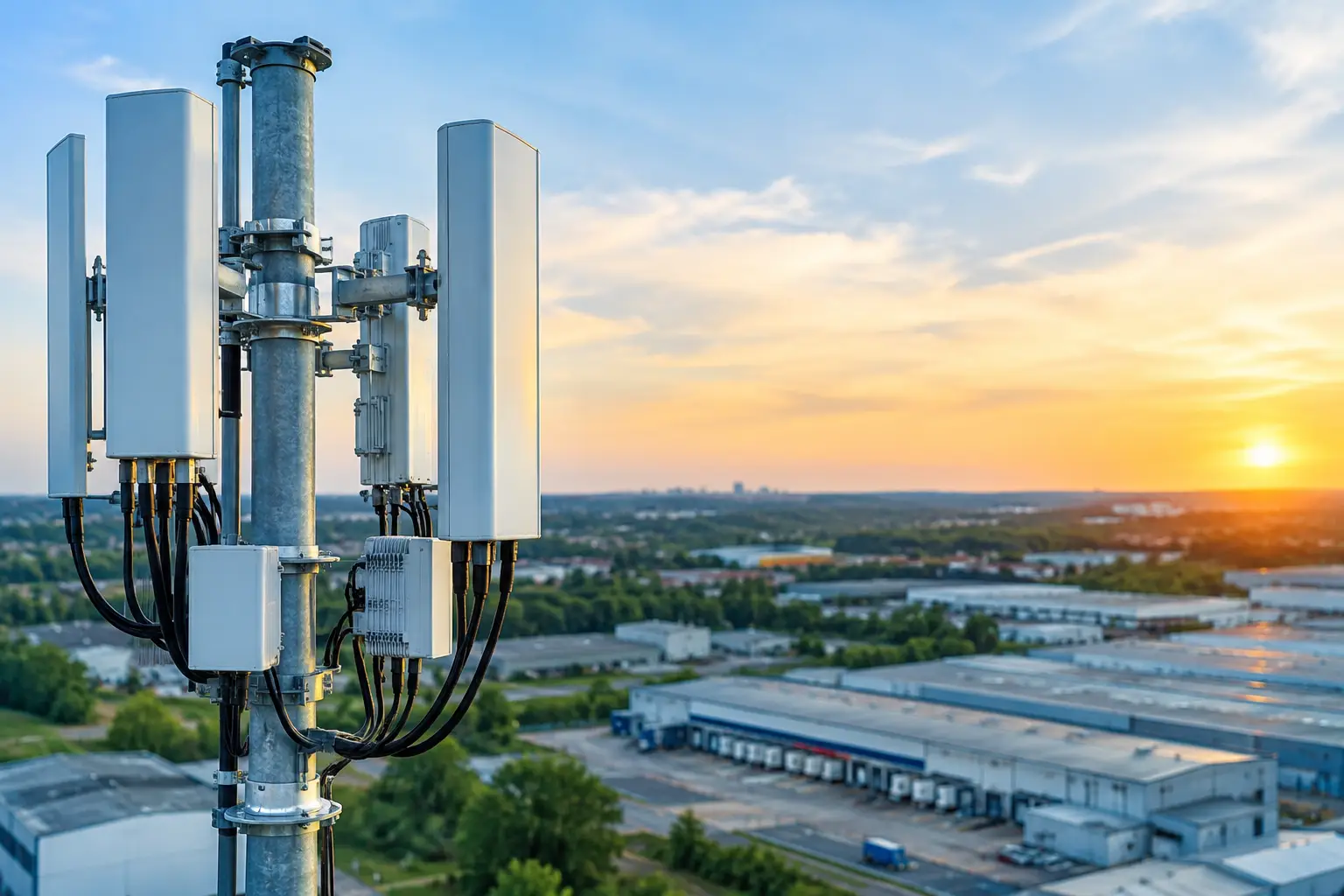
A CBRS network can look straightforward on a coverage map and still fail the operational test. A remote facility may have radios online, devices attached, and acceptable throughput at the edge of a test area, yet lose service when machinery starts, a vehicle moves behind terrain, or the backhaul path is interrupted. That reality is shaping CBRS deployment trends across industrial, government, maritime, and public safety environments. Buyers are moving beyond small proof-of-concept networks and asking harder questions about mobility, interference management, redundancy, device compatibility, and lifecycle support.
The most significant shift is not simply broader use of 3.5 GHz spectrum. It is a more disciplined approach to engineering private LTE and 5G networks for the conditions in which they must operate. CBRS is becoming part of a larger communications architecture that may include licensed spectrum, Wi-Fi, microwave backhaul, satellite, fiber, and vehicle or vessel-mounted systems.
CBRS Deployment Trends Are Becoming More Operational
Early CBRS projects often focused on proving that private cellular could deliver predictable coverage where Wi-Fi was difficult to manage. That remains a valid starting point, particularly in warehouses, campuses, ports, and outdoor industrial sites. But the decision criteria have expanded.
Network owners now expect CBRS to support operational traffic, not just demonstration devices. That can include push-to-talk communications, field tablets, cameras, autonomous equipment, industrial sensors, crew connectivity, and access to enterprise applications. Each traffic type has different tolerance for latency, packet loss, handoff behavior, and downtime. A design that works for low-rate telemetry may not support mobile video or remote equipment control.
This is driving more attention to radio placement, sector design, antenna selection, and coverage validation. In demanding outdoor environments, coverage is not a circle drawn around a radio. Terrain, steel structures, water reflections, vegetation, moving equipment, and nearby RF activity all influence actual performance. Site surveys and path analysis are becoming central to deployment planning rather than late-stage troubleshooting tools.
Private LTE Remains the Practical Starting Point
Private 5G receives substantial attention, but LTE continues to be the practical choice for many CBRS deployments. LTE devices are mature, available across more industrial categories, and often easier to integrate with existing mobility and operational technology requirements. For organizations replacing unreliable Wi-Fi over a large outdoor footprint, private LTE can provide a strong and cost-effective improvement without requiring a complete device refresh.
That does not mean 5G should be dismissed. 5G becomes more compelling where applications demand higher device density, tighter quality-of-service control, lower latency, or a longer-term platform for advanced automation. The right choice depends on the application roadmap, available devices, core network architecture, and the cost of supporting mixed LTE and 5G endpoints. Many engineered networks will operate as hybrid environments for years.
Spectrum Coordination Is Now a Design Input
CBRS uses a three-tier spectrum framework: incumbent access, Priority Access Licenses, and General Authorized Access. For many enterprise users, General Authorized Access is an attractive route because it lowers the barrier to obtaining spectrum. However, GAA availability is coordinated dynamically through a Spectrum Access System, or SAS. That means spectrum conditions should be treated as an operational design variable, not a one-time licensing exercise.
A proper deployment evaluates local spectrum availability, incumbent activity risk, channel assignment behavior, and the consequences of channel changes for critical applications. In areas near coastal operations, federal facilities, or other high-demand users, this assessment matters even more. A network carrying routine data can tolerate different risks than one supporting incident command, crew safety, or remote control.
Priority Access Licenses can provide greater planning certainty in licensed areas, but they do not eliminate the need for RF engineering. They are one part of a broader availability strategy. High-consequence deployments still require sensible channel planning, sufficient capacity margins, failover paths, and clear operational procedures if conditions change.
The Backhaul Conversation Has Changed
As private cellular expands into remote and mobile locations, backhaul has become the limiting factor in many deployments. A high-performance CBRS radio cannot compensate for an undersized, obstructed, or unstable upstream connection. Fiber is ideal where it is available and economically practical. In oil and gas fields, construction sites, ports, wind farms, vessels, disaster areas, and other hard-to-reach locations, it often is not.
This is increasing demand for purpose-built microwave and millimeter-wave backhaul, including stabilized and auto-aiming systems for moving assets. A fixed point-to-point link may be appropriate for a static site with clear line of sight. A vessel, command vehicle, mobile field unit, or temporary worksite requires a different architecture. The antenna system must maintain alignment while the platform moves, vibrates, changes heading, or operates in adverse weather.
The strongest designs separate the access-network question from the transport-network question, then engineer both as one system. That includes bandwidth allocation, latency budgets, prioritization of critical traffic, redundant paths, power requirements, and physical hardening. A private network is only as dependable as its least dependable transport segment.
Ruggedization and Mobility Are Taking Center Stage
A growing share of CBRS deployments is happening outside climate-controlled buildings. Operators are extending private cellular to yards, terminals, mines, energy assets, coastlines, temporary sites, and transportation corridors. These environments introduce constraints that do not show up in a conventional indoor deployment.
Radios and antennas may need to withstand salt exposure, high wind, dust, vibration, temperature swings, and limited access for maintenance. Towers and mounting points may be constrained by safety rules, lease conditions, vessel geometry, or the availability of power. In some cases, the best radio location is not the highest location because cable loss, maintenance access, or backhaul geometry creates a better practical option elsewhere.
Mobility adds another layer. Vehicles, vessels, aircraft-adjacent operations, and portable command assets need continuity as they move between sectors or coverage areas. The network must account for handoffs, directional antenna patterns, uplink performance, and changing line-of-sight conditions. For applications such as live video, dispatch, and operational control, mobility performance should be tested under actual movement patterns rather than measured only from a stationary device.
CBRS Is Moving Closer to Critical Operations
Another defining trend is the migration from supplemental connectivity to operationally significant traffic. Private CBRS networks increasingly carry services that affect production, safety, security, and decision-making. That raises the standard for network segmentation, authentication, monitoring, and support.
A well-engineered private network should separate business traffic from operational technology traffic and establish clear quality-of-service policies. Cameras should not be allowed to crowd out voice or control traffic during a high-activity event. Remote access should be tightly governed. Core functions, management platforms, and edge applications should be evaluated for their resilience if the external WAN connection is degraded.
There is no single security model for every deployment. A fixed industrial site with an experienced IT team may use a centrally managed core and established security operations processes. A remote operation may need more local autonomy, hardened edge equipment, and a support model that does not depend on a technician arriving quickly. The architecture should follow the consequence of failure, not a generic technology checklist.
Managed Services Are Filling the Operations Gap
CBRS has lowered the barrier to building private cellular networks, but it has not removed the need for RF, transport, and cellular expertise. Organizations often have capable IT teams but limited experience with SAS coordination, SIM lifecycle management, radio optimization, cellular core functions, and field troubleshooting.
As a result, more buyers are looking for a deployment partner that can provide design, integration, commissioning, monitoring, and field support as a unified service. This is especially relevant for multi-site rollouts and isolated locations where a small configuration issue can create extended downtime. The value is not merely installing hardware. It is maintaining predictable performance as sites, applications, device counts, and spectrum conditions change.
What Deployment Teams Should Decide Early
The best CBRS projects begin with an operating requirement, not a radio count. Teams should identify the applications that must work, the geography they must cover, the assets that move, the expected number of devices, and the acceptable duration of a communications outage. Those answers determine whether the network needs LTE, 5G, or both; fixed or tracking antennas; a single backhaul path or multiple paths; and local survivability at the edge.
They should also define success in field terms. Coverage percentage is useful, but it is not enough. Measure uplink and downlink performance where crews work, handoff behavior along travel routes, video quality during peak traffic, and recovery time after power or transport disruptions. Test in the conditions that matter: loaded equipment, active machinery, weather exposure, and realistic mobility.
For organizations operating beyond conventional broadband footprints, CBRS is becoming a practical foundation for private connectivity. The advantage comes when cellular access, stabilized transport, antenna engineering, and operational support are designed together. That is where engineered providers such as BATS Wireless can turn spectrum access into a communications system that stays useful when the environment becomes difficult.
November 12, 2026

November 12, 2026

November 12, 2026

November 12, 2026
