
How Does CBRS Licensing Work for Private Networks?
Learn how does CBRS licensing work for private networks, including GAA access, PAL spectrum, SAS coordination, and deployment decisions for critical sites.


A private LTE or 5G design can look complete on paper until spectrum access becomes the limiting factor. So, how does CBRS licensing work when an enterprise needs dependable coverage across a port, refinery, campus, field site, or moving operational asset? The short answer is that CBRS combines licensed and lightly licensed spectrum access under automated coordination. The more useful answer is that your network’s location, coverage objective, interference environment, and continuity requirements determine which access model is appropriate.
CBRS operates in the 3.55-3.70 GHz band, also called Band 48 in LTE and n48 in 5G. Rather than assigning all spectrum exclusively to one carrier, the Federal Communications Commission established a three-tier framework. A Spectrum Access System, or SAS, coordinates access dynamically so private networks can use the band while protecting higher-priority users.
For operational buyers, this model can reduce the cost and lead time of acquiring dedicated spectrum. It does not remove the need for RF engineering. A well-designed CBRS network still requires a valid propagation plan, properly registered radios, backhaul capacity, device compatibility, and a clear plan for what happens when channel availability changes.
How CBRS Licensing Works Across Three Access Tiers
The CBRS framework has three priority levels: Incumbent Access, Priority Access License, and General Authorized Access. Each tier has a different role in spectrum protection and network planning.
Incumbent Access comes first
Incumbent users have the highest priority in defined areas. The primary incumbent is U.S. Navy radar activity, particularly near coastal areas. Certain protected satellite earth stations and legacy operations also receive protection under the rules.
When incumbent activity requires protection, the SAS can change or suspend spectrum grants for lower-tier CBRS users in the affected area. Environmental Sensing Capability, or ESC, networks help identify radar activity in relevant coastal zones and notify the SAS ecosystem.
This is a practical design issue, not a theoretical one. A maritime terminal, shoreline industrial facility, or coastal emergency communications deployment should model available channels conservatively. It may still be an excellent CBRS use case, but the design should include channel flexibility, sufficient capacity margin, and an alternate communications path for critical traffic.
PAL provides licensed priority access
A Priority Access License, or PAL, is the licensed portion of CBRS. PALs apply to 10 MHz channels within the 3550-3650 MHz portion of the band. They are issued on a county basis through FCC auctions and provide priority over GAA users, subject to incumbent protection requirements.
A PAL licensee does not simply turn on a radio and claim a channel. The licensee still registers CBRS base stations with an approved SAS and requests spectrum grants. The SAS assigns available PAL spectrum consistent with the licensee’s county and channel rights, while accounting for protection zones and other technical requirements.
PALs are generally issued for 10-year terms and may be renewed when the licensee meets FCC renewal and performance obligations. A county can have up to seven PALs, representing up to 70 MHz of licensed priority spectrum. Licensees may acquire one or more PALs where available, which can support higher capacity or more predictable spectrum access at a critical site.
The key distinction is priority, not absolute exclusivity. PAL access remains below incumbent access. In areas where an incumbent protection event affects the band, PAL operations can also be modified. For most inland industrial and enterprise deployments, however, a PAL can provide a more controlled spectrum position than operating entirely under GAA.
GAA makes CBRS broadly accessible
General Authorized Access, or GAA, is available without purchasing an individual FCC spectrum license. GAA users can operate across the full 3550-3700 MHz band when spectrum is available, including unused PAL spectrum in some circumstances.
GAA is often described as unlicensed access, but that can be misleading. It is authorized access under FCC rules, not open spectrum that can be used without coordination. Every CBRS base station must obtain grants from a SAS, operate within those grants, and respond when the SAS directs a change.
For a warehouse, construction site, utility yard, inland mine, manufacturing facility, or temporary incident command location, GAA may deliver the right balance of performance, availability, and cost. It is especially compelling where the network can use multiple channels, where local RF conditions are manageable, and where the application can tolerate dynamic channel reassignment.
The SAS Is the Operational Control Plane
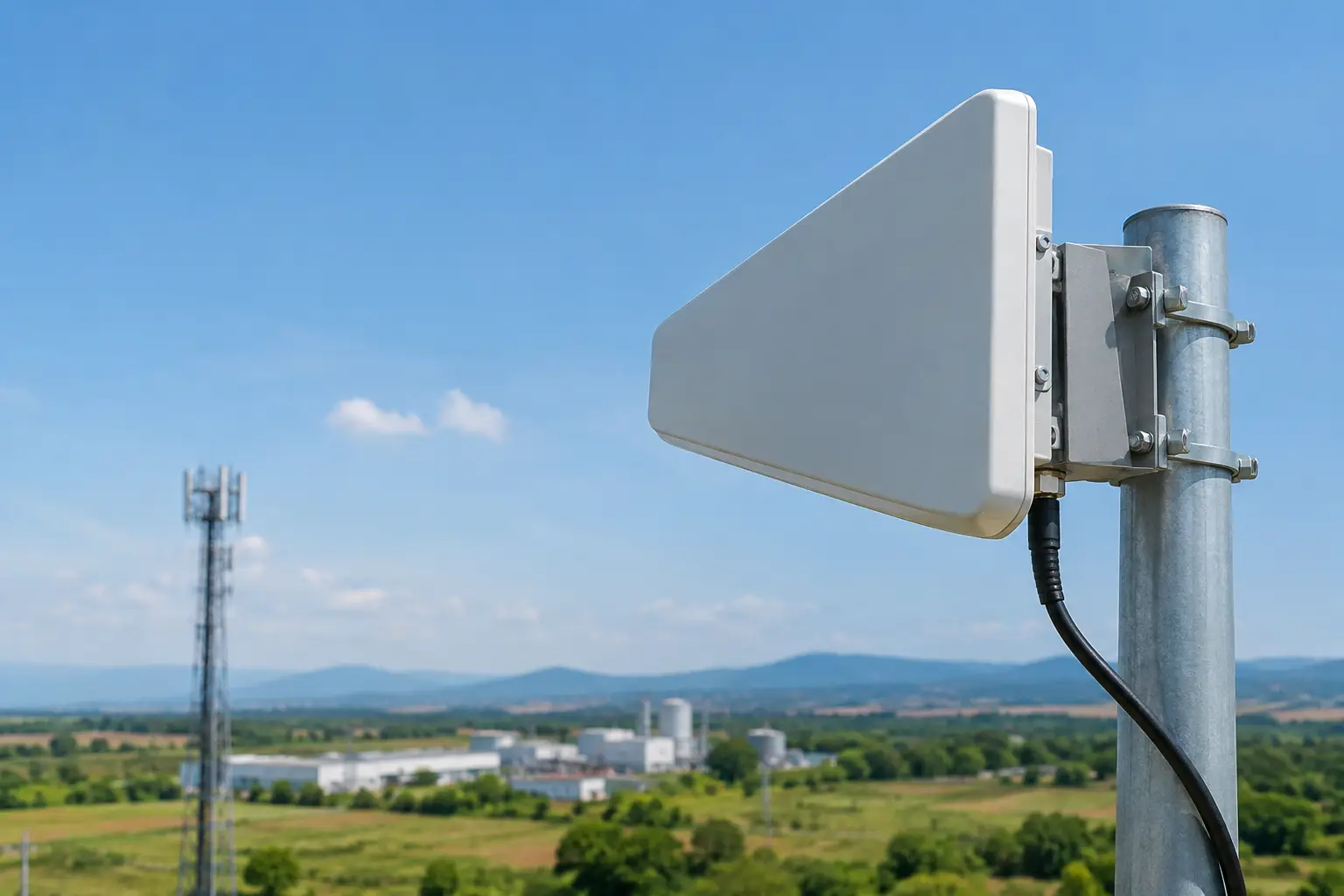
The SAS is central to CBRS operation. It is an FCC-authorized cloud-based coordination service that manages the spectrum rights of deployed Citizens Broadband Radio Service Devices, or CBSDs. In a private network, the CBSD is typically the LTE or 5G radio at the cell site, not the handset, tablet, router, or industrial endpoint.
Before transmitting, the CBSD registers with a SAS using its FCC certification information, location, antenna height, and other technical parameters. It then requests a grant. The SAS evaluates the request against incumbent protections, PAL assignments, nearby CBRS operations, and applicable power limits. If approved, the radio receives an operating channel and authorized power level.
That grant is not permanent. The CBSD must maintain communication with the SAS and follow its instructions. A grant can be renewed, adjusted, moved to another frequency, or terminated. For a properly engineered private network, this behavior should be designed into the radio configuration and operational procedures rather than treated as an exception.
SAS coordination is also why an RF survey matters. The same GAA deployment may have very different channel availability on an isolated inland site than at a dense urban logistics hub. Antenna height, terrain, building materials, adjacent CBRS networks, and distance from protected areas all influence the outcome.
What a CBRS Deployment Must Do Before It Transmits
CBRS compliance starts with equipment selection. Radios must be FCC-certified CBSDs, and they must be compatible with an approved SAS. Consumer-grade cellular equipment or a generic 3.5 GHz radio is not automatically suitable for CBRS operation.
Registration details must be accurate. The SAS uses installation coordinates, antenna information, height, and radio characteristics to determine appropriate grants. A change in the radio location, antenna configuration, or installation parameters can require an update to the registration.
Outdoor higher-power Category B CBSDs require professional installation by a Certified Professional Installer, or CPI. Category B equipment can provide valuable coverage for large yards, ports, campuses, and wide-area industrial sites, but its installation and registration process demands closer technical control. Category A equipment is commonly used for lower-power indoor and localized outdoor coverage.
Network teams should also separate spectrum authorization from network security. SAS coordination does not encrypt user traffic, authenticate devices in the private core, or replace cybersecurity controls. A private LTE or 5G architecture still needs proper SIM or eSIM lifecycle management, segmentation, identity controls, transport security, and monitoring.
Choosing Between GAA and PAL for a Private Network
The correct answer depends on the operational consequence of reduced spectrum availability. GAA is not inherently unreliable, and PAL is not automatically necessary. The decision should be based on measured RF conditions and service objectives.
GAA is often the cost-saving solution when the site has sufficient channel availability and the network can adapt to grant changes. It works well for localized coverage, temporary deployments, remote sites with limited neighboring activity, and projects where rapid deployment matters more than holding a specific licensed channel.
A PAL becomes more attractive when the network supports high-value production processes, dense device populations, safety-critical workflows, or major facilities where capacity and interference predictability are central to the business case. A PAL may also be appropriate when an organization wants greater control over its spectrum position across a county-wide operating footprint.
There are trade-offs. A PAL adds acquisition cost, licensing administration, and a county-based boundary that may not align neatly with a single enterprise property. GAA avoids those licensing costs but requires a design that accepts the dynamic nature of shared access. Many organizations use both: PAL capacity for essential traffic and GAA capacity for additional coverage, lower-priority devices, or temporary expansion.
Design the Network for Channel Changes, Not Just Coverage
CBRS is most effective when spectrum coordination is treated as part of the overall network architecture. The radio layer, core network, backhaul, and application traffic policies should all support operational continuity.
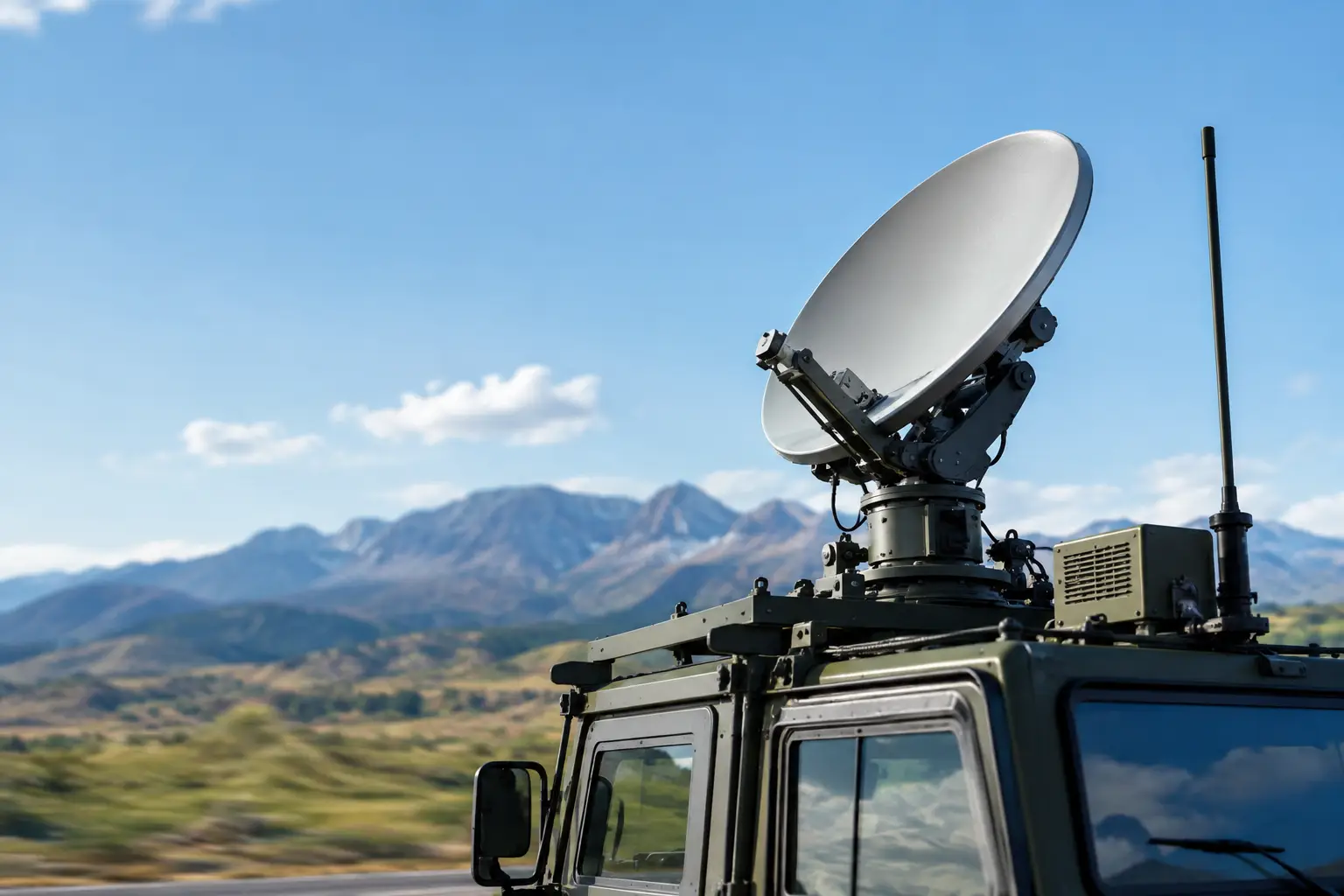
For example, a remote oil and gas site may use CBRS for field mobility and local sensor traffic while stabilized microwave systems provide the long-range backhaul path. A port or maritime operation may use private cellular for dockside devices and onboard connectivity, with engineered antenna placement and alternate transport for essential control traffic. Public safety deployments may prioritize key applications and retain satellite, microwave, or commercial-carrier failover for incident resilience.
Capacity planning should assume that not every 10 MHz channel will be available at every location or every time. Engineers should validate device support for the intended LTE Band 48 or 5G n48 configuration, assess carrier aggregation options where applicable, and test channel reassignment behavior before commissioning the system. Auto-aiming and stabilized backhaul systems can extend the value of a CBRS access network, but they do not replace disciplined spectrum and RF planning.
The practical question is not whether CBRS is licensed or unlicensed. It is whether the combination of SAS-managed spectrum, private cellular controls, and engineered transport can meet the required service level at the actual site. Start with a site-specific RF assessment and the operational consequences of downtime, then choose GAA, PAL, or a blended model that gives the network room to perform when conditions change.

October 22, 2026
October 22, 2026
October 22, 2026

October 22, 2026
