
Vehicle Mounted Microwave Connectivity Systems
Vehicle mounted microwave connectivity provides high-capacity links for moving assets, supporting resilient backhaul, onboard networks, and operations.


A command vehicle can arrive on scene with radios, laptops, cameras, and a full operational team, yet still be constrained by the weakest part of the architecture: the path back to the network. Vehicle mounted microwave connectivity addresses that constraint by extending high-capacity broadband from a moving or rapidly deployed platform to a fixed network, another mobile asset, or a remote operating location.
This is not simply a matter of mounting a radio on a roof rack. A useful mobile microwave system must acquire the correct path, maintain antenna alignment through vibration and vehicle movement, accommodate changing terrain, and integrate cleanly with the onboard network. When those elements are engineered as one system, a vehicle becomes a reliable communications node rather than a temporary coverage compromise.
Why Vehicle Mounted Microwave Connectivity Is Different
Traditional fixed microwave links benefit from surveyed tower locations, rigid mounts, stable power, and carefully aligned antennas. A vehicle operates under different conditions. It may travel across uneven ground, park on an incline, deploy in high winds, or need to establish a link before personnel can begin work.
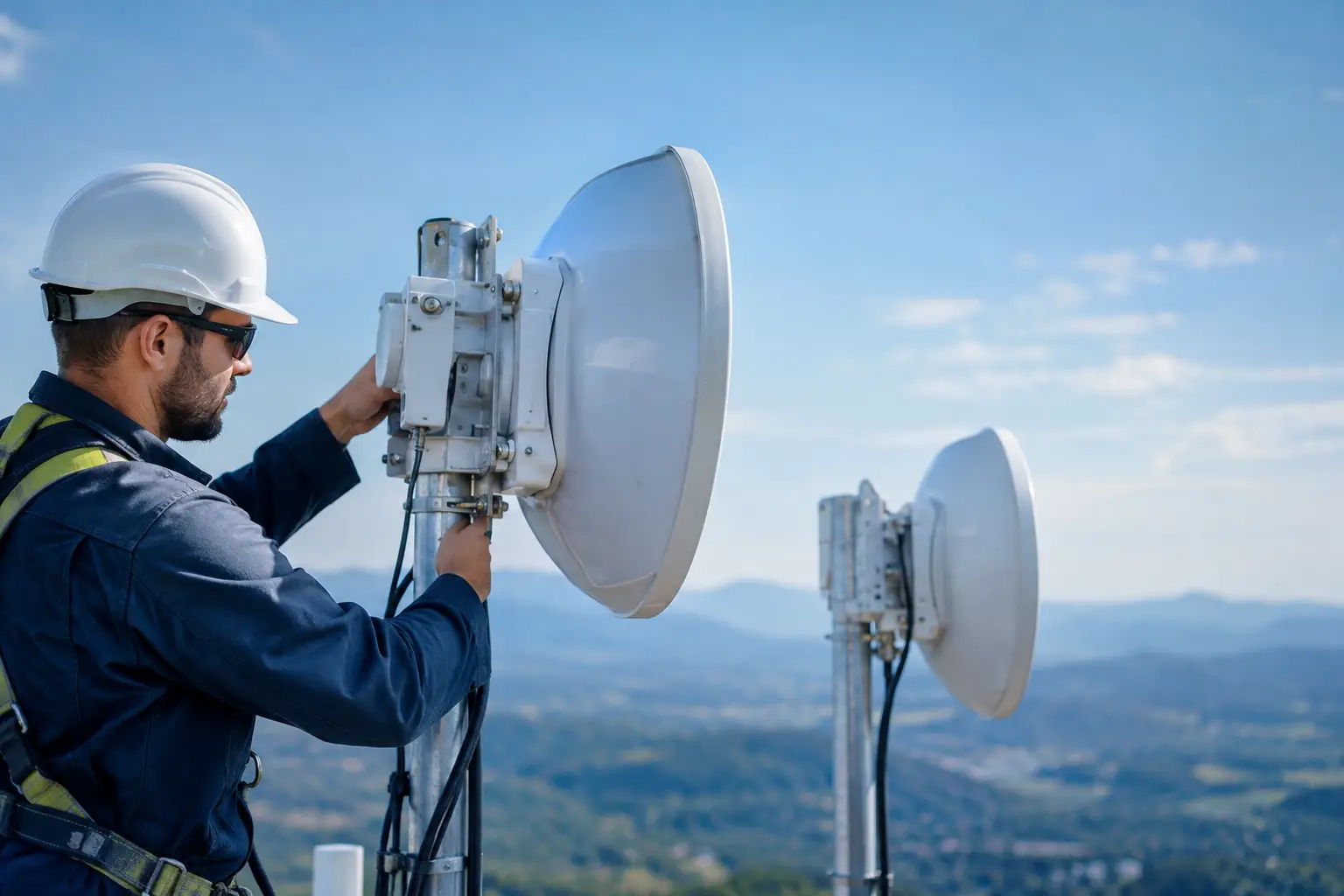
The central technical challenge is antenna pointing. At microwave frequencies, narrow beamwidth supports greater gain and spectrum efficiency, but it also leaves little tolerance for pointing error. A few degrees of misalignment can reduce throughput, increase packet loss, or break the connection altogether. Manual alignment can work for occasional stationary deployments, but it consumes time and depends on trained personnel, clear line of sight, and a vehicle that remains still.
Auto-aiming and stabilized microwave systems change the operating model. Using position data, heading, inclination, path calculations, and tracking logic, the system can identify an intended endpoint and maintain the antenna on path as conditions change. The required level of stabilization depends on the application. A vehicle parked at an incident site has different needs from a platform communicating while moving, but both require more than a standard fixed wireless installation.
The Network Architecture Behind the Vehicle
A microwave terminal is only one part of the deployment. For operational buyers, the relevant question is how it fits into the entire communications architecture.
At the vehicle edge, a local area network connects user devices, dispatch workstations, IP cameras, sensors, VoIP handsets, radios, and computing equipment. That onboard network may include Ethernet switching, Wi-Fi, private LTE or 5G access, quality-of-service policies, and segmentation between operational, administrative, and guest traffic. The microwave link provides the high-capacity transport path from that edge network to a command center, fiber point of presence, mobile network core, or remote site.
This architecture is especially valuable where cellular service is congested, unavailable, or unsuitable for the traffic profile. Cellular can remain an important failover or supplemental transport option. However, applications such as multiple HD video feeds, real-time situational awareness, remote equipment control, and private network backhaul can quickly exceed what a best-effort public connection can reliably provide.
A well-designed system also considers the return path. The far-end site must have sufficient upstream capacity, compatible radios, appropriate antenna placement, power protection, and network policies that preserve critical traffic. High throughput at the vehicle has limited operational value if the fixed endpoint creates a bottleneck.
Performance Depends on the Entire RF Path
Microwave performance is often discussed in terms of radio data rate. That figure matters, but it does not define field performance by itself. Link availability and usable capacity are determined by the complete RF path.
Frequency selection is one early design decision. Lower microwave bands generally offer improved propagation and rain tolerance, while higher bands can support wider channels and higher capacity where shorter paths and clear line of sight are available. Licensed spectrum can provide protection from interference for critical links. Unlicensed or lightly licensed options can reduce deployment cost and accelerate implementation, but they require a disciplined interference assessment and realistic expectations about the operating environment.
Path engineering should account for terrain, vegetation, structures, Fresnel-zone clearance, expected vehicle positions, and the height of both antennas. A path that works from a test location may fail when a response vehicle parks behind a building, on the wrong side of a ridge, or below a tree line. For recurring deployments, predefined sites and path profiles can reduce uncertainty. For highly variable missions, antenna tracking and flexible endpoint planning become more important.
Availability targets also need to be defined honestly. A link intended for occasional file transfers has different requirements than a public safety command platform carrying live video and dispatch traffic. Higher availability may require additional fade margin, better antennas, protected spectrum, redundant paths, or an alternate transport service. There is no single configuration that is right for every vehicle.
Where Mobile Microwave Systems Deliver Value
The strongest use cases share one characteristic: operations cannot wait for conventional connectivity to arrive.
Public safety and emergency management teams can use a vehicle-mounted link to establish incident command communications, extend private LTE or 5G coverage, transport video from field cameras, and support interagency coordination. In disaster response, the system can restore broadband at a staging area where terrestrial infrastructure is damaged or overloaded.
Defense and government users may require secure, high-capacity transport between mobile command assets and fixed network infrastructure. In these deployments, integration with approved encryption, tactical radios, and mission network policies is as important as RF performance.
Oil and gas, mining, utilities, and industrial field teams can use mobile microwave as a temporary or relocatable backhaul solution at remote work zones. It can support inspection crews, construction operations, environmental monitoring, remote experts, and operational technology traffic without waiting for a permanent fiber build.
Commercial broadcast, event, and infrastructure teams also benefit where video contribution, site commissioning, or temporary operational broadband requires more predictable capacity than public wireless networks can provide.
Design Decisions That Determine Field Success
The most effective deployments begin with the mission, not the hardware catalog. Start by defining the traffic that must be carried, the expected link distance, vehicle movement profile, likely endpoint locations, setup-time requirement, and acceptable service interruption. Those inputs determine antenna type, radio band, tracking approach, onboard network design, and redundancy strategy.
Power and mechanical integration deserve equal attention. Vehicle systems must tolerate vibration, weather, shock, temperature extremes, and repeated deployment cycles. Antenna placement must avoid obstructions from light bars, masts, vehicle equipment, and personnel while maintaining a practical cable route and safe stowed position. The system should be designed around the vehicle’s power budget, including startup load, battery reserve, alternator capacity, and protected shutdown procedures.
Interoperability is another deciding factor. The microwave platform should support the required Ethernet interfaces, VLANs, routing, encryption approach, management protocols, and radio integrations. A high-performing point-to-point link that cannot integrate with the organization’s network operations model becomes a support burden in the field.
BATS Wireless approaches these environments as an engineered communications system, combining auto-aiming antenna capability, stabilized microwave transport, integrated radios, and network design around the actual operating mission.
Plan for Degraded Conditions, Not Ideal Conditions
A deployment plan should assume that some links will face rain, dust, RF congestion, partial obstruction, or an unplanned vehicle position. The answer is not always more transmit power. Better path selection, appropriate antenna gain, frequency planning, traffic prioritization, and a secondary transport option can provide greater operational value.
For example, critical command-and-control traffic can receive priority over lower-value internet access or bulk file synchronization. A private LTE or 5G network on the vehicle can serve local users while microwave carries aggregated traffic back to the core. If the primary path becomes unavailable, cellular, satellite, or an alternate microwave endpoint may sustain essential services at reduced capacity.
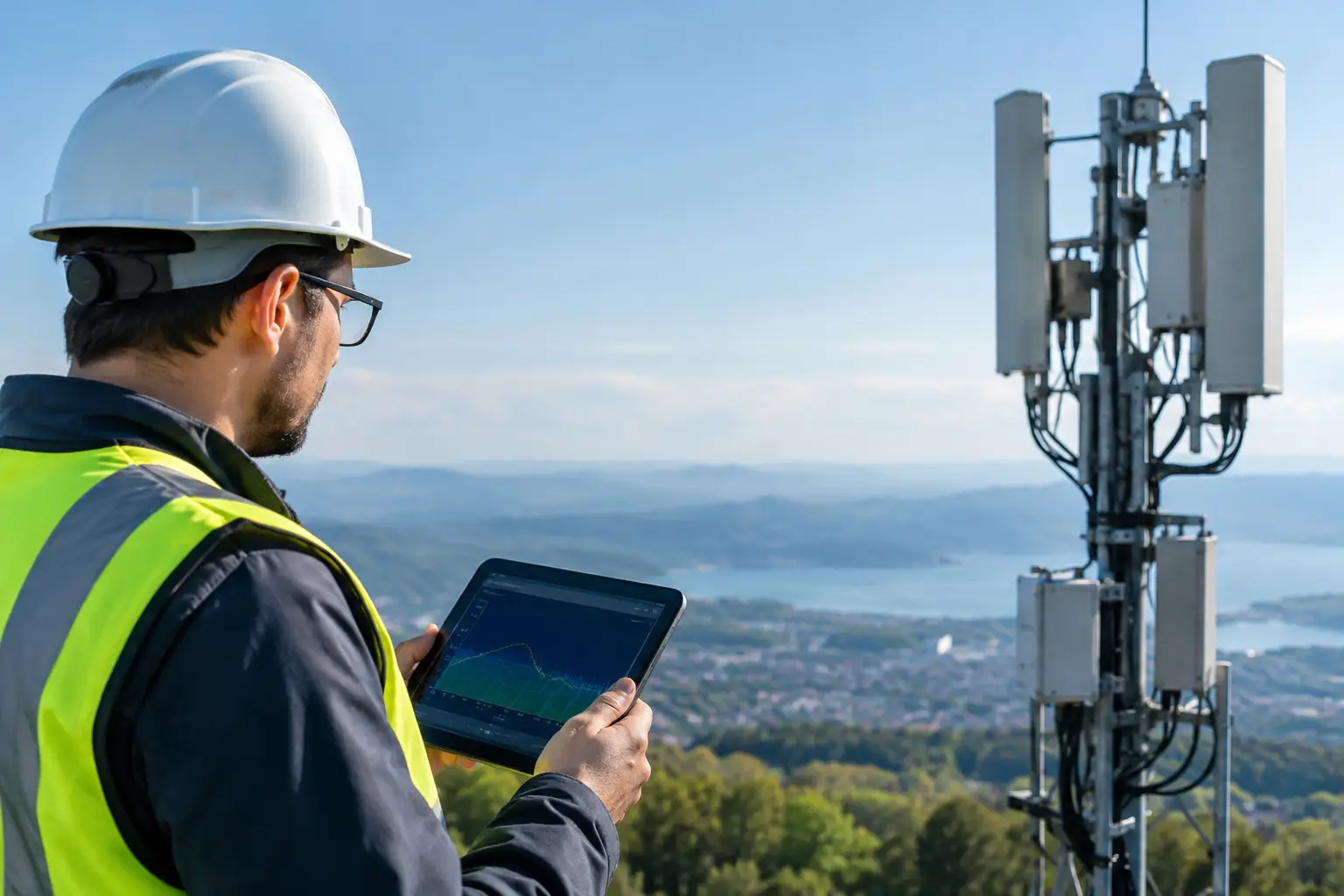
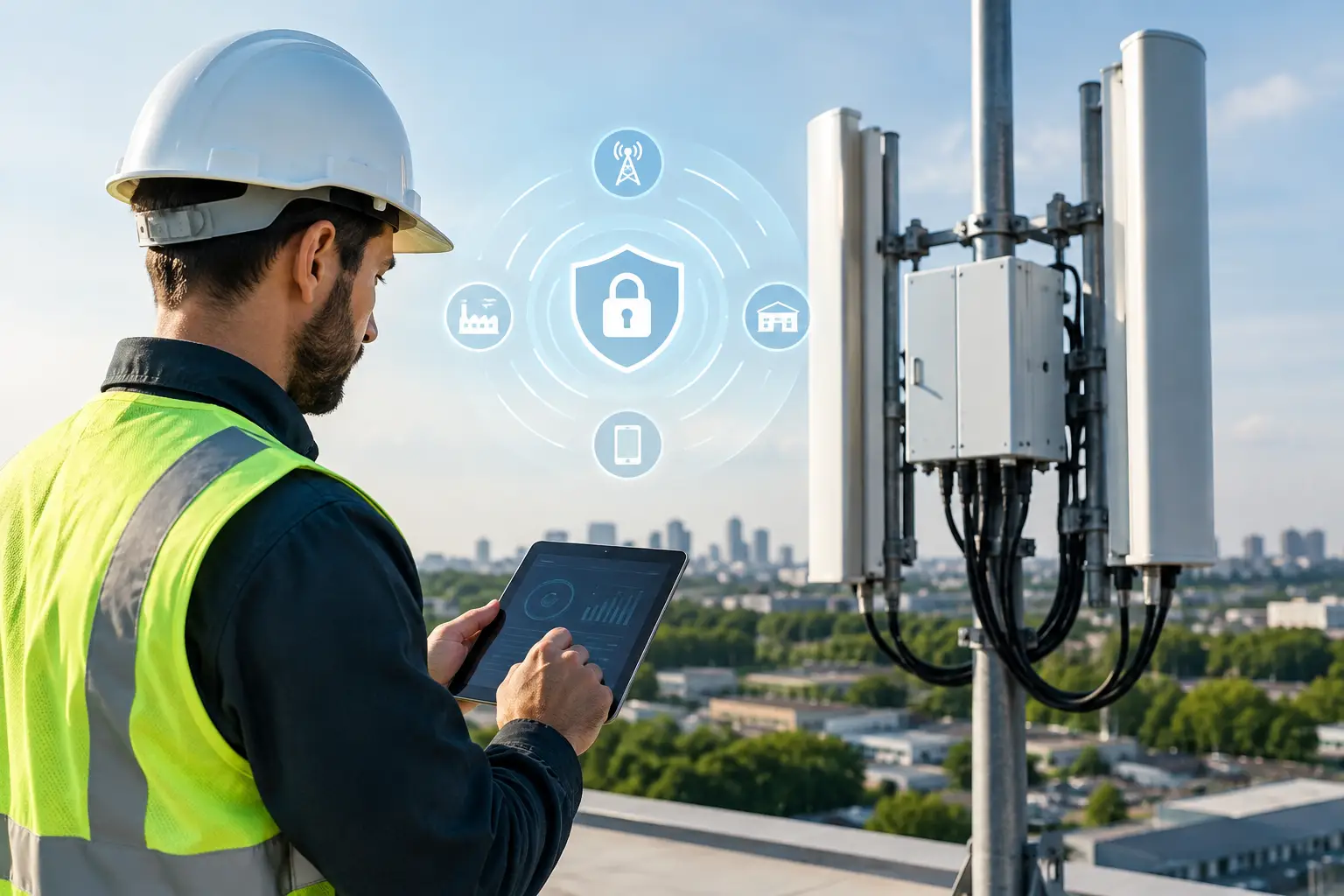
Monitoring should be built into the system from the outset. Operations teams need visibility into signal level, modulation state, throughput, latency, packet loss, alignment status, power condition, and transport failover events. This data supports rapid troubleshooting and helps engineers distinguish an RF-path issue from an onboard network or application problem.
Training also matters. Automation reduces setup complexity, but crews still need clear procedures for site selection, vehicle positioning, obstruction checks, safe antenna operation, and escalation. The best field system is one operators can deploy correctly under pressure.
Making the Vehicle a Network Extension
Vehicle mounted microwave connectivity is most valuable when it is treated as a purposeful extension of the enterprise or mission network. The objective is not merely to get online. It is to deliver usable, protected, high-capacity communications where crews need to act.
The right solution balances capacity with availability, automation with operator control, and speed of deployment with the realities of RF engineering. Before specifying equipment, map the vehicle’s mission routes, operating locations, traffic priorities, and failure scenarios. That work turns mobile broadband from a temporary workaround into infrastructure that supports the mission when fixed connectivity is out of reach.
October 25, 2026
October 25, 2026
October 25, 2026
October 25, 2026
