
What Is a Maritime LTE Communication System?
A maritime LTE communication system delivers private, high-performance connectivity for vessels, ports, and offshore assets near shore.

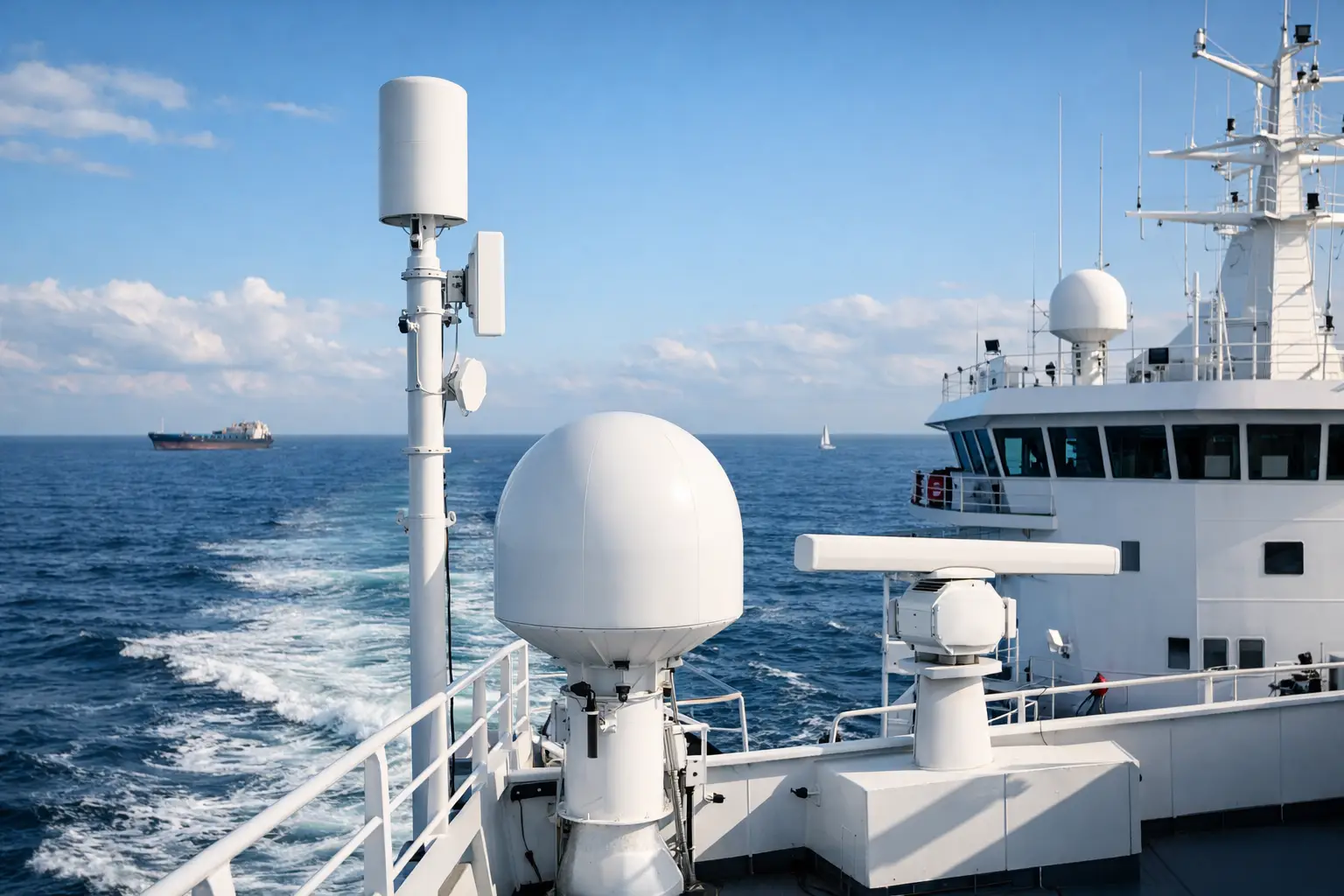
A vessel can carry modern navigation, engine monitoring, CCTV, crew welfare traffic, and operational applications, yet still lose practical broadband the moment it leaves the dock. That gap is exactly where a maritime LTE communication system earns its place. For operators working near shore, across ports, coastal routes, offshore wind areas, and inland waterways, LTE can deliver a far more cost-effective and controllable communications layer than satellite alone.
The key point is that maritime LTE is not just “cell coverage at sea.” In an engineered deployment, it is a private or managed wireless system designed to maintain usable bandwidth across moving assets, changing sea states, and difficult RF paths. The difference between a brochure claim and an operational result usually comes down to antenna performance, tracking capability, network design, and how well the radios are integrated into the wider onboard and shore-side environment.
Where a maritime LTE communication system fits
A maritime LTE communication system is most effective where vessels operate within reach of shore-based coverage or purpose-built offshore infrastructure. That includes ferries, workboats, patrol vessels, dredging fleets, tug and barge operations, pilot services, offshore support vessels, aquaculture sites, and windfarm support operations. It also applies to ports and harbor authorities that need persistent data exchange with mobile assets without relying on public carrier service as the only option.
In these environments, LTE solves a specific business problem. It extends broadband to moving vessels and remote marine assets with lower operating cost than constant satellite use, while supporting higher throughput for routine traffic. That can include telemetry, VoIP, dispatch, SCADA-related traffic, video feeds, maintenance systems, and standard business applications.
The trade-off is distance. LTE is not a universal offshore answer. Once routes move well beyond the practical radio horizon of coastal or platform-based infrastructure, satellite remains necessary. For many operators, the right architecture is not LTE versus satellite. It is LTE where it performs best, with failover or hybrid switching to satellite where geography demands it.
The engineering behind maritime LTE performance
Anyone evaluating maritime connectivity should be skeptical of simple range claims. Water can help RF propagation in some cases, but the marine environment also introduces motion, obstruction, interference, multipath, and weather-related signal variation. A system that looks adequate on paper can underperform quickly if the vessel antenna cannot maintain signal quality while pitching and rolling.
That is why the physical layer matters as much as the core network. High-gain antennas, intelligent antenna placement, stabilized platforms, and auto-aiming or tracking technologies can materially change the result. On a moving vessel, maintaining the best possible RF link is not a cosmetic upgrade. It is often the deciding factor between intermittent service and dependable throughput.
The onboard network matters too. If LTE is brought onto a vessel but poorly distributed across crew devices, bridge systems, cameras, and operational endpoints, the user experience still fails. A well-built maritime deployment treats the vessel as a complete communications environment. WAN access, routing, segmentation, Wi-Fi, cybersecurity controls, and application prioritization all need to be aligned.
This is where specialized providers separate themselves from general IT resellers. Maritime mobility introduces mechanical, radio, and network challenges at the same time. BATS Wireless operates in exactly this kind of deployment space, where antenna engineering, radio integration, and field performance are not separate tasks but part of one working system.
Public LTE, private LTE, and hybrid design
Not every maritime LTE communication system is built the same way. Some operators begin with public carrier coverage because it is fast to procure and inexpensive at low scale. That can be suitable for limited routes in well-served coastal areas. The downside is reduced control over coverage, contention, security policy, and long-term performance.
Private LTE gives operators a different level of control. It allows dedicated infrastructure, managed spectrum options where available, defined coverage zones, tailored QoS, and direct alignment with operational applications. For ports, offshore energy sites, and industrial marine operators, that control can justify the investment quickly, especially when connectivity affects safety, uptime, or compliance.
Hybrid models are common and often the most practical. A vessel may use private LTE in a port zone or project area, roam to public LTE along the coast, and fail over to satellite outside terrestrial range. The best design depends on route predictability, data demand, application criticality, and how expensive outages are to the operation.
There is no single right answer for every fleet. A harbor tug with repeatable near-shore routes has different needs than a crew transfer vessel supporting offshore wind, and both differ from a patrol fleet requiring secure, low-latency communications. The architecture should follow the mission, not the other way around.
What buyers should evaluate first
Coverage maps are only the start. Serious buyers should first define the operational envelope. How far offshore do assets travel? What is the required throughput per vessel? Which applications are truly mission-critical, and which can tolerate latency or outages? Is the goal to reduce satellite spend, improve operational visibility, support onboard users, or all three?
After that, attention should turn to RF design. Shore site elevation, Fresnel clearance, antenna gain, vessel motion, and interference all affect real-world performance. In many projects, path calculation and site engineering are more valuable than adding more generic hardware. Good marine communications design is usually disciplined, not excessive.
Security and segmentation also deserve early attention. A vessel may carry OT traffic, enterprise applications, guest access, and video systems on the same physical platform. Those flows should not be treated equally. A maritime LTE system should support traffic separation, policy enforcement, and controlled integration with shore networks.
It is also worth evaluating equipment survivability. Salt exposure, vibration, temperature swings, and constant motion shorten the life of commodity hardware. Marine deployments need components and enclosures suited to the environment, plus service support that recognizes the cost of dispatching technicians to vessels and remote sites.
Common use cases with measurable value
The strongest maritime LTE projects are tied to operational outcomes, not vague connectivity goals. Port operators use LTE to support mobile workforces, vehicle coordination, CCTV backhaul, and vessel communications across large facilities. Ferry and workboat fleets use it to offload expensive satellite traffic, synchronize operational data, and improve service continuity for crews and passengers.
Offshore energy and aquaculture operators often need something more specialized. They may require broadband links between shore, service vessels, barges, platforms, and fixed offshore sites. In those settings, LTE can support monitoring systems, security video, maintenance applications, and day-to-day business traffic with a cost profile that is easier to scale than satellite-only architectures.
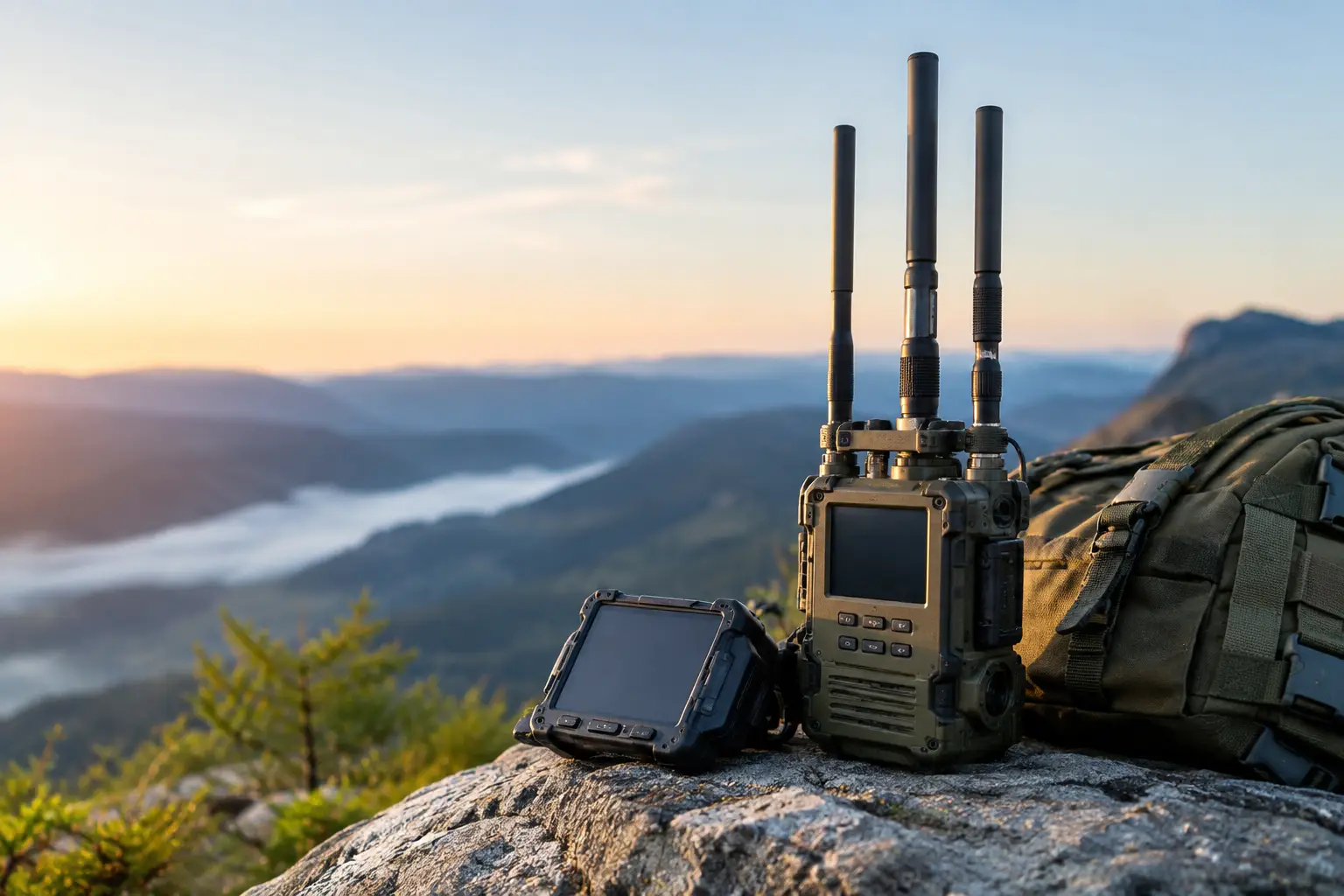
Public safety and defense users look at the same technology through a different lens. Their priorities may center on resiliency, controlled coverage, encrypted traffic, and interoperability with existing command and communications systems. Here again, the answer is rarely a standard off-the-shelf kit. It is an engineered system built around the operational requirement.
Why deployment experience matters
Marine connectivity projects often fail for ordinary reasons. Antennas are mounted in poor locations. Coverage assumptions are copied from land-based designs. Backhaul is undersized. Vessel network policies are not updated as applications grow. The result is a system that technically exists but does not perform reliably enough to support operations.
Deployment experience reduces that risk. Teams that understand moving platforms, antenna stabilization, auto-aiming behavior, integrated radios, and onboard network design can identify issues before they become field failures. That matters because troubleshooting offshore or across distributed marine assets is expensive, slow, and disruptive.
This is also why a low upfront hardware price can be misleading. The real cost sits in lifecycle performance. If the system requires repeated site visits, cannot maintain throughput in routine sea conditions, or forces traffic back to satellite more often than expected, the economics change quickly.
The real question is not whether LTE works at sea
The real question is where, how, and under what constraints it works well enough to improve operations. A maritime LTE communication system can be a high-value asset when the route profile, RF design, hardware selection, and onboard integration are handled correctly. It can also disappoint when buyers treat it like a simple extension of office networking.
For organizations responsible for vessel connectivity, port operations, offshore logistics, or coastal infrastructure, the opportunity is clear. LTE can extend broadband where conventional approaches are too costly, too limited, or too dependent on public infrastructure. But the gain comes from engineering discipline, not marketing language.
If your operation depends on reliable data beyond the dock, the smartest next step is to define the mission first and build the wireless system around it.

September 20, 2026

September 20, 2026

September 20, 2026
September 20, 2026
