
Disaster Response Communication Systems That Hold
Disaster response communication systems must keep teams connected under pressure. Learn what works, what fails, and how to design for continuity.

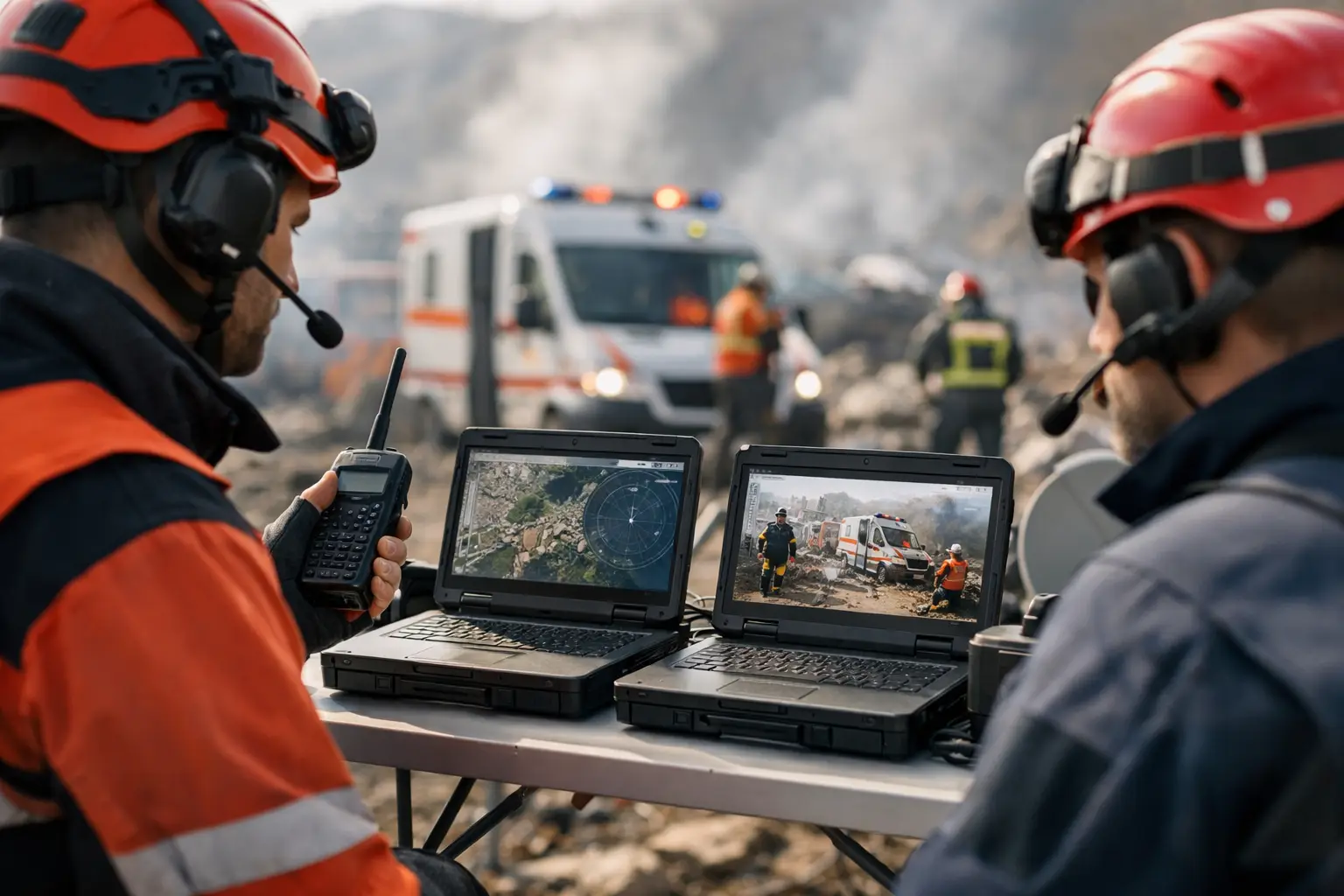
When a storm cell wipes out fiber, a wildfire takes commercial towers offline, or a flood cuts road access to a command post, disaster response communication systems stop being a procurement category and become the operating backbone. At that point, coverage maps and datasheets mean very little. What matters is whether incident command, field teams, mobile assets, and partner agencies can still pass voice, video, telemetry, and situational data without delay.
For public safety agencies, utilities, defense support teams, and industrial operators, the communications problem during a disaster is rarely just one problem. It is a stack of failures happening at once: damaged infrastructure, moving units, obstructed terrain, overloaded public networks, limited power, and multiple agencies trying to work across different radio and IP environments. Systems that perform well under normal conditions often break at the exact point they are needed most.
What disaster response communication systems actually need to do
A capable disaster communications architecture has to support more than a backup voice channel. It needs to maintain operational continuity across fixed and mobile locations, restore network reach into damaged or isolated areas, and adapt as the incident footprint shifts.
That usually means carrying several traffic types at once. Dispatch voice is only one layer. Teams may also need live video from vehicles or drones, SCADA or utility telemetry, GIS feeds, body-worn camera traffic, sensor data, and broadband access for field applications. If the system cannot prioritize traffic or maintain stable throughput under mobility, the network becomes another source of operational friction.
Coverage extension is just as critical. Many incident zones sit outside strong terrestrial coverage even before infrastructure damage occurs. Rural wildfire response, coastal storm recovery, remote pipeline incidents, and maritime search operations all expose the same weakness: standard commercial broadband was never engineered for those conditions. Disaster response communication systems have to bridge that gap with private wireless, point-to-point or point-to-multipoint backhaul, transportable network nodes, and antenna systems that can stay aligned and stable in motion or in high-wind environments.
Why commercial networks alone are not enough
Public cellular infrastructure plays a role in disaster operations, but it should not be mistaken for a complete resilience strategy. Commercial LTE and 5G networks are shared environments. During a major event, they can become congested precisely when demand spikes. In some cases, the issue is not congestion but physical outage due to power loss, damaged towers, or severed transport.
Even when public service remains available, there are trade-offs. Coverage may be inconsistent at the edge of the incident zone. Uplink performance may not support high-value applications such as live aerial video. Security policies, device control, and traffic prioritization may also fall short for agencies that need deterministic performance.
That is why engineered private infrastructure remains central to serious response planning. A private LTE or 5G layer, a stabilized microwave backhaul path, or an integrated radio network can give operators direct control over performance, coverage, and interoperability. It also reduces dependence on a third-party network that may be degraded for reasons outside the responder’s control.
The core building blocks of a field-proven architecture
The right design depends on geography, mission profile, and available assets, but most effective systems combine a few core elements.
Mobile and transportable connectivity
Disaster operations move. The network has to move with them. Vehicle-based communications platforms, rapidly deployable mast systems, trailer-mounted nodes, and portable command infrastructure make it possible to establish service where fixed assets are damaged or unavailable.
Mobility introduces a technical challenge that many generic systems do not address well: maintaining link quality while platforms shift, vibrate, or reposition. Auto-aiming and tracking capability matters here. If a backhaul link requires repeated manual alignment, it slows deployment and increases the chance of outage during repositioning or adverse weather.
Resilient backhaul
Access is only useful if it can reach the core network, command site, or cloud application environment. In disaster zones, backhaul often becomes the limiting factor. Fiber may be unavailable, leased circuits may be down, and line-of-sight paths may be constrained by terrain or damaged structures.
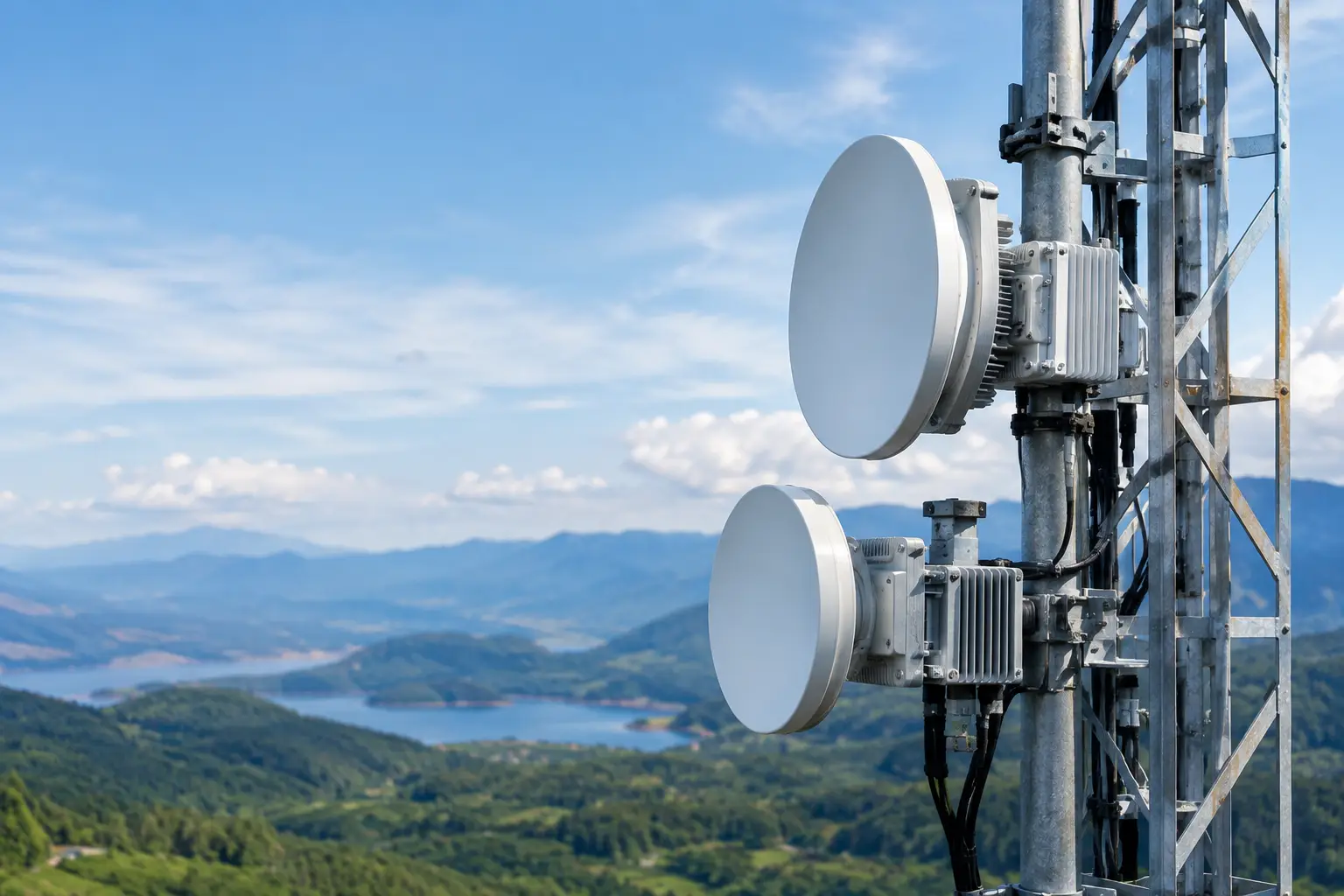
Stabilized microwave systems are often a strong fit where operators need high-capacity links with rapid setup and predictable performance. In mobile and maritime environments, antenna stabilization is not a luxury feature. It is what keeps the path usable when the platform is moving or exposed to motion and wind loading. In other deployments, integrated radios with carefully engineered path design provide a cost-saving solution for restoring broadband where trenching or temporary fiber repair is impractical.
Interoperability across agencies and systems
Few incidents stay within one organizational boundary. Fire, law enforcement, EMS, utilities, transportation teams, National Guard units, and private infrastructure operators may all be involved. The communications layer has to connect legacy radios, broadband devices, IP networks, and sector-specific applications without forcing every user onto a single platform.
This is where system engineering matters more than product selection. Interoperability is not solved by adding more equipment. It is solved by designing the interfaces between radio systems, network segments, onboard devices, and command applications so the right traffic can move securely and reliably between them.
The design trade-offs buyers should evaluate
There is no universal template for disaster response communication systems because every deployment is constrained by a different mix of terrain, mobility, bandwidth demand, and time-to-service.
A highly portable kit can be deployed fast, but it may not deliver the same capacity or coverage radius as a larger transportable system. A long-range microwave design may provide excellent throughput, but it depends on viable path engineering and stable mounting. Private LTE can give strong local broadband control, though it requires spectrum planning, device strategy, and clear integration with backhaul.
Power design is another trade-off that gets overlooked until the field operation starts. Battery-backed systems offer mobility and speed, while generator-backed nodes support longer runtimes and heavier payloads. The right choice depends on expected incident duration, logistics access, refueling constraints, and the environmental profile of the deployment.
Security also requires balance. Strong segmentation and access control are essential, especially when multiple agencies or contractors share infrastructure. But overcomplicated policy design can delay activation in the field. The best architectures are secure by design and operationally practical under stress.
Where engineered systems create an advantage
In disaster response, hardware alone does not create resilience. The advantage comes from matching antenna performance, radio compatibility, mobility requirements, and path design to the operating environment.
For example, a coastal emergency response mission may need broadband continuity between a shore command center, mobile vehicles, and offshore assets. A wildfire deployment may require a rapidly restored backbone across mountainous terrain where public infrastructure is either sparse or compromised. A utility storm restoration team may need private connectivity across a moving fleet, temporary field offices, and remote substations while commercial traffic remains saturated.
These are not commodity networking problems. They require solutions built around link stability, environmental survivability, and deployment speed. That is where companies such as BATS Wireless differentiate – not by selling generic connectivity, but by engineering auto-aiming, adaptive, and integrated wireless systems that keep broadband available in difficult coverage conditions.
How to assess whether your current system is ready
A realistic assessment starts with failure assumptions, not nominal performance. Ask what happens if commercial cellular is partially available but congested. Ask how quickly you can establish broadband at a temporary command site with no wired infrastructure. Ask whether moving assets can maintain a usable link without manual intervention. Ask how voice, video, and operational data will be prioritized when capacity is constrained.
Then look at deployment mechanics. Can your team transport, power, align, and activate the system with the personnel available during an actual event? Can it integrate with existing radios, private network assets, and agency applications? If the answer depends on ideal conditions or specialized staff who may not be on site, the design needs work.
Field validation matters more than lab validation. The systems that perform best in disaster response are the ones tested under motion, weather exposure, obstructed paths, and compressed deployment timelines. That is where weak assumptions show up early enough to fix.
Disaster response communication systems are an engineering decision
Buying for disaster response is not about checking a resilience box. It is about deciding how your organization will communicate when infrastructure is damaged, resources are stretched, and the mission cannot pause. The right system is the one that holds link integrity, restores coverage fast, and supports the operational picture as conditions change.
If your current plan depends on public networks staying available or on field crews improvising around coverage gaps, that is a design signal worth taking seriously. The organizations that perform best under pressure usually made the communications decisions well before the emergency started.
October 10, 2026
October 10, 2026

October 10, 2026

October 10, 2026
