
Best Networks for Remote Operations in the Field
Compare the best networks for remote operations, from private LTE and 5G to microwave and satellite, and design reliable coverage for moving assets safely.


A drilling crew shifts to a new pad, a patrol vessel moves beyond shore coverage, or a disaster command post is stood up overnight. In each case, the best networks for remote operations are not defined by a single radio technology. They are defined by whether the architecture can maintain usable, secure communications across distance, terrain, movement, weather, and changing operational demand.
For industrial, government, maritime, and field-critical organizations, the question is not simply whether a network can provide bandwidth. It is whether field teams can depend on that bandwidth when a fiber extension is impractical, commercial service is unavailable, and downtime affects safety, production, or mission execution. The right answer is usually a purpose-built combination of access network, backhaul, mobility capability, and operational redundancy.
What Makes a Remote Operations Network Fit for Purpose?
Remote connectivity projects often fail at the planning stage because teams start with a preferred technology rather than the operating requirement. A cellular network, microwave link, satellite service, or Wi-Fi system can all be appropriate. Each has limits that must be addressed in the design.
Begin with the operational area. A fixed mine site, wind farm, construction project, or well pad may need broad local coverage and high-capacity backhaul. A vessel, vehicle convoy, mobile command center, or airborne asset introduces a different problem: the network endpoint moves, and the link must maintain alignment and quality while the platform pitches, turns, or travels.
Traffic behavior matters as much as coverage. Voice push-to-talk, SCADA telemetry, video surveillance, crew welfare internet, command-and-control applications, and cloud workloads do not have the same latency, capacity, or priority requirements. A network that handles routine data traffic can still fail operationally if real-time video floods the link or critical control traffic has no quality-of-service policy.
Security and interoperability are equally central. Remote networks should support segmented traffic, authenticated devices, encrypted transport, and integration with existing enterprise, public safety, or tactical communications systems. The most effective design is one that extends the organization’s operating network into the field without creating an unmanaged, isolated communications island.
Best Networks for Remote Operations: The Core Options
There is no universal winner. The strongest remote network is selected around coverage geometry, mobility, capacity, frequency availability, deployment time, and lifecycle cost.
Private 4G and 5G for controlled local coverage
Private LTE and 5G are often the best fit when an operator needs controlled, wide-area wireless coverage across a defined location. They provide more predictable mobility, device management, and quality-of-service capability than conventional Wi-Fi, especially where vehicles, personnel, sensors, cameras, and industrial equipment must remain connected over a large site.
Private cellular is well suited to ports, logistics yards, oil and gas facilities, mines, temporary construction sites, campuses, and disaster-response areas. It can support separate service policies for operational technology, workforce communications, surveillance, and visitor access. With the right spectrum strategy and radio placement, it also gives operators a path to scale coverage as the site expands.
The trade-off is that private cellular is not a backhaul solution by itself. It still requires a dependable connection from the site to the core network or internet gateway. It also needs disciplined RF design, device compatibility verification, spectrum planning, and ongoing network management. Treating it as a drop-in replacement for consumer cellular service leads to poor coverage assumptions and avoidable integration problems.
Point-to-point and point-to-multipoint microwave for high-capacity backhaul
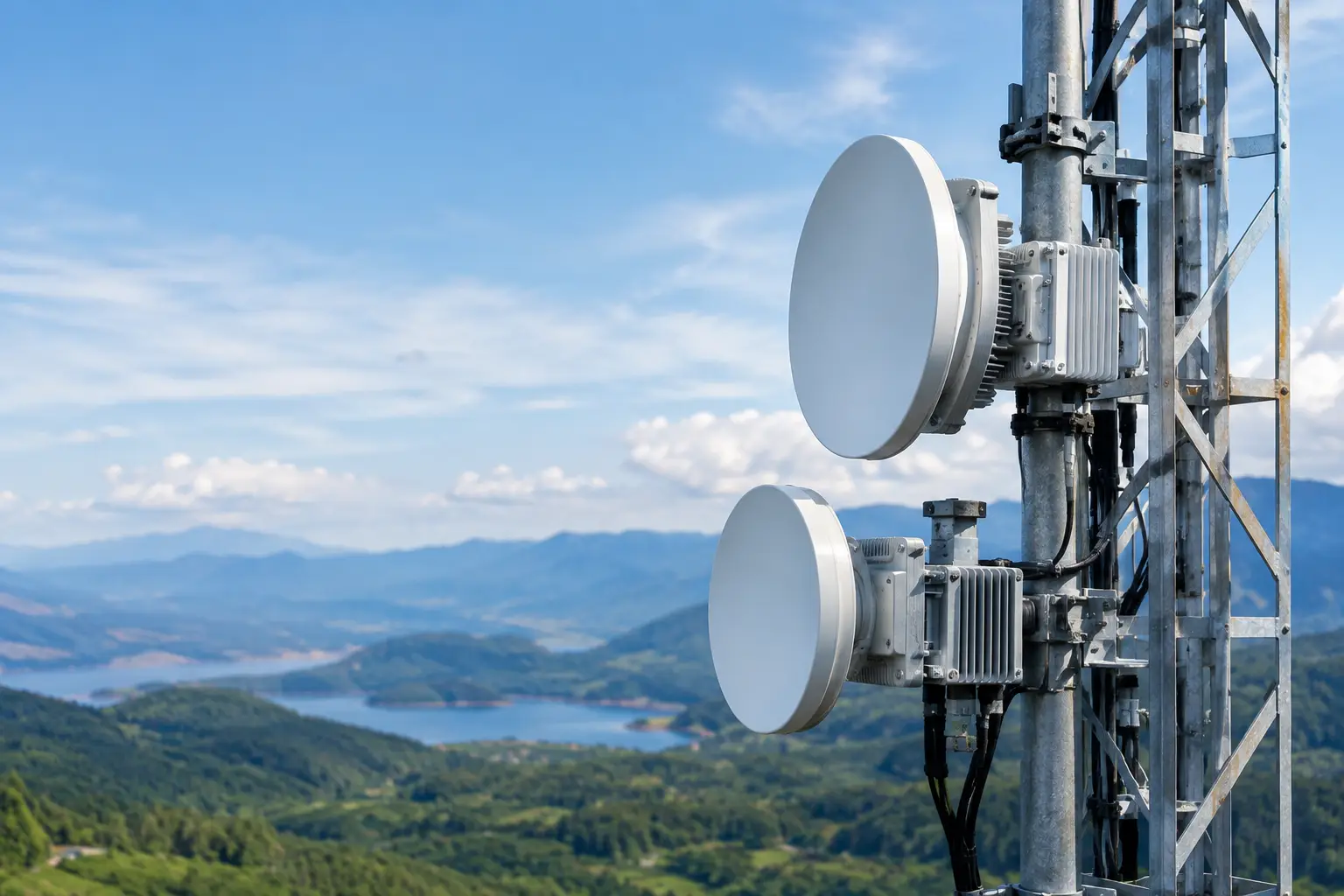
Microwave remains one of the most cost-effective ways to extend broadband into remote areas where line of sight is available. Properly engineered point-to-point links can deliver high capacity with low latency across long distances, making them a strong choice for backhauling private LTE and 5G, connecting remote facilities, or linking temporary field sites to an established network.
For distributed operations, point-to-multipoint systems can serve several endpoint locations from a central hub. This model can be effective for wind farms, aquaculture operations, industrial campuses, rural infrastructure, and scattered field assets where laying fiber is too costly or slow.
Microwave performance depends on path engineering. Terrain, Fresnel-zone clearance, antenna height, rain fade, interference, and link availability targets all require attention. A link that works during a site survey can become unreliable when foliage changes, a temporary obstruction appears, or weather conditions degrade the fade margin. Long-distance systems should be designed around expected availability, not best-case throughput.
Stabilized and auto-aiming links for moving platforms
Conventional microwave works well between fixed points. It is not sufficient when one endpoint is moving. Maritime vessels, mobile command vehicles, ground-to-air systems, and other mobile platforms need antenna systems that can acquire and maintain the connection as the platform changes position and orientation.
Auto-aiming and stabilized microwave systems address this problem by combining tracking capability, path calculation, antenna control, and compatible radio equipment. The system continuously manages alignment so the link can remain operational through platform motion and changing geometry. This is particularly valuable where operators require higher capacity and lower latency than satellite can provide, such as nearshore maritime operations, ship-to-shore communications, mobile public safety deployments, and ground-to-air connectivity.
The design decision is governed by operating range, movement profile, network endpoints, and line-of-sight conditions. Stabilized systems require careful mechanical and RF integration, but they can materially improve communications continuity for assets that cannot stop and manually align an antenna.
Satellite for reach beyond terrestrial infrastructure
Satellite is indispensable when the operating area has no practical terrestrial path, the location changes frequently, or the deployment must be independent of local infrastructure. It provides geographic reach that microwave and cellular cannot always match, making it a necessary element in offshore operations, remote exploration, emergency response, and isolated field deployments.
Its trade-offs are familiar but consequential: latency can affect interactive applications, capacity may be constrained or expensive, and service quality depends on the selected constellation, terminal, coverage area, and environmental conditions. Satellite is often best used as primary connectivity where no terrestrial alternative exists, or as a resilient backup path for a higher-capacity microwave or fiber connection.
Wi-Fi for contained access areas
Industrial Wi-Fi still has a place in remote operations. It can provide high-capacity access within buildings, work areas, accommodations, warehouses, vessels, and other contained environments. It is also useful for fixed equipment that does not require broad-area mobility.
However, Wi-Fi should not be assumed to provide campus-scale mobility or outdoor coverage without extensive engineering. Roaming behavior, interference, client diversity, antenna placement, and environmental exposure can limit performance. In many remote designs, Wi-Fi is the local access layer while private cellular handles outdoor mobility and microwave or satellite provides backhaul.
Build a Layered Architecture, Not a Single Link
Mission-critical connectivity is stronger when different technologies perform the jobs they handle best. A remote industrial site may use private LTE for outdoor mobility, Wi-Fi inside buildings, licensed microwave for primary backhaul, and satellite for failover. A vessel may use stabilized microwave near shore, satellite beyond line of sight, and an onboard network to distribute connectivity to crew, operational systems, and sensors.
This approach also supports sensible traffic policy. Critical control, dispatch, and safety traffic should receive priority. High-bandwidth video can be managed according to available capacity. Nonessential traffic can be restricted when the backup link is active. Those policies preserve operational continuity when a network is under stress rather than allowing lower-priority use to consume the available path.
Redundancy should be designed around realistic failure modes. A second connection that uses the same tower, route, power source, or service provider may not provide meaningful resilience. Consider physical path diversity, independent power, alternate backhaul media, spare equipment, and procedures for restoring service in the field.
Evaluate the Network in Operational Terms
Procurement decisions improve when requirements are expressed as operational outcomes. Instead of asking for maximum advertised throughput, define the number of active users and devices, expected coverage area, required application performance, acceptable outage duration, platform movement, and environmental conditions. Specify whether the network must operate in salt spray, high wind, extreme temperatures, vibration, or RF-congested locations.
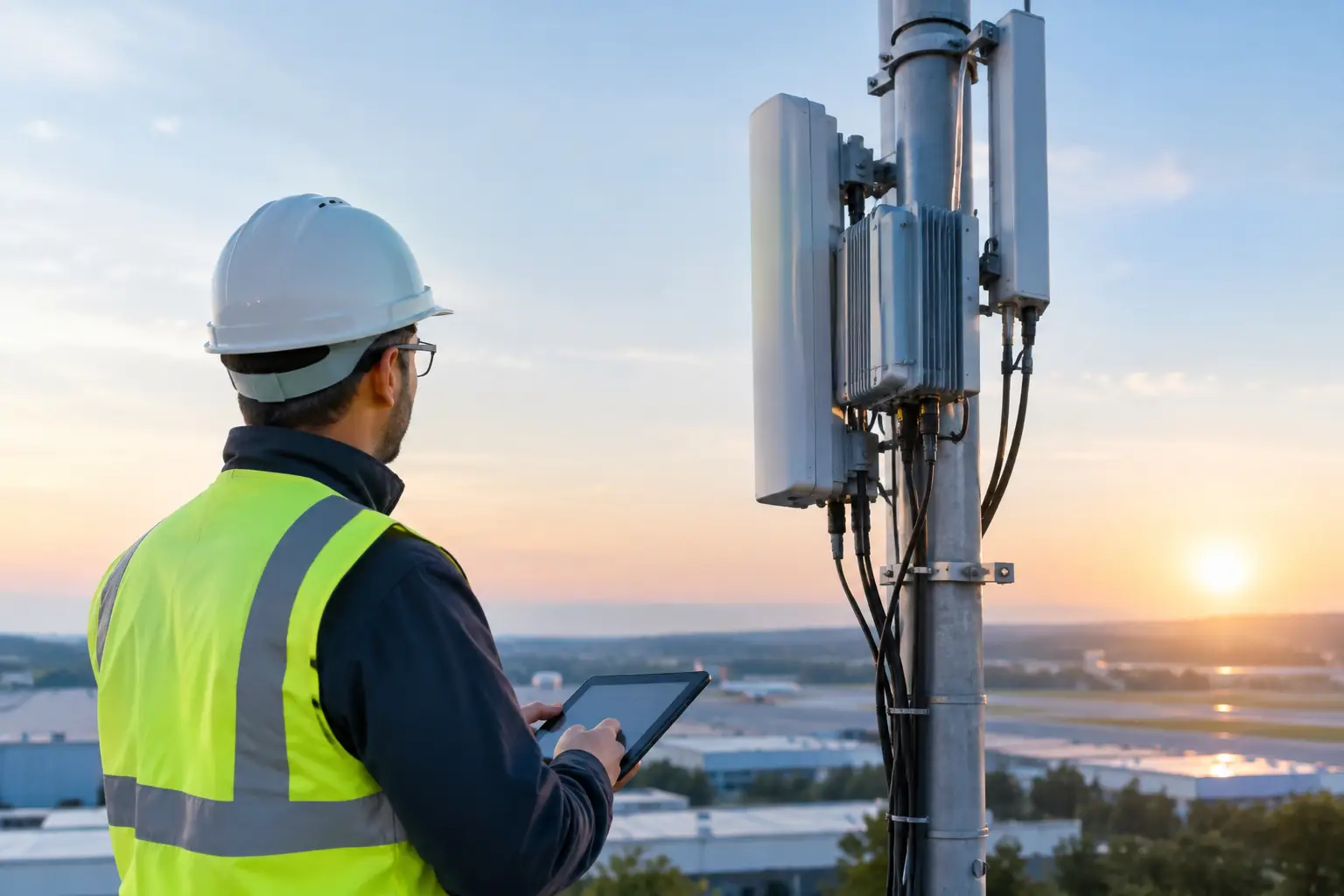
Field validation is essential. Test mobility at the edge of coverage, measure throughput during peak traffic, verify handoffs, confirm priority policies, and evaluate the failover path under load. Network diagrams and bench tests are useful, but they do not replace a proof of performance in the actual operating environment.
BATS Wireless designs engineered wireless systems around this full operational picture, including antenna tracking, stabilized microwave, integrated radios, private cellular, and the technical services needed to make the components function as one network.
The useful next step is to map your critical applications and asset movements before selecting equipment. Once the operational geometry is clear, the appropriate combination of cellular, microwave, satellite, and onboard networking becomes a design decision rather than a gamble.
October 10, 2026
October 10, 2026

October 10, 2026

October 10, 2026
