
Onboard Network Solutions for Vessels
Onboard network solutions for vessels must handle motion, distance, and uptime demands. Learn what matters in design, coverage, and backhaul.

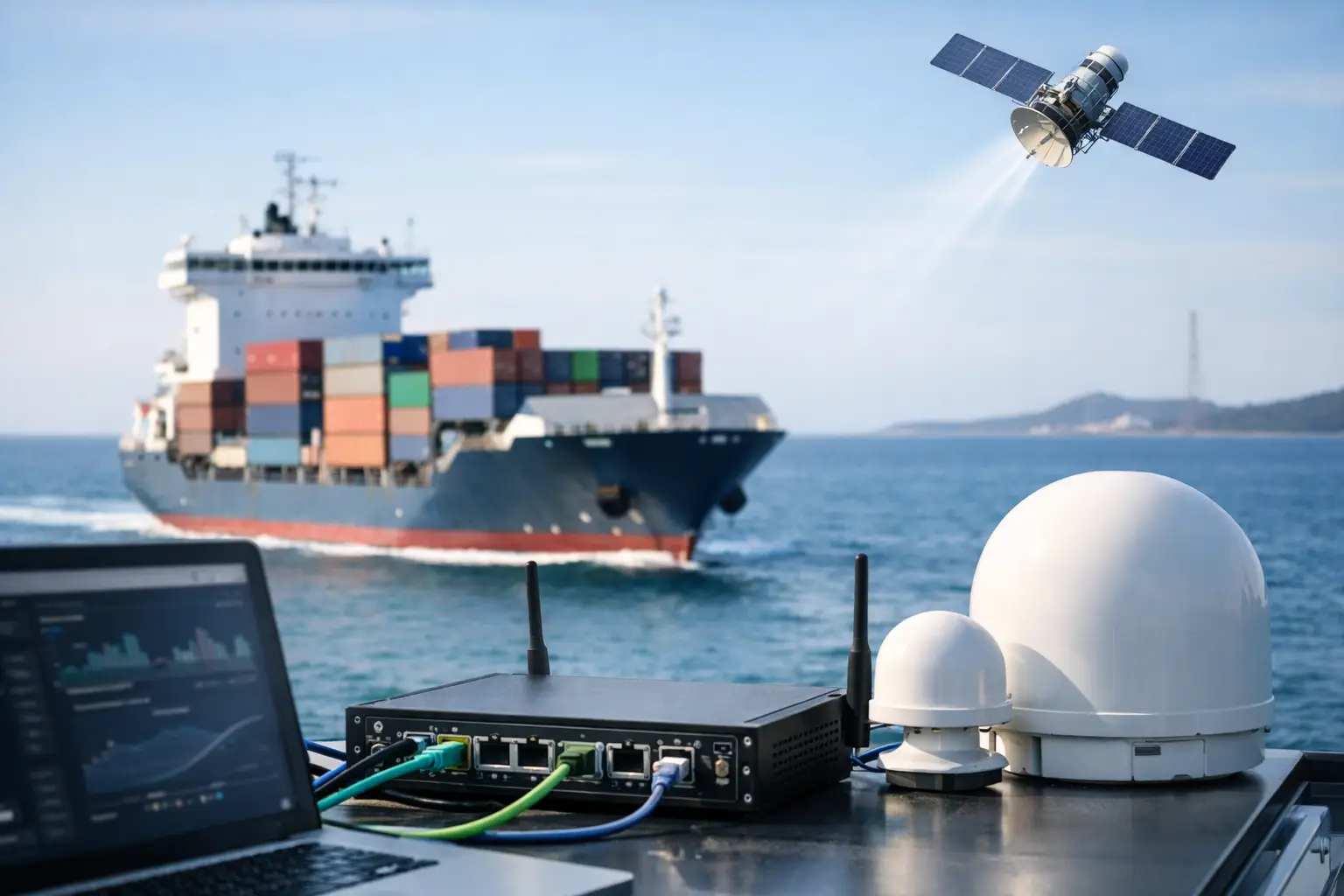
A vessel can move from port coverage to open water in minutes, but crew operations, telemetry, security systems, and business traffic do not get to pause when the shoreline disappears. That is why onboard network solutions for vessels have to be engineered differently from a standard enterprise Wi-Fi deployment. The real challenge is not just getting a signal onboard. It is maintaining predictable connectivity across moving platforms, metal structures, changing RF conditions, and multiple traffic priorities.
For maritime operators, the network is now part of the vessel’s operating infrastructure. It supports navigation-adjacent systems, engine and equipment monitoring, crew welfare, video, VoIP, operational applications, and remote support. If the design is treated like a generic IT project, performance gaps show up fast. Dead zones appear below deck, handoffs fail between links, and bandwidth gets consumed by low-priority traffic when critical systems need it most.
What onboard network solutions for vessels actually need to solve
A vessel network has to do three jobs at once. It must distribute connectivity internally, maintain an external backhaul path, and keep both layers stable while the platform is moving. Each of those jobs has different technical constraints.
Inside the vessel, coverage is affected by steel bulkheads, deck separation, machinery spaces, and compartmentalized layouts. Wireless design that works in an office often performs poorly at sea because RF propagation is heavily shaped by the vessel structure. Access point placement, antenna selection, cable routing, and power planning matter more than brand labels on hardware.
The external link is a separate engineering problem. Near shore, LTE or private maritime broadband may be the most cost-effective path. Farther offshore, operators may need microwave, satellite, or hybrid connectivity. In many cases, the best answer is not one transport method but an architecture that can prioritize and fail over across several.
Then there is network control. Maritime environments are not forgiving when too many systems share the same path without traffic segmentation. Crew internet, vessel operations, IP cameras, maintenance diagnostics, and third-party contractor access should not all compete on equal terms. A properly designed onboard network uses VLANs, traffic policies, security segmentation, and application-aware routing to keep the right traffic moving.
The core architecture behind vessel onboard network solutions
Most effective vessel deployments are built in layers. The first layer is the onboard LAN and WLAN environment. The second layer is the edge and routing layer that manages policy, segmentation, and failover. The third layer is the backhaul layer that connects the vessel to shore, platform, fleet, or command infrastructure.
That layered approach matters because each vessel class has different demands. A workboat operating near shore may need dense onboard Wi-Fi and a strong LTE path. A patrol vessel may require secure segmented communications with integrated radios and resilient external links. A commercial ship may prioritize operational continuity, crew access, and remote monitoring across long routes. The onboard network should reflect the mission profile, not a one-size-fits-all parts list.
In practice, this means the vessel network often includes hardened switching, marine-suitable access points, external antennas, edge routing with multi-WAN support, and some form of managed backhaul selection. In more demanding deployments, stabilized or auto-aiming systems become important because the external link quality depends on maintaining alignment despite pitch, roll, and heading changes.
Why coverage design onboard is usually underestimated
The internal wireless layer tends to be treated as the easy part. On vessels, it rarely is. Metal structures absorb and reflect RF energy in ways that create uneven performance, and lower decks often become difficult coverage zones. Add weather exposure, vibration, and long cable runs, and small design shortcuts become service tickets.
Good onboard coverage starts with the operating use case. If the priority is handheld crew devices, traffic patterns will differ from a vessel using fixed sensors, cameras, and operational terminals. If VoIP roaming is required, handoff behavior and cell overlap need close attention. If maintenance teams need access in engine rooms or on exposed decks, antenna type and enclosure rating become part of the network design, not an afterthought.
This is where engineered vessel onboard network solutions stand apart from commodity installs. The question is not simply how many access points fit the budget. The question is how to produce reliable service levels in the spaces where operational traffic actually lives.
Backhaul is where maritime performance is won or lost
The onboard network can be perfectly designed internally and still disappoint users if the external path is unstable or poorly managed. Maritime backhaul is not static. Signal conditions shift with range, sea state, obstructions, and vessel orientation. Link selection has to account for performance, availability, and cost.
For many operators, LTE and 5G provide strong economics near shore, especially when paired with high-gain antennas, intelligent routing, and maritime-specific RF engineering. But cellular alone may not cover all routes or all service expectations. Microwave can deliver high-capacity point-to-point performance in the right scenarios, though it depends on line of sight and alignment discipline. Satellite extends coverage much farther, but latency and recurring cost can change the application mix.
That is why hybrid architectures are becoming the practical standard. They allow a vessel to use the most efficient path available, then fail over when conditions change. Not every application needs the same treatment. Video uploads can wait. Alarm traffic, command applications, and monitored operational systems usually cannot.
Security and segmentation are not optional
A vessel network now carries enough operational value that it has to be treated as critical infrastructure. The risk is not only cyber intrusion from outside. It is also internal traffic sprawl, unmanaged devices, and poor isolation between operational and non-operational users.
A sound design separates crew welfare traffic from vessel systems, limits lateral movement, and applies role-based access wherever possible. Remote access should be controlled and auditable. Third-party maintenance connectivity should be segmented and time-bound. If radios, camera systems, industrial controls, and standard IP devices all coexist onboard, interoperability has to be matched with strict policy control.
For buyers evaluating vendors, this is an area where solution depth matters. Hardware compatibility is useful, but it is not enough. Maritime operators need an architecture that supports security policy under real operating conditions, including low-bandwidth periods and failover events.
The trade-offs buyers should assess early
Not every vessel needs the most complex system, but every vessel needs a deliberate one. There are trade-offs between upfront capital cost and long-term operating efficiency. A low-cost installation may look acceptable until downtime, repeat service visits, or poor link performance start driving actual cost higher.
There are also trade-offs between coverage density and simplicity, between cellular-first and hybrid backhaul, and between standardized fleet design and vessel-specific customization. The right answer depends on route profile, distance from shore, data demand, security requirements, and whether the vessel supports mission-critical workflows.
This is where experienced engineering support changes the outcome. Field-proven providers understand that maritime performance depends on antenna placement, stabilization, RF path calculation, integrated radio compatibility, and network policy working together. BATS Wireless operates in that space, where the goal is not to sell generic networking gear but to deliver an operational system that holds up under motion, distance, and changing RF conditions.
Choosing vessel onboard network solutions that scale
A good system should solve today’s coverage and backhaul problem without cornering the operator tomorrow. Fleets evolve. Application demand grows. Remote diagnostics increase. Private LTE or 5G may become part of the roadmap. What looks like excess capacity during deployment often becomes necessary faster than expected.
That does not mean overbuilding for its own sake. It means selecting an architecture that can support phased expansion, additional radios, segmented services, and better automation without forcing a complete redesign. Especially in maritime environments, refresh cycles are expensive and vessel access windows are limited. Scalability has practical value.
The strongest onboard network solutions for vessels are built around operational continuity. They treat connectivity as a working system tied to mission outcomes, not a convenience feature layered onto the vessel later. If the network has to support crew, equipment, safety functions, and shore-side visibility at the same time, then design discipline is not optional.
For maritime operators and technical buyers, that is the real decision point. Choose a vessel network based on what it has to keep doing when conditions are less than ideal. That is usually where the right architecture proves its value.

October 10, 2026

October 10, 2026

October 10, 2026

October 10, 2026
