
How to Optimize Private 5G Backhaul
Learn how to optimize private 5G backhaul for remote, mobile, and industrial networks with better capacity, latency, resilience, and uptime.

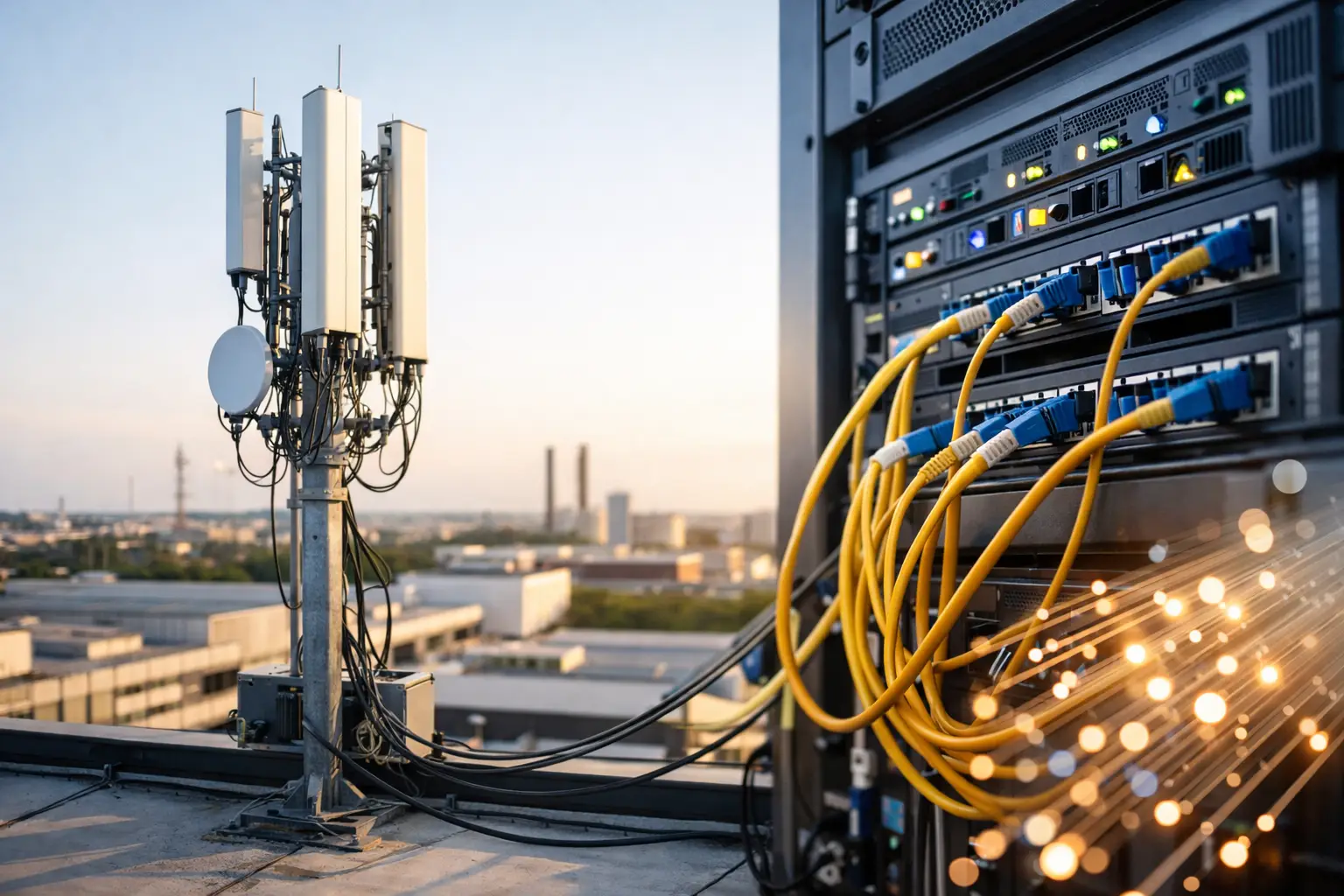
A private 5G network can look strong on paper and still fail at the point that matters most – the path between the radio access network and the core, data center, or internet edge. If you need to optimize private 5G backhaul, the real work starts after spectrum, radios, and coverage maps. Backhaul is where latency budgets get consumed, where packet loss appears under load, and where a site that tested well in staging starts missing operational targets in the field.
For industrial, maritime, defense, energy, and public safety deployments, backhaul is not a generic transport layer. It is a performance system with physical constraints, availability requirements, security implications, and cost trade-offs. The right design depends on terrain, mobility, throughput demand, service classes, and how much downtime the operation can tolerate.
What optimize private 5G backhaul really means
In practice, to optimize private 5G backhaul means balancing four variables at once: capacity, latency, resilience, and operating cost. Most teams can improve one or two of those quickly. The challenge is improving all four without creating a weak point somewhere else in the architecture.
A factory campus with fixed assets may prioritize deterministic latency and traffic segmentation. An offshore vessel may care more about link continuity under motion and weather. A temporary field deployment may accept lower peak throughput if it gains faster setup and better survivability. The backhaul design should reflect the mission, not a lab ideal.
This is why backhaul planning cannot be separated from application behavior. Video analytics, SCADA traffic, push-to-talk, autonomous systems, and routine enterprise data do not react the same way to jitter, congestion, or failover events. Private 5G only performs as intended when the transport path is engineered around those differences.
Start with the traffic profile, not the transport preference
Many projects begin by choosing fiber, microwave, millimeter wave, or satellite too early. That usually leads to redesign later. A better starting point is the traffic profile.
Define the steady-state load, but also map the burst behavior. A site may average modest throughput and still need substantial headroom when cameras switch to high-resolution streaming, a software update is pushed, or multiple field units attach at once. Backhaul that is sized only for average traffic will appear cost efficient until the first operational surge.
The service mix matters just as much. Control traffic, voice, telemetry, and video should not be treated as a single demand pool. Some flows are bandwidth hungry but tolerant of delay. Others are light in volume but intolerant of jitter or packet loss. Once those classes are understood, you can set realistic requirements for committed throughput, peak throughput, latency ceilings, and failover behavior.
That analysis often changes the access choice. Fiber may remain the best option where it is available and physically secure. In many remote or mobile environments, though, engineered wireless backhaul is the more practical answer because it can be deployed faster, extended farther, and adapted to changing site conditions.
The transport layer is where performance is won or lost
Fiber is strong, but not always operationally available
Fiber offers high capacity and predictable latency, which is why many buyers start there. But in oil and gas fields, ports, disaster zones, temporary construction sites, and moving platforms, fiber may be delayed, exposed, too costly to extend, or impossible to maintain. In those cases, waiting for fiber can become a project risk rather than a network strategy.
Microwave and millimeter wave can outperform assumptions
Well-engineered microwave backhaul remains one of the most effective ways to support private 5G in difficult environments. It delivers low latency, high availability, and meaningful throughput over long distances when path design, antenna selection, alignment, and fade margin are handled correctly.
Millimeter wave can deliver very high capacity, but it is less forgiving. It works best where paths are short, clean, and stable. Rain fade, obstruction, and movement narrow the design window. For fixed industrial sites with line of sight and high throughput demand, it can be a strong fit. For exposed or mobile scenarios, conventional microwave may offer better operational consistency.
Mobile and maritime sites need stabilized links
If the platform moves, the backhaul strategy changes. A standard fixed wireless link is not enough for a vessel, mobile command unit, or other dynamic asset. Maintaining link integrity under pitch, roll, vibration, and route variation requires stabilized microwave systems, auto-aiming capability, and path control that accounts for motion in real time.
This is where specialized engineering matters. Backhaul performance in motion is not just about radio power or modulation. It depends on tracking accuracy, antenna stability, environmental tolerance, and how quickly the system recovers from disturbance. Buyers in these environments should evaluate the whole link system, not just the radio specification.
Optimize private 5G backhaul through link engineering
The fastest way to degrade a private 5G deployment is to treat backhaul as an afterthought. Link engineering should be done with the same discipline as RF planning on the access side.
Protect link budget and fade margin
Backhaul availability is built long before the first packet crosses the network. Path length, frequency band, antenna gain, modulation strategy, rainfall zone, obstruction risk, and interference conditions all shape the final service quality. Aggressive throughput targets can push the design toward higher-order modulation, but that may reduce resilience during adverse conditions. Sometimes slightly lower peak rates produce better uptime and more consistent application performance.
Design for realistic line-of-sight conditions
Line of sight is not a box to check during a desktop survey. Seasonal foliage, temporary construction, vessel stacking, crane movement, sea clutter, and terrain reflections can all affect link quality. In industrial and port environments, a path that looks clear during planning may become marginal once the site is active. A practical design accounts for the operating environment as it actually behaves.
Keep latency budgets honest
Private 5G discussions often focus on air interface latency, but backhaul delays can erase those gains. Each hop, processing stage, queue, and conversion point adds delay. If the use case includes time-sensitive applications, count the full path end to end. It is common to find that the access network is performing well while the transport chain is creating the user experience problem.
Redundancy should match the cost of failure
High availability sounds good in every proposal, but not every site needs the same redundancy model. The right approach depends on what failure means operationally.
For a utility substation, public safety node, or offshore production environment, downtime may affect safety, compliance, or revenue. In those cases, path diversity, ring architecture, dual radios, protected power, and secondary transport options are often justified. For a temporary site office, a simpler design with well-defined restoration procedures may be the smarter spend.
Redundancy also needs to be tested, not assumed. Many failover schemes look solid until they are triggered under live load. Measure switchover performance, application impact, route convergence, and service recovery time. A backup path that comes online too slowly for critical traffic may protect availability metrics while still failing the mission.
Security and segmentation cannot be bolted on later
Private 5G backhaul carries operational data, not just user traffic. That usually includes machine control, video, telemetry, voice, and management plane communications. The transport design should support segmentation from the beginning.
That means separating critical traffic classes, controlling management access, and aligning encryption and inspection with performance requirements. Over-securing the wrong layer can add delay and complexity. Under-securing the network creates obvious exposure. The right design is use-case specific and should reflect the threat model of the sector.
For defense, public safety, and critical infrastructure buyers, interoperability matters as much as security itself. Backhaul must work cleanly with existing radio, routing, and operational systems. A technically elegant design that complicates field integration is not an optimized design.
Operational visibility is part of optimization
A backhaul network cannot be tuned if the team only sees alarms after failure. Good monitoring should show signal health, modulation changes, throughput trends, packet loss, latency variation, and power conditions in near real time.
This matters because many backhaul problems are progressive. A path begins to degrade under specific weather, load, or movement conditions long before it drops completely. When engineers can see those patterns early, they can adjust alignment, QoS policy, antenna configuration, or traffic routing before service is affected.
For buyers evaluating vendors, this is an important distinction. The best solution is not only the hardware on the tower, mast, or vehicle. It is the combination of radios, antennas, tracking capability, network design, and support model that keeps performance stable over time. That is where experienced providers such as BATS Wireless tend to separate from commodity suppliers.
The best backhaul design is the one that fits the mission
There is no universal answer for how to optimize private 5G backhaul. Some networks need fiber-fed determinism. Others need long-range microwave, stabilized links for mobility, or hybrid architectures that trade peak throughput for survivability and speed of deployment. The right decision comes from understanding the application, the terrain, the movement profile, and the cost of failure.
If the network supports real operations rather than a pilot, backhaul deserves front-end engineering attention. That is usually where uptime, user experience, and lifecycle cost are decided. The most effective private 5G networks are not built around a preferred transport technology. They are built around the conditions they have to survive.

October 10, 2026
October 10, 2026

October 10, 2026

October 10, 2026
